
UK Defends Falklands Sovereignty Amid Pentagon Review

Number 10 reaffirms UK sovereignty over the Falkland Islands following reports of a Pentagon document suggesting a potential US position shift.
The British government has moved swiftly to reaffirm its unwavering commitment to Falklands sovereignty, following reports that an internal Pentagon document had contemplated a reassessment of the United States' historical stance on the disputed territory. A spokesperson from Number 10 Downing Street issued a firm statement clarifying that UK sovereignty over the South Atlantic archipelago remains unequivocal and non-negotiable, regardless of any internal American policy discussions that may have circulated within defense department circles.
The revelation of this Pentagon assessment emerged amid broader tensions over Britain's reluctance to participate in military operations against Iran, according to multiple sources familiar with the classified documentation. The internal review allegedly suggested that a shift in the American position regarding the Falkland Islands could serve as leverage in diplomatic negotiations or as retaliatory measures for London's decision to maintain its independent foreign policy stance on Middle Eastern interventions. This strategic consideration, if implemented, would have represented a dramatic departure from decades of consistent American support for British territorial claims in the region.
The Falkland Islands dispute has its roots in competing historical claims dating back centuries, with Argentina maintaining that it possesses legitimate sovereignty over the territory it calls the Islas Malvinas. The situation escalated dramatically in 1982 when Argentina launched a military invasion of the islands, prompting a decisive British military response that resulted in the recapture of the territory. Since that conflict, the UK has maintained firm control over the islands and their strategic position in the South Atlantic.

Britain's position on the Falklands has remained consistent across successive governments and decades of international relations, with the principle of self-determination serving as a cornerstone of its claims. The residents of the Falkland Islands, numbering around 3,000 people, overwhelmingly support continued British rule, having expressed this preference in referendums and consistent polling. The UK government has repeatedly emphasized that any decision regarding the islands' sovereignty must ultimately rest with the inhabitants themselves, a position aligned with fundamental principles of international law and democratic governance.
The emergence of internal Pentagon discussions about potentially reconsidering American support for British claims represents an unusual development in transatlantic relations. The United States has historically maintained a position of neutrality on the Falklands issue while simultaneously being a close ally to Britain through NATO and various bilateral agreements. However, the suggestion that strategic disagreements over Iran policy could precipitate a reversal of this neutral stance raised significant concerns about the instrumentalization of territorial disputes for diplomatic leverage.
The reported Pentagon document came to light at a time when the UK government was actively reviewing its foreign policy approach to the Middle East, particularly regarding potential military action against Iran. The British government has maintained a careful diplomatic balance in the region, seeking to preserve international agreements like the Joint Comprehensive Plan of Action (JCPOA) while managing relationships with both Iran and its regional partners. Washington's apparent frustration with London's reluctance to take a more hawkish stance appears to have prompted the internal review of various negotiating positions and potential leverage points.
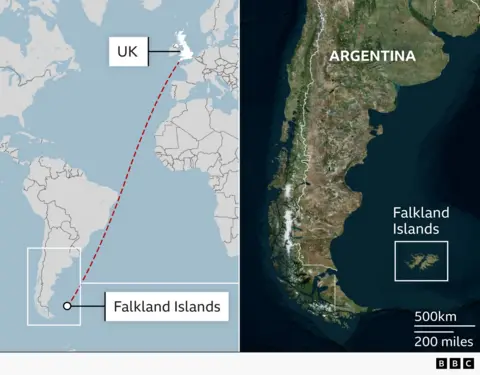
The swift and emphatic response from Number 10 underscores the British government's determination to prevent any ambiguity regarding its territorial claims. Officials made clear that British sovereignty over the Falklands is not subject to negotiation, retaliation, or strategic maneuvering, and that it would continue to be defended robustly regardless of international pressures or diplomatic disagreements on unrelated matters. This firm stance reflects the deep political consensus within Westminster that the Falklands remain an integral part of British territory.
The incident has also highlighted the potential vulnerabilities that can emerge when major strategic partnerships encounter disagreements on specific policy issues. While the US and UK maintain one of the strongest bilateral relationships in international affairs, the suggestion that one nation might leverage territorial disputes as bargaining chips in other negotiations raises important questions about the stability and predictability of long-standing alliances. Such tactical approaches could undermine the trust and cooperation that have characterized transatlantic relations for decades.
Argentina has long contested British control of the Falklands, and any shift in American support for the British position could have provided the South American nation with diplomatic ammunition in its ongoing campaign to reclaim the territory. The Argentine government has consistently pursued its claim through diplomatic channels, international forums, and various negotiations, though without military action since 1982. The possibility that an outside power might align itself with Argentina's position would have represented a significant strategic opportunity for Buenos Aires in its long-standing territorial dispute.
The broader implications of the Pentagon document extend beyond the immediate Falklands question and touch upon fundamental principles of alliance behavior and international relations. The concept of weaponizing territorial disputes or historical claims as retaliation for disagreements on unrelated policy matters challenges norms of diplomatic behavior that have evolved over centuries of international law and practice. Such tactics risk creating unstable precedents that could encourage similar behavior among other powers when facing strategic disagreements with their allies.
Moving forward, both the United States and United Kingdom appear committed to resolving any outstanding differences regarding Iran policy and broader Middle Eastern strategy through continued dialogue and negotiation. The affirmation of British sovereignty over the Falklands by Number 10 has effectively placed a boundary around discussions that could otherwise become destabilizing to the bilateral relationship. The incident serves as a reminder that even the closest of international partnerships require careful management and respect for each nation's core interests and principles.
The Falklands sovereignty matter remains one of the few unresolved territorial disputes in the Western Hemisphere, continuing to occupy space in diplomatic discussions and international relations despite more than four decades of British control. The security and welfare of the Falkland Islander population continues to guide British policy in the region, along with considerations of strategic positioning and resource management in the South Atlantic. As global geopolitics continue to evolve, the UK's commitment to defending its territorial interests and supporting the rights of the islanders shows no signs of weakening.
The episode also demonstrates the importance of clear communication and consistent messaging between allied nations when disagreements emerge on specific policy questions. The British government's rapid and decisive response to the Pentagon document reports prevented any ambiguity from taking root and reaffirmed the non-negotiable nature of its territorial claims. This approach reflects an understanding that permitting uncertainty or negotiability on fundamental sovereignty matters could encourage further pressure or diplomatic challenges from any quarter.
Source: BBC News


