
UK Economy Remains Fragile Despite Positive Headlines

Labour MPs push for increased spending while government warns of financial constraints ahead of Rachel Reeves' spring statement on March 3rd.
Despite recent encouraging economic indicators making headlines, the United Kingdom's financial landscape remains on shaky ground, creating tension within the ruling Labour Party as MPs demand increased spending while government leaders urge fiscal restraint. This disconnect between political aspirations and economic reality has become increasingly apparent as the party grapples with the legacy of more than a decade of previous policies. The situation has intensified pressure on Chancellor Rachel Reeves as she prepares to deliver crucial economic updates to Parliament.
A growing chorus of Labour MPs continues to advocate for substantial increases in public spending, seemingly undeterred by repeated warnings from senior government officials about the severely constrained state of Britain's public finances. These parliamentarians, predominantly from the party's progressive wing, remain vocal in their demands despite clear guidance from leadership about the fiscal limitations facing the administration. Their persistent calls for expanded government expenditure reflect deep frustration with the pace of policy implementation since Labour took power.
The primary focus of these left-leaning representatives centers on rapidly addressing what they perceive as 15 years of accumulated damage to public services and social infrastructure under previous Conservative governance. Their urgency stems from campaign promises and constituent expectations that significant improvements would materialize quickly following the change in government. However, this timeline conflicts sharply with the financial realities inherited by the current administration, creating an increasingly difficult political balancing act.
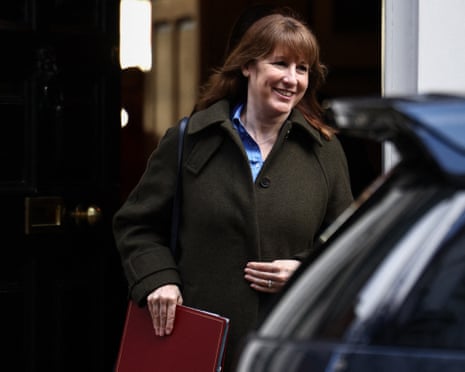
The spring statement scheduled for March 3rd represents the next critical juncture where these competing pressures will likely come to a head. Chancellor Rachel Reeves faces the challenging task of managing expectations while delivering a realistic assessment of the government's fiscal capacity. This upcoming address will serve as a crucial test of the administration's ability to maintain party unity while adhering to responsible economic management principles.
Economic analysts warn that succumbing to pressure for dramatic spending increases could undermine the UK's economic stability at a time when global financial markets remain volatile and investor confidence requires careful nurturing. The government's credibility with international financial institutions depends largely on demonstrating fiscal discipline and realistic policy implementation timelines. Any perception of reckless spending could have immediate negative consequences for borrowing costs and currency stability.
The current situation reflects broader challenges facing many developed economies as they attempt to balance political promises with fiscal reality. Similar tensions between spending demands and financial constraints have emerged across Europe, where governments struggle to satisfy voter expectations while maintaining economic stability. The UK's position is particularly delicate given recent economic turbulence and the need to rebuild investor confidence following previous market disruptions.

Furthermore, the demands from Labour's progressive wing mirror similar calls from opposition parties, with Conservative and Reform UK representatives also advocating for spending increases in their preferred areas despite the same fundamental fiscal constraints. This cross-party tendency to propose unaffordable solutions highlights a systemic challenge in British politics where electoral pressures often override economic pragmatism. The result is a political environment where realistic policy discussions become increasingly difficult to maintain.
Treasury officials have repeatedly emphasized that the government's options remain severely limited by structural budget deficits and existing debt obligations inherited from previous administrations. These constraints are not merely political talking points but represent genuine mathematical limitations on available resources for new spending commitments. The depleted state of public finances requires careful prioritization of spending initiatives rather than broad-based increases across all government departments.
As the March 3rd spring statement approaches, Chancellor Reeves must navigate between maintaining party cohesion and presenting a credible economic plan that reassures financial markets. Her challenge involves communicating difficult truths about spending limitations while outlining a path forward that addresses legitimate concerns about public service funding. The success of this balancing act will likely determine both the government's political stability and the country's economic trajectory in the coming months.
Source: The Guardian


