
UK Galleries Unite to Celebrate Female Artists

Major UK galleries launch 'Making Her Mark' project featuring Tracey Emin and other pioneering female artists, challenging historical male-dominated collections.
In a significant move to address longstanding gender imbalances within the art world, three prominent regional galleries across the United Kingdom have joined forces to champion the work of female artists and reshape how their contributions are presented to the public. The collaborative initiative, known as Making Her Mark, represents a meaningful step toward correcting historical disparities that have systematically marginalized women creators for generations.
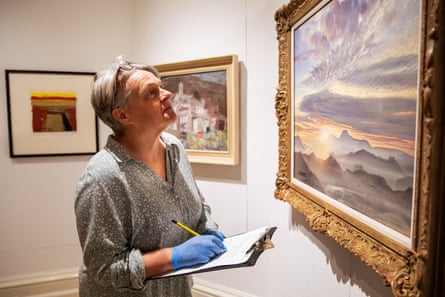
Penlee House, located in the picturesque coastal town of Penzance, Cornwall, has long reflected a pattern common across regional art galleries—collections predominantly featuring male artists. This imbalance is not unique to Penlee House but rather represents a broader institutional challenge that has plagued the art establishment for centuries. The underrepresentation of women in permanent collections and exhibitions has been a persistent issue, rooted in historical biases, unequal opportunities, and systemic barriers that prevented female artists from achieving the same recognition and market success as their male counterparts.
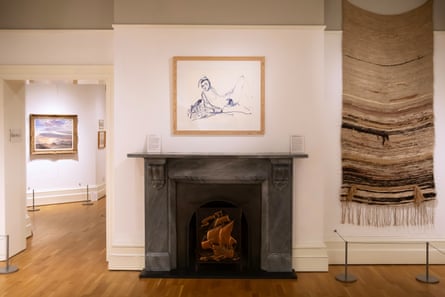
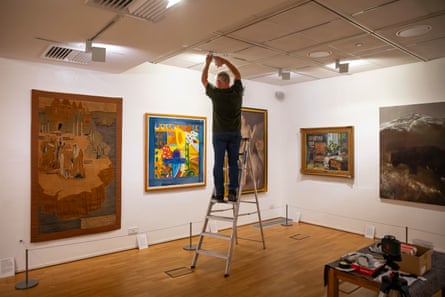
Beginning Thursday, the gallery doors at Penlee House will open to showcase an impressive array of works by some of Britain's most celebrated female artists, fundamentally transforming the visitor experience. The exhibition brings together pieces that have been largely absent from these spaces, offering art enthusiasts and casual visitors alike the opportunity to engage with diverse artistic voices that have shaped contemporary and historical British art. This moment marks a turning point in how regional institutions are reconsidering their curatorial practices and commitment to inclusivity.

Among the notable creators featured in this groundbreaking exhibition is Tracey Emin, the internationally renowned contemporary artist known for her provocative and deeply personal work that has challenged artistic conventions and pushed boundaries across multiple mediums. Emin's inclusion underscores the exhibition's commitment to representing both historical and contemporary female artistic achievement. Her presence alongside other talented women creators demonstrates the breadth and depth of female contribution to British visual culture.
The Making Her Mark project is not confined to Penzance alone; rather, it represents a coordinated effort spanning three distinct geographical regions. In addition to Penlee House in Cornwall, the Worcester Art Gallery and Museum and the Kirkcaldy Galleries in Scotland are participating in this collaborative venture. This multi-venue approach amplifies the project's reach and impact, allowing audiences across England and Scotland to engage with the exhibition and contribute to a larger conversation about gender representation in the arts.
This partnership between galleries reflects a growing recognition within the cultural sector that meaningful change requires institutional cooperation and shared commitment. By pooling resources, expertise, and curatorial vision, these three galleries are creating a more substantial and impactful exhibition than any single institution could produce independently. The collaboration also enables the sharing of artworks across venues, allowing audiences in different regions to access pieces they might not otherwise encounter locally.
The historical context for this initiative cannot be overstated. For centuries, female artists have faced systematic exclusion from major exhibitions, art historical narratives, and prestigious collections. Women were often denied access to formal art training, professional organizations, and the social networks that facilitated career advancement for their male colleagues. Despite these obstacles, countless women created extraordinary work that has endured and continues to inspire contemporary creators. The emergence of projects like Making Her Mark represents a belated but necessary acknowledgment of these contributions and an effort to correct the historical record.
The exhibition's timing is particularly significant given ongoing discussions within the art world about diversity, equity, and inclusion. Museums and galleries internationally are increasingly scrutinizing their collections and asking difficult questions about whose work is displayed, whose stories are told, and whose perspectives are centered in institutional narratives. The Making Her Mark initiative suggests that British regional galleries are taking these conversations seriously and committing resources to substantive change rather than performative gestures.
For visitors to Penlee House, Worcester, and Kirkcaldy, this exhibition offers an opportunity to experience art history from a different vantage point. Rather than viewing female artists as occasional anomalies within predominantly male collections, viewers can engage with women's artistic achievement as a central and vital component of British cultural heritage. This shift in perspective has educational implications extending beyond the gallery walls, influencing how art is discussed, taught, and valued in broader society.
The collaboration also signals to emerging and mid-career female artists that institutional support for their work is possible and growing. When galleries make visible commitments to presenting women's art with the same prominence and resources typically reserved for male artists, it sends a message about professional viability and recognition. Young artists watching these developments understand that their gender need not be a barrier to institutional representation, though challenges certainly remain within the broader art market and critical establishment.
Beyond the immediate impact of increased visibility, the Making Her Mark project has potential to influence art collection practices more broadly. When galleries collaborate on exhibitions highlighting underrepresented artists, they often discover new acquisition opportunities and develop stronger relationships with artists and their representatives. This can lead to long-term changes in what these institutions collect and prioritize, moving beyond temporary exhibitions toward more fundamental shifts in collection composition.
The project also acknowledges that there is still substantial work to be done in achieving genuine gender parity within art institutions. The conversation doesn't end with a single exhibition; rather, Making Her Mark represents a beginning—an opening gesture toward more comprehensive and sustained engagement with female artistic voices. Gallery leadership has indicated that this initiative reflects broader commitments to institutional change, suggesting future programming will continue to amplify overlooked perspectives and challenge established hierarchies within the art world.
For the three participating galleries—Penlee House, Worcester, and Kirkcaldy—this collaboration also offers practical benefits in terms of visitor engagement, media attention, and cultural relevance. Exhibitions that tackle important social issues like gender equity in the arts tend to attract diverse audiences and generate meaningful conversations. This can strengthen community connections and position these institutions as leaders in progressive, thoughtful curation rather than repositories of traditional, unchanging collections.
The Making Her Mark initiative ultimately represents more than a single exhibition; it embodies a philosophical commitment to reexamining how art history is presented, whose contributions are centered, and what stories galleries choose to tell. As these three British institutions move forward with this project, they join an international movement of cultural organizations working to create more inclusive, representative spaces for art and artists. The work continues, and as organizers emphasize, there is still much more to discuss, discover, and celebrate about the remarkable legacy of British female artists.
Source: The Guardian


