
UK Refinery Owner Moved Russian Loans Offshore

Investigation reveals Essar Energy shifted VTB loans to Mauritius subsidiary to evade sanctions after Russia's Ukraine invasion.
A significant scandal has emerged surrounding Essar Energy, the owner of the Stanlow refinery in Cheshire, following revelations that the company strategically relocated Russian loans to an offshore subsidiary in Mauritius—a jurisdiction where international sanctions against Russian entities held considerably less weight. Members of Parliament have called for a formal investigation into these transactions, which appear designed to circumvent the strict financial penalties imposed on Russia following its invasion of Ukraine.
The timing of these maneuvers proves particularly damning. Just days after Russian military forces crossed the border into Ukraine in March 2022, initiating a brutal campaign of conquest and destruction, workers at the Port of Ellesmere Port in Cheshire demonstrated remarkable moral courage. These dockers, deeply moved by Putin's aggression and the humanitarian crisis unfolding in Eastern Europe, made a principled decision to refuse unloading any Russian oil destined for the nearby Stanlow refinery. The refinery serves as a critical infrastructure asset for the United Kingdom's fuel supply chain, processing significant volumes of petroleum products distributed across the nation.
The workers' stance represented a powerful grassroots response to geopolitical aggression. Their commitment to not participating in commerce that would benefit Russian interests reflected broader public sentiment in the United Kingdom regarding the invasion. The dockworkers understood that their labor could either support or resist the Putin regime's actions, and they chose conscience over commercial obligation. This act of solidarity with Ukrainian victims put considerable pressure on the refinery's operations and management.

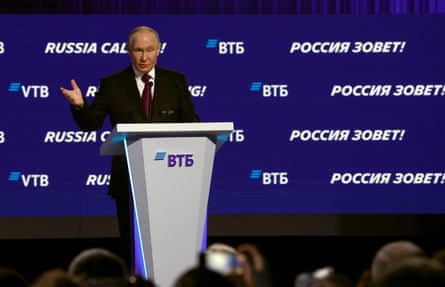
However, these principled actions by workers may have been partially circumvented through financial engineering by Essar Energy's leadership. The company's decision to move substantial loans originally provided by VTB Bank—widely regarded as 'Putin's piggy bank' due to its close alignment with the Russian government and the Kremlin's interests—to a subsidiary registered in Mauritius represents a troubling attempt to maintain financial relationships with sanctioned Russian entities while maintaining a veneer of compliance.
VTB Bank itself became subject to severe international sanctions following Russia's Ukraine invasion, with Western nations freezing its assets and cutting it off from global financial systems. The bank had long served as a preferred financial instrument for Russian state interests and oligarchs connected to Putin's inner circle. By moving these loans offshore to Mauritius, Essar Energy potentially sought to obscure the true beneficiaries and origins of its financing arrangements, making it significantly more difficult for regulators and investigators to trace the connections back to sanctioned Russian sources.
Mauritius, while a legitimate jurisdiction, has become known among financial professionals as a destination for companies seeking to structure arrangements that may avoid the full force of international sanctions regimes. The island nation's corporate registration framework, tax incentives, and regulatory environment have made it an attractive venue for entities attempting to maintain financial relationships that would be prohibited in major Western economies. By establishing a subsidiary in this jurisdiction and transferring the Russian loans to this entity, Essar Energy appears to have exploited a potential loophole in the sanctions architecture.
The Stanlow refinery itself represents an enormously important piece of British energy infrastructure. Located in Ellesmere Port, Cheshire, the facility has operated for decades as a major processing center for crude oil, converting it into essential fuel products including petrol, diesel, and heating oil that power British vehicles and heat British homes. The refinery's operational continuity is deemed critical to national energy security and economic stability. Its connection to Russian financing sources, whether direct or indirect, raises significant concerns among policymakers and security officials.
Members of Parliament have expressed outrage at the apparent circumvention of sanctions intended to isolate Russia economically and financially. These lawmakers argue that sanctions enforcement represents a crucial tool for holding the Putin regime accountable for its invasion of Ukraine, and that any attempt to route around these restrictions—no matter how technically sophisticated—undermines the collective Western response to aggression. The call for investigation suggests Parliament intends to examine not only Essar Energy's specific transactions but also broader patterns of sanctions evasion across British business.
The investigation would likely focus on several critical questions: When exactly did Essar Energy move the Russian loans to the Mauritius subsidiary? What were the specific business justifications offered for this transfer? Did company executives consult with legal advisors regarding sanctions compliance before implementing this strategy? What is the current status of these loans, and do they remain active? Furthermore, investigators would want to understand whether other British companies engaged in similar practices, suggesting a broader problem of sanctions circumvention in the UK business community.
The revelation also highlights tensions between business interests and national security concerns. Essar Energy, as a private corporation, has legitimate interests in maintaining financial stability and operational funding. However, these commercial considerations must be balanced against the nation's commitment to sanctions regimes designed to constrain hostile actors. The company's apparent prioritization of maintaining access to Russian financing over compliance with the spirit and letter of international sanctions demonstrates a troubling willingness to profit while others suffer the consequences of Russian aggression.
This scandal emerges within a broader context of increased scrutiny regarding Russian money in Britain. Over recent years, London and the UK have developed reputations as destinations for Russian capital seeking to establish legitimacy and find safety from domestic political risks. Property, corporate investments, and financial instruments have all been used as vehicles for moving Russian wealth into British society. The invasion of Ukraine and the subsequent imposition of sanctions has forced a reckoning with the extent to which British business and finance had become entangled with Russian interests.
The workers at Ellesmere Port who refused to handle Russian oil demonstrated that ordinary British citizens understood the moral dimensions of this entanglement and sought to distance themselves from it. Their action posed an uncomfortable question to business leaders and policymakers: If dock workers can take a principled stand, why cannot corporations? The answer, apparently, lies in the enormous financial incentives that drive corporate decision-making, incentives that may outweigh ethical considerations or regulatory compliance in the minds of some executives.

The parliamentary investigation announced in response to these revelations represents an important check on corporate behavior and an affirmation that Britain's democratic institutions take sanctions compliance seriously. If Essar Energy indeed circumvented sanctions through offshore financial engineering, the company should face substantial consequences including potential legal penalties, reputational damage, and regulatory restrictions. Such enforcement sends a critical message to other British corporations that attempting to evade sanctions will not be tolerated.
Looking forward, this case suggests the need for enhanced regulatory frameworks specifically designed to close loopholes in sanctions enforcement. Regulators must develop greater capacity to trace beneficial ownership across multiple jurisdictions and to identify corporate structures created primarily for the purpose of circumventing sanctions. The Treasury and Financial Conduct Authority should consider strengthening disclosure requirements for companies with Russian financing sources and implementing more robust compliance monitoring regimes. The ultimate goal must be ensuring that British business cannot serve as a vehicle for preserving the financial interests of hostile regimes.
Source: The Guardian


