
UK's New Pavement Charging Gullies to Transform EV Adoption

Government fast-tracks legislation enabling households without driveways to charge electric vehicles safely through pavement-embedded power cables, revolutionizing home EV charging.
The United Kingdom stands at a pivotal moment in its transition toward sustainable transportation, with innovative solutions designed to overcome one of the most significant barriers to electric vehicle adoption: the lack of off-street parking. Millions of British households residing in urban areas, terraced homes, and properties without dedicated driveways have historically faced considerable obstacles when attempting to transition from traditional combustion engines to zero-emission vehicles. Recognizing this critical infrastructure gap, the government has unveiled an ambitious plan to democratize home EV charging access through groundbreaking pavement-based charging infrastructure.
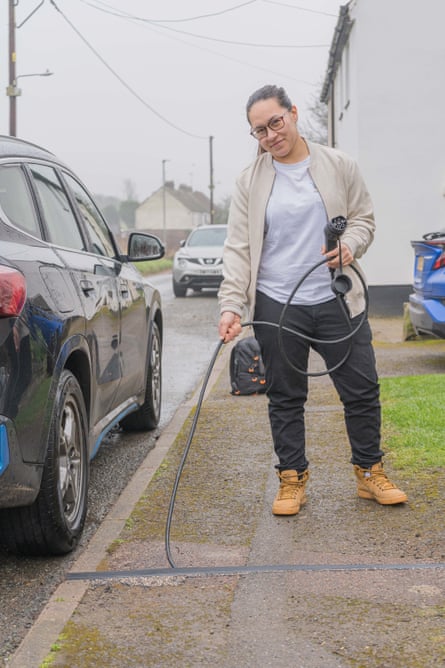
The centerpiece of this transformative initiative involves the development and installation of charging gullies—specially engineered channels built directly into pavements that safely house power cables. These innovative conduits would enable homeowners to run electrical connections from street-level distribution points to their vehicles parked immediately outside their residences, eliminating the need for unsightly overhead cables or complex underground installations. The government has committed to expediting the passage of enabling legislation during the summer months, removing bureaucratic hurdles that have historically complicated similar infrastructure projects.
Currently, many households without access to private parking must resort to public charging networks, which often prove inconvenient, expensive, or unreliable for regular charging routines. This structural disadvantage has created a significant equity problem within the EV charging infrastructure landscape, where affluent homeowners with driveways can easily install private chargers while apartment dwellers and those in densely populated areas remain dependent on public alternatives. By enabling pavement-based charging solutions, the government aims to level this playing field and ensure that economic circumstances alone do not determine access to convenient home charging capabilities.

The legislative framework being developed will fundamentally reshape how local authorities and utility companies approach urban charging infrastructure development. Under the new provisions, homeowners will no longer require extensive planning permissions to install pavement charging gullies, significantly reducing installation timelines and associated costs. This streamlining represents a crucial acknowledgment that traditional regulatory pathways—designed for entirely different infrastructure types—have become impediments to essential climate transition technologies. The government's decision to expedite this process demonstrates growing recognition that meeting ambitious net-zero targets requires regulatory flexibility and practical solutions tailored to modern transportation challenges.
Experts in sustainable transport policy have long identified off-street parking availability as one of the most persistent obstacles to rapid EV adoption rates across the United Kingdom. According to recent surveys, approximately 30% of British households lack dedicated parking facilities, creating an estimated barrier affecting millions of potential electric vehicle purchasers. The psychological and practical implications of this infrastructure gap cannot be overstated; many consumers remain reluctant to transition to electric vehicles if they cannot guarantee convenient, safe, and reliable home charging access. By directly addressing this concern through pavement-integrated solutions, policymakers hope to unlock enormous latent demand for electric vehicles among currently underserved populations.
The broader context for these initiatives involves the government's commitment to reducing dependence on fossil fuels and accelerating decarbonization across the transport sector. The development of sustainable charging solutions directly supports this strategic objective while demonstrating practical commitment to environmental targets outlined in recent climate legislation. Transportation currently accounts for approximately 27% of the United Kingdom's total carbon emissions, with road vehicles representing the largest proportion of this figure. Accelerating the transition to electric vehicles through infrastructure investment represents one of the most effective mechanisms available for achieving meaningful reductions in transport-related emissions.
Implementation of pavement charging gullies will require coordination between multiple stakeholders, including local authorities, electricity distribution companies, vehicle manufacturers, and residents themselves. The technical specifications for these installations must ensure public safety, protect underground utilities, maintain pavement structural integrity, and provide reliable electrical supply to charging equipment. Engineers and infrastructure specialists have been working to develop standardized designs that can be deployed efficiently across diverse urban environments, from London's dense Victorian terraces to regional towns with different street configurations and underground infrastructure layouts.
The financial implications of this initiative extend beyond individual household savings on charging costs. Widespread adoption of home charging solutions reduces pressure on public charging networks, enabling targeted investment in fast-charging facilities for longer journeys rather than duplicative residential infrastructure. Furthermore, reduced reliance on petrol and diesel reduces aggregate expenditure on fossil fuels—money that remains within the domestic economy through electricity payments rather than flowing to international oil producers. This economic benefit is particularly significant for lower-income households that currently bear disproportionate burden of fuel costs.
Environmental benefits associated with increased EV charging accessibility extend beyond direct emissions reductions from eliminating tailpipe pollution. Electric vehicles powered by increasingly renewable-based electricity grids offer substantial advantages over combustion engines, even accounting for manufacturing impacts and electricity generation methods. As the UK's electricity system continues its transition toward wind, solar, and other renewable sources, the environmental advantage of electric vehicles grows proportionally. Every additional household enabled to transition to electric vehicles through improved charging infrastructure represents meaningful progress toward climate targets and cleaner air quality in urban neighborhoods.
The government's decision to rush legislation through parliament reflects growing political consensus around the necessity of transport decarbonization and recognition that infrastructure investment cannot be indefinitely delayed. Delays in implementing practical solutions for residential charging perpetuate inequities in EV access and slow progress toward environmental targets. By prioritizing pavement charging solutions, policymakers acknowledge that incremental improvements to existing infrastructure networks are preferable to indefinite delays awaiting theoretically superior but perpetually unimplemented solutions. This pragmatic approach balances ambitious climate objectives with realistic assessment of implementation timelines and resource constraints.
Looking forward, widespread adoption of pavement-based charging systems could fundamentally transform urban transportation patterns across the United Kingdom. As more households gain access to convenient home charging, demand for electric vehicles is expected to increase substantially, particularly among demographics currently excluded from the market due to parking constraints. Manufacturers will likely respond to this expanded market opportunity with increased EV production and potentially reduced vehicle prices as economies of scale intensify. The combination of improved infrastructure access and market expansion creates a virtuous cycle supporting accelerated decarbonization of the transport sector.
Source: The Guardian


