
UK's New US Ambassador: Starmer 'On the Ropes' Over Mandelson

UK's new ambassador to the US made controversial comments about PM Starmer and Israel's relationship with Washington. Details on the diplomat's remarks.
Christian Turner, the United Kingdom's newly appointed ambassador to the United States, has made headlines for remarks suggesting Prime Minister Keir Starmer was in a precarious political position following the controversy surrounding Peter Mandelson's appointment. The diplomatic comments, made in February during Turner's tenure commencement, have raised questions about the nature of candid discussions within diplomatic circles and the appropriate bounds of public commentary by senior government representatives.
Turner, who officially took office in February as the UK's most senior diplomat in Washington, made these observations privately to a visiting group of students during the same month he assumed his position. The remarks reportedly characterized Starmer as being "on the ropes" in reference to the political turbulence generated by Mandelson's appointment, suggesting that the Prime Minister faced considerable domestic political challenges at that time. These private conversations between a serving ambassador and visiting students highlight the ongoing tensions within British political circles regarding high-profile government appointments and their implications for party leadership.
Beyond his comments about the Prime Minister's political standing, Turner also offered his perspective on international relations and diplomatic priorities, specifically addressing the relationship between Israel and the United States. The ambassador reportedly stated that Israel, rather than Britain, maintains the special relationship with the White House, a characterization that carries significant implications for understanding the balance of power and influence in transatlantic diplomacy. Such statements from a serving ambassador reflect broader geopolitical realities while simultaneously raising questions about the positioning of traditional Anglo-American relations in contemporary international affairs.
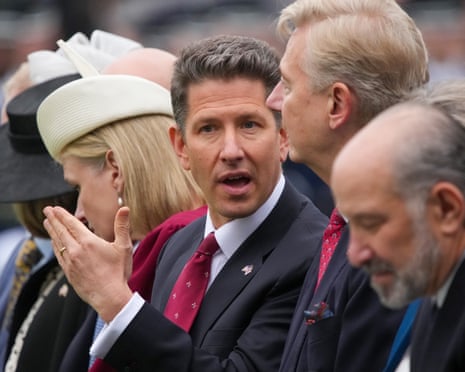
The timing of these remarks during Turner's early weeks in office is particularly noteworthy, as it suggests that the new ambassador entered his role with distinct perspectives on the political landscape both domestically in the UK and within the broader framework of Western international relations. Diplomatic protocol typically encourages careful and measured public statements, yet Turner's comments to students indicate a willingness to engage in frank discussion about political realities. This approach may reflect a broader trend among modern diplomats to be more accessible and forthcoming with the public, though it also demonstrates the potential pitfalls of such candor when remarks are subsequently made public.
The Mandelson controversy that prompted Turner's characterization of Starmer's political position had generated substantial debate within British political circles. Mandelson's recent roles and involvement in government affairs had sparked discussions about party politics, governance, and the direction of the current administration. Turner's observation that the Prime Minister was "on the ropes" during this period suggests that the ambassador viewed the situation as genuinely challenging for Starmer's position and authority within his own party and government.
The ambassador's assertion regarding Israel's special relationship with the United States reflects a careful observation of geopolitical realities and historical patterns of American foreign policy in the Middle East. While the phrase "special relationship" has historically been associated with Anglo-American relations dating back decades, Turner's statement acknowledges the profound and multifaceted nature of US-Israel relations. This reassessment of diplomatic terminology and international positioning represents an important perspective from someone tasked with representing British interests at the highest levels of American government.
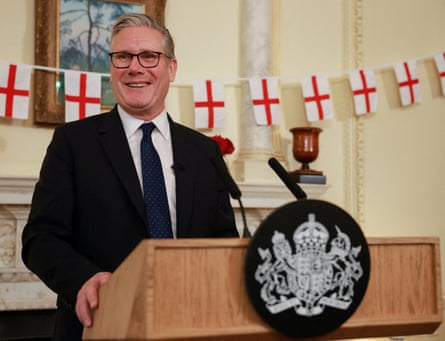
Turner's background and appointment to this prestigious position reflect considerations of diplomatic expertise, political acumen, and the ability to navigate complex international relationships. As the UK's ambassador to the United States, he holds one of the most significant diplomatic posts in the British foreign service, given the centrality of the Anglo-American relationship to global affairs. His willingness to discuss political matters candidly with visiting students suggests an approach to diplomacy that values engagement and dialogue, even if such conversations carry the risk of generating controversy when made public.
The emergence of these private comments raises important questions about the boundaries between private diplomatic discussions and public statements. In an era where information travels rapidly through digital channels and social media, conversations once considered confidential may quickly become public knowledge. This situation illustrates the contemporary challenge facing senior government officials and diplomats who must balance frankness in private conversations with awareness that their remarks may eventually reach broader audiences.
The UK-US relations remain fundamentally important to British foreign policy, and Turner's posting represents a critical moment in managing this essential bilateral relationship. While his comments about Israel's special relationship with Washington may seem to challenge traditional assumptions about Anglo-American primacy, they likely reflect a pragmatic assessment of how American political and strategic interests are currently distributed across different international partnerships. Understanding these dynamics is essential for effective diplomacy and for the UK to position itself appropriately within the broader framework of Western alliances.
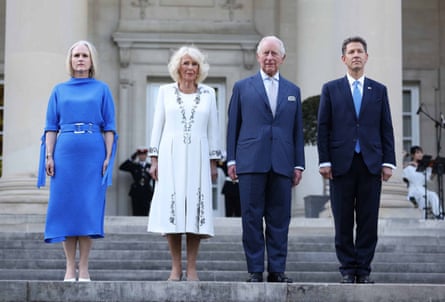
The incident underscores the complexities of modern diplomacy, where public pronouncements must be carefully calibrated while private conversations may carry significant implications if revealed. Turner's comments about Starmer and the Mandelson situation demonstrate how political controversies at home can reverberate in the assessment of senior diplomats abroad. Similarly, his observations about international relationships reflect the careful calculus that diplomatic representatives must maintain when evaluating the relationships between different nations and understanding America's evolving strategic priorities.
Moving forward, this situation may influence how the Turner's subsequent diplomatic engagements are conducted and how carefully future conversations with visiting groups are managed. The incident serves as a reminder that even private diplomatic conversations can become public and that ambassadors must be cognizant of the potential consequences of candid remarks. Nevertheless, Turner's willingness to engage substantively with visitors suggests a commitment to public diplomacy and educational outreach that characterizes modern British diplomatic practice, even when such engagement occasionally generates unexpected controversy or headlines.
Source: The Guardian


