
UK Tech Secretary Urges Swifter Action on Deepfakes to Safeguard Women and Girls

Technology secretary Liz Kendall warns that rapidly evolving deepfake threats outpace government's ability to regulate, calls for faster action to tackle online misogyny.
The UK's Technology Secretary, Liz Kendall, has issued a stark warning about the urgent need for the government to act more quickly in combating the fast-changing threats posed by emerging technologies like deepfakes. In an exclusive interview, Kendall highlighted the heightened risks that women and girls face from these rapidly evolving digital threats.
Kendall stressed that the pace of technological development has far outpaced the government's ability to effectively regulate it, suggesting the potential need for annual reviews of relevant regulations, similar to the annual budget process. This underscores the challenge policymakers face in keeping up with the breakneck speed of innovation in areas like artificial intelligence and digital media.
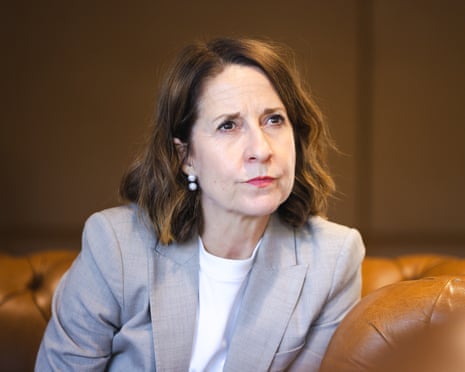
In particular, Kendall expressed grave concerns about the proliferation of deepfakes - synthetic media that uses machine learning to create convincing fake images, audio, and videos. These tools have the potential to be misused to spread misinformation, harass, and exploit women and girls online, often in the form of nonconsensual "deepfake porn."
"The threats from technology are evolving so rapidly that the government's ability to regulate and respond is often playing catch-up," Kendall said. "We need to be much more proactive and agile in addressing these challenges, especially when it comes to protecting vulnerable groups like women and girls from the harms of emerging technologies."
Kendall's comments come amid growing alarm over the potential for deepfakes and other AI-powered tools to be weaponized against women online. Advocacy groups have reported a surge in the nonconsensual creation and sharing of deepfake pornography, which can have devastating psychological and reputational consequences for victims.
In response, Kendall called on tech companies to take more robust action to detect and remove deepfake content, as well as to invest in education and awareness campaigns to help the public identify manipulated media. She also urged lawmakers to consider new regulations and enforcement mechanisms to hold platforms accountable for the harms facilitated on their services.
"The scale and severity of online misogyny and the risks posed by deepfakes are simply unacceptable," Kendall said. "We need a whole-of-society approach to tackle this problem, with technology companies, policymakers, and the public all playing a role. The stakes are too high, especially for women and girls, for us to continue moving at a glacial pace."


