
Ukraine Betrayal: How America Failed Its European Allies

As Ukraine war enters year five, Europe faces America's greatest betrayal. Time for Europe to confront Putin independently and reject Trump's approach.
As the devastating conflict in Ukraine transitions into its fifth brutal year, a profound sense of betrayal reverberates across European capitals. The United States, long considered Europe's most reliable ally, has fundamentally failed in its commitment to defend Ukrainian sovereignty against Russian aggression. This failure represents not merely a diplomatic setback, but the most significant and far-reaching betrayal in recent transatlantic relations, with consequences that will reshape global geopolitics for decades to come.
The scope of America's abandonment extends far beyond simple policy disagreements or strategic miscalculations. European observers witness with growing dismay the subservience to Vladimir Putin, a leader who stands indicted as a war criminal responsible for countless civilian deaths and systematic destruction across Ukraine. This deference to a dictator who has brazenly violated international law represents a fundamental departure from the values that once defined the Western alliance.
Perhaps even more disturbing is the systematic campaign of victim-blaming directed toward Kyiv, with American officials increasingly pressuring Ukraine to make territorial and political concessions to an aggressor who has shown no genuine interest in peaceful resolution. This approach not only undermines Ukrainian sovereignty but establishes a dangerous precedent that aggression will ultimately be rewarded through diplomatic pressure on victims rather than meaningful consequences for perpetrators.
Donald Trump's approach to the Ukrainian crisis has added layers of cynicism that particularly appall European leaders. His crude attempts to monetize the suffering of millions of Ukrainians while simultaneously positioning himself for potential Nobel Peace Prize consideration represent a level of opportunism that shocks even seasoned diplomatic observers. These efforts to extract personal and political gain from mass human suffering reveal a profound moral bankruptcy that extends well beyond policy differences.
The systematic undermining of NATO allies represents another dimension of this comprehensive betrayal. Trump's transactional approach to alliance relationships, combined with his apparent willingness to sacrifice Ukrainian territorial integrity for perceived diplomatic victories, has fundamentally altered European perceptions of American reliability. The trampling of sovereign rights, particularly Ukraine's right to determine its own future, strikes at the heart of principles that European nations believed were shared across the Atlantic.
What proves most painful for European leaders and citizens alike is the recognition that this betrayal comes from a nation they had consistently counted as their closest friend and most dependable partner. The historical bonds forged through two world wars, the Cold War, and decades of cooperation now appear insufficient to maintain American commitment when truly tested by authoritarian aggression.
The literary insight of 18th-century English gothic novelist Ann Radcliffe resonates powerfully in this context: "few circumstances are more afflicting than a discovery of perfidy in those whom we have trusted." This betrayal cuts deeper than disagreements with adversaries because it represents the collapse of fundamental trust relationships that took generations to build.
European leaders increasingly recognize that continued dependence on American security guarantees represents an unsustainable vulnerability. The repeated demonstrations of American unreliability, particularly under Trump's leadership, have catalyzed a fundamental reassessment of European defense capabilities and strategic autonomy. This shift represents not merely a policy adjustment but a historic realignment of global power structures.

The implications of this American abandonment extend far beyond the immediate Ukrainian crisis. European nations now confront the reality that they must develop independent capabilities to confront Putin's imperial ambitions without relying on American support. This necessity for strategic independence, while potentially strengthening European resilience, comes at enormous financial and political costs that could have been avoided through sustained American leadership.
The timing of this betrayal proves particularly consequential as Putin's Russia continues to probe European defenses and democratic institutions. With American commitment in question, European nations must rapidly develop both military capabilities and political coordination mechanisms to address threats that they previously assumed would be managed through transatlantic cooperation.
Trump's recent threats regarding Greenland and his broader dismissive attitude toward European sovereignty serve as stark reminders that American unreliability extends beyond Ukraine to encompass fundamental respect for allied nations. His dark warnings following European rejection of American demands echo authoritarian rhetoric more commonly associated with adversaries than allies.
European memories of these betrayals will persist long after current political leaders leave office. The institutional damage to transatlantic relationships may prove irreversible, as European strategic autonomy becomes not merely an aspiration but an existential necessity. Future American leaders seeking to rebuild these relationships will discover that trust, once broken, proves extraordinarily difficult to restore.

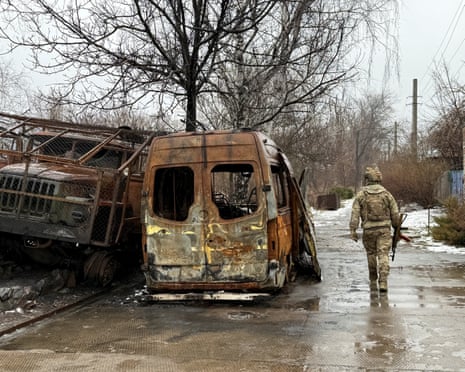
The human cost of American abandonment continues mounting daily across Ukrainian cities and villages. Every civilian casualty, every destroyed hospital and school, every family separated by war represents not merely Russian brutality but also American failure to uphold the international order that it once championed. European observers increasingly view American promises as worthless given this fundamental failure to protect democracy when confronted by determined authoritarianism.
The broader implications for global democracy cannot be overstated. When the world's most powerful democracy abandons smaller democratic nations to authoritarian aggression, it sends an unmistakable signal that democratic values and international law provide insufficient protection against determined autocrats. This lesson will not be lost on other authoritarian leaders contemplating similar aggressive actions.
European nations now face the enormous challenge of developing independent deterrent capabilities while simultaneously managing the diplomatic fallout from American betrayal. This dual burden strains resources and attention at precisely the moment when unified Western response would prove most effective against Russian aggression.
The path forward requires Europeans to embrace both the burden and the opportunity of strategic independence. Rather than continuing to plead with an unreliable ally, European leaders must develop the military capabilities, economic leverage, and diplomatic coordination necessary to confront Putin's regime on their own terms. This transformation, while painful and expensive, may ultimately strengthen European democracy and sovereignty.
The historical parallel to previous moments when Europeans were forced to stand alone against authoritarian aggression provides both sobering context and potential inspiration. Just as previous generations rose to defend democratic values when abandoned by potential allies, contemporary Europeans must find the resolve to protect Ukrainian democracy and their own security interests without American support.
As Trump's influence over American foreign policy continues expanding, Europeans can expect further betrayals and additional pressure to accommodate authoritarian demands. The message from across the Atlantic is clear: Europe cannot depend on American protection and must prepare for a future of strategic independence, regardless of the costs involved.
The Ukrainian crisis thus represents far more than a regional conflict or temporary diplomatic setback. It marks the definitive end of the post-World War II transatlantic security architecture and the beginning of a new era in which Europeans must defend their values and interests through their own capabilities and determination. The American betrayal of Ukraine will be remembered as the moment when Europeans learned they could only depend on themselves in the face of existential threats to democracy and international law.
Source: The Guardian


