
Ukraine's Advanced Defense: Drones and AI Combat Air Raids

Discover how Ukraine is revolutionizing air defense with AI technology and drone interceptors to counter Russian aerial attacks after four years of invasion.
Following nearly four years of Russia's comprehensive military invasion, Ukraine has made substantial progress in defending its airspace against relentless aerial bombardment. The nation's defensive capabilities have evolved dramatically, transforming from reactive measures into a sophisticated, multi-layered approach that combines cutting-edge artificial intelligence technology with innovative drone interception systems. This transformation represents one of the most significant technological advances in modern air defense, demonstrating how wartime necessity can accelerate innovation and strategic adaptation.
The escalation of Russia's aerial campaign has forced Ukrainian military strategists and engineers to think creatively about air defense solutions. Traditional air defense systems, while still valuable, proved insufficient against the sheer volume and variety of aerial threats. Ukrainian forces now face a complex array of challenges including cruise missiles, ballistic missiles, unmanned aircraft systems, and kamikaze drones. Rather than rely solely on conventional military hardware, Ukraine has increasingly turned to drone technology and artificial intelligence systems to create an integrated defense network that can respond more quickly and effectively than human operators alone could manage.
The integration of AI-powered air defense represents a paradigm shift in how Ukraine approaches the threat of Russian aerial attacks. These intelligent systems can process vast amounts of radar data, optical imagery, and acoustic signatures in real-time, identifying potential threats and coordinating responses across multiple defensive platforms simultaneously. The speed of decision-making provided by artificial intelligence gives Ukrainian defenders a critical advantage, allowing them to intercept threats before they reach populated areas or critical infrastructure. This technological leap forward has significantly improved the nation's ability to protect civilians and maintain essential services.
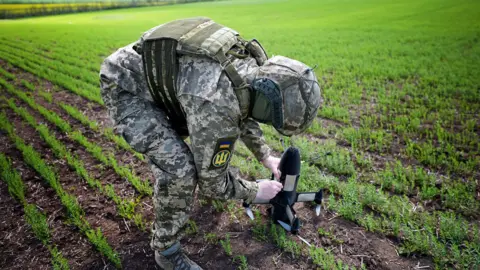
One of the most innovative aspects of Ukraine's new defensive posture involves the deployment of drone interceptor systems that can identify and neutralize incoming threats in the upper atmosphere. These specialized unmanned vehicles are equipped with sensors and targeting systems that allow them to engage enemy drones with precision, reducing collateral damage compared to traditional air defense missiles. The effectiveness of these systems has been demonstrated repeatedly throughout the conflict, with Ukrainian operators successfully intercepting an increasing percentage of incoming aerial threats. This development has fundamentally changed the calculus of aerial combat over Ukrainian territory.
The success rate of Ukrainian air defenses has improved substantially over the course of the invasion. In the early stages of the conflict, Ukrainian forces struggled to counter the volume and sophistication of Russian aerial attacks. However, through a combination of captured equipment, international military aid, domestic innovation, and lessons learned from constant engagement with Russian forces, Ukraine has developed increasingly effective countermeasures. Intelligence gathered from each encounter with enemy aircraft systems provides valuable data that engineers and military planners use to refine and improve their defensive strategies continuously.
International support has played a crucial role in enabling Ukraine's air defense transformation. Western nations have provided advanced radar systems, surface-to-air missiles, and in some cases, drone technology and electronic warfare capabilities. Countries including the United States, Poland, and other NATO members have contributed equipment specifically designed to counter the types of threats Ukraine faces. However, Ukrainian engineers have taken these international contributions and integrated them with their own innovations, creating hybrid systems that are uniquely suited to the particular conditions of the conflict and the specific characteristics of Russian aerial weapons.
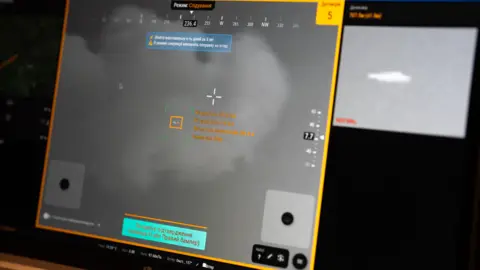
The development of Ukraine's own drone interception technology demonstrates the nation's capacity for rapid innovation under pressure. Ukrainian companies and military research institutes have engineered specialized unmanned systems capable of engaging targets that traditional air defense systems struggle to reach. These homegrown solutions often prove more adaptable and cost-effective than relying entirely on imported systems. The success of these programs has also enhanced Ukraine's technological sovereignty, reducing dependence on foreign systems for critical defense operations and positioning the nation as a potential future exporter of specialized defense technologies.
Artificial intelligence applications extend beyond simple threat identification and interception coordination. Machine learning algorithms analyze patterns in Russian attack strategies, predict likely targets based on historical data, and optimize the positioning of defensive assets across the country. These predictive capabilities allow Ukrainian command and control centers to pre-position resources where they are most likely to be needed, reducing response times and increasing the probability of successful interception. The continuous learning capability of these systems means that they become more effective over time as they encounter and process more real-world threat data.
The human element remains crucial despite the increasing role of automation and artificial intelligence in air defense. Experienced operators supervise the AI systems, make critical decisions about resource allocation, and provide oversight to ensure that automated responses remain appropriate and proportional. This human-in-the-loop approach combines the speed and processing power of artificial intelligence with the judgment and strategic thinking of experienced military personnel. The interaction between human commanders and AI systems has created a defense capability greater than either could achieve independently.
The civilian population has benefited directly from improvements in air defense effectiveness. While complete protection from all aerial threats remains impossible, the reduced number of successful attacks on civilian infrastructure and residential areas has saved countless lives. Critical services including hospitals, power plants, and water treatment facilities receive prioritized protection based on AI threat assessment and resource optimization algorithms. The improved survivability of these essential services has helped maintain basic living conditions for civilians throughout the ongoing conflict, demonstrating how military technological advances can translate into humanitarian benefits.
Looking forward, Ukraine continues to invest in research and development of even more advanced air defense capabilities. The experience gained from four years of continuous engagement with Russian aerial systems has provided invaluable knowledge about the strengths and weaknesses of both attackers and defenders. This expertise positions Ukrainian scientists, engineers, and military planners to contribute meaningfully to the evolution of air defense technology globally. The innovations developed during this conflict will likely influence how air defense systems are designed and deployed by armed forces worldwide for decades to come, establishing Ukraine as a center of excellence in advanced air defense technologies.
The transformation of Ukraine's air defense from a primarily reactive posture to a sophisticated, technology-enabled defensive system reflects the nation's determination and adaptability in the face of existential threat. By combining advanced drone technology with artificial intelligence, international military assistance, and homegrown innovation, Ukraine has created a defensive capability that continues to improve and evolve. The success of this effort demonstrates that rapid technological advancement is possible even during active conflict, and that nations facing existential threats can accomplish extraordinary feats of engineering and strategic adaptation. As the conflict continues, these air defense innovations will remain critical to protecting Ukrainian territory, infrastructure, and civilian lives.
Source: BBC News


