
UN's Secret Mission to Save Palestinian Refugee Archive

Millions of documents chronicling Palestinian history rescued from Gaza and East Jerusalem in a 10-month Unrwa operation to preserve vital refugee records.
In one of the most significant humanitarian preservation efforts in recent years, the United Nations Relief and Works Agency for Palestine Refugees (Unrwa) successfully completed an extraordinary 10-month operation to rescue millions of irreplaceable archival documents from Gaza and East Jerusalem. This covert mission to safeguard decades of Palestinian historical records faced unprecedented logistical and political challenges that threatened to derail the entire operation at multiple critical junctures.
What should have been a straightforward journey from East Jerusalem to Amman—a relatively short drive through the West Bank, down toward the Dead Sea, across the border checkpoint, and into the Jordanian capital—became a monumental undertaking fraught with complications. The Palestinian refugee archive contained millions of documents representing generations of trauma, displacement, and the lived experiences of Palestinian refugees whose stories might otherwise be lost to history. The stakes could not have been higher for preserving this crucial historical record.
During the early summer of 2024, humanitarian workers and archivists employed by Unrwa faced what seemed like an insurmountable obstacle as they attempted to transport and protect these vital historical materials. The geopolitical landscape, combined with security concerns and logistical constraints, transformed what appeared to be a simple cross-border transfer into a complex operation requiring meticulous planning, diplomatic coordination, and unwavering commitment to the preservation mission.

The archive preservation initiative represented far more than a simple administrative task; it was fundamentally about ensuring that the voices, experiences, and documented histories of Palestinian refugees would not be erased or lost due to conflict or neglect. Each document within these vast collections held significance—from personal identification records and family histories to official administrative papers that traced the institutional response to refugee crises over several decades.
The scope of the operation was staggering, with humanitarian workers needing to identify, catalogue, and safely transport millions of documents across conflict-affected regions. The Unrwa mission required unprecedented coordination between international humanitarian organizations, local authorities, and security personnel. Teams had to work under conditions of uncertainty, navigating through territories where instability could shift rapidly and unexpectedly.
Archivists and heritage preservation specialists involved in the operation understood that delay could result in catastrophic loss. Environmental factors including exposure to conflict zones, inadequate storage conditions, and the general deterioration that accompanies displacement of records all posed serious threats to the materials' long-term survival. The urgency of the situation drove the humanitarian workers to maintain focus and momentum despite the numerous challenges they encountered.
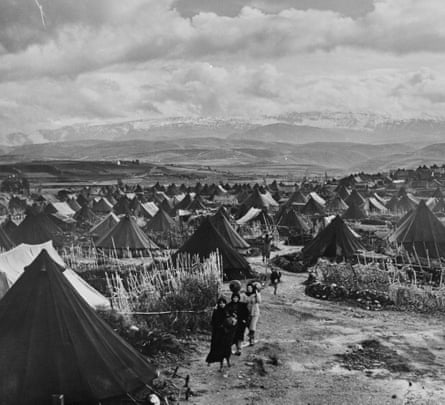
The document rescue operation drew upon expertise from international archival organizations and heritage preservation specialists who brought their knowledge of best practices for handling sensitive historical materials. These professionals understood that once lost or damaged, many of these documents could never be replaced, as they represented the only official records of many refugee families' journeys, legal statuses, and humanitarian assistance received over decades.
Security remained a paramount concern throughout the extended mission. The route from East Jerusalem to Amman passed through multiple jurisdictions with varying levels of stability and security infrastructure. Unrwa teams had to coordinate extensively with various authorities to ensure safe passage for the irreplaceable materials they were transporting. The operation required careful timing, secure vehicles, and contingency plans for potential complications.
The successful completion of this 10-month archive mission stands as a testament to the dedication of the humanitarian workers and archivists who prioritized the preservation of Palestinian historical records above personal convenience or risk aversion. Their commitment to safeguarding these materials demonstrates the profound importance placed on maintaining historical documentation for future generations of Palestinian refugees and scholars studying this period of Middle Eastern history.
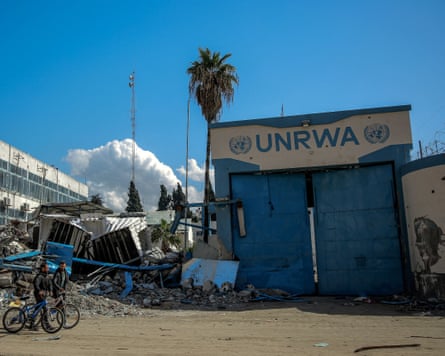
The successful transfer of these materials to safe archival facilities in Jordan ensures that the Palestinian refugee documentation will be preserved for future research, legal proceedings, and historical study. Archives containing personal and administrative records serve multiple crucial purposes: they provide evidence for legal claims, support historical research, enable genealogical investigations, and preserve the collective memory of displaced communities.
Looking forward, the completion of this operation raises important questions about the ongoing preservation of other vulnerable archives and historical records in conflict zones throughout the world. The Unrwa archive project demonstrates both the critical importance of preserving historical documentation and the complex challenges involved in protecting cultural and historical materials during periods of regional instability and humanitarian crisis.
The materials now safely housed in proper archival facilities represent invaluable resources for scholars, legal experts, and the refugee communities themselves. Future researchers will be able to access these records to better understand the historical experiences of Palestinian refugees, document patterns of displacement and resettlement, and study the institutional responses to refugee crises that have shaped the region for generations. The successful completion of this preservation mission ensures that this irreplaceable historical record will survive for centuries to come.
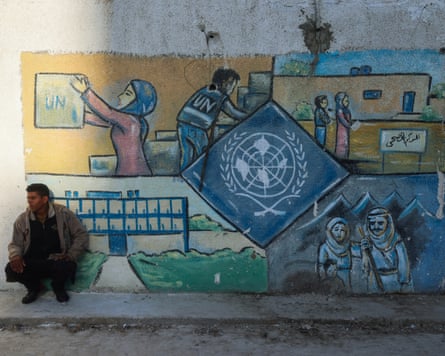
This extraordinary humanitarian undertaking ultimately succeeded in its primary objective: to rescue and preserve millions of documents that chronicle the lives, experiences, and histories of Palestinian refugees. The 10-month operation, despite its considerable challenges and obstacles, accomplished what many thought impossible, demonstrating the power of determined humanitarian action to protect what matters most for future generations.
Source: The Guardian


