
Undercover Operation Stops ISIS Terror Plot in UK

How British police prevented a planned massacre targeting Jewish communities in Manchester through an elaborate undercover sting operation.
A sophisticated undercover operation by British authorities successfully prevented what could have been one of the most devastating terrorist attacks on UK soil, as revealed in a detailed investigation by The Guardian's community affairs correspondent Chris Osuh. The plot, orchestrated by Islamic State supporters, aimed to carry out a mass casualty attack targeting Jewish communities in Manchester, demonstrating the ongoing threat posed by extremist groups operating within Britain.
At the center of this chilling conspiracy was Walid Saadaoui, a man whose public persona starkly contrasted with his hidden allegiances. On the surface, Saadaoui appeared to be the epitome of successful integration into British society. His journey from Tunisia to the UK painted a picture of legitimate immigration and entrepreneurship that masked far more sinister intentions.
Saadaoui's background in the entertainment industry in Tunisia, where he had worked as a holiday entertainer organizing dance shows and quiz nights at tourist resorts, provided him with skills in organization and public engagement that would later prove crucial to his terrorist plotting. His ability to present a friendly, sociable facade had been honed through years of entertaining tourists, making him an ideal candidate for operating under the radar of security services.
Following his relocation to the United Kingdom, Saadaoui took steps that further cemented his apparent legitimacy within British society. His marriage to a British woman provided him with legal status and deeper community connections, while his venture into the restaurant business established him as a local entrepreneur. His passion for bird keeping added another layer to his carefully constructed civilian identity, presenting him as someone with normal hobbies and interests.
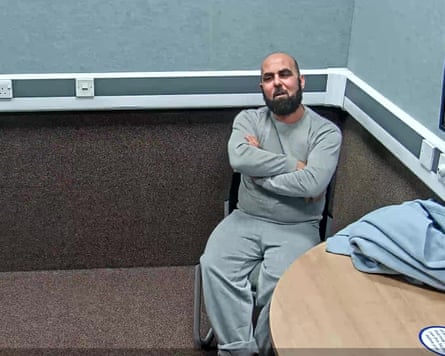
However, beneath this carefully maintained exterior, Saadaoui harbored dangerous extremist beliefs and had secretly pledged his allegiance to the Islamic State terrorist organization. This dual existence highlights the challenges faced by security services in identifying potential threats, particularly when suspects have successfully integrated into local communities and maintain legitimate businesses and relationships.
The undercover police operation that ultimately thwarted this plot represents a significant success for British counter-terrorism efforts. The investigation required months of careful planning and execution, with undercover officers infiltrating the terrorist network and gathering crucial evidence about the planned attack. This type of operation demands exceptional skill and courage from law enforcement personnel who must maintain their cover while gathering intelligence on potentially deadly plots.
The target selection of Jewish communities in Manchester reflects the antisemitic ideology that drives much of Islamic State's propaganda and operational planning. Manchester's Jewish community, like many across Britain, has faced increasing security concerns in recent years, with synagogues and Jewish schools implementing enhanced security measures in response to growing threats from various extremist groups.
The counter-terrorism investigation revealed the sophisticated nature of modern terrorist planning, with suspects utilizing various communication methods and operational security techniques learned from Islamic State training materials and online propaganda. The ability of these individuals to maintain normal lives while planning mass casualty attacks underscores the evolving nature of the terrorist threat facing Western democracies.
Intelligence services have noted that the profile of modern terrorists often differs significantly from historical patterns, with many suspects appearing well-integrated into society while harboring extremist views. This evolution in terrorist methodology has forced law enforcement agencies to develop more sophisticated surveillance and infiltration techniques to identify and prevent attacks before they occur.
The success of this particular sting operation demonstrates the effectiveness of human intelligence gathering in counter-terrorism work. While technological surveillance plays an important role in modern security operations, the ability of trained undercover officers to infiltrate terrorist networks remains crucial for gathering actionable intelligence and preventing attacks.
The case also highlights the international nature of modern terrorism, with suspects often having connections across multiple countries and drawing inspiration from global extremist movements. Saadaoui's background spanning Tunisia and the UK illustrates how terrorist networks exploit international mobility and communication systems to plan and coordinate attacks.
British authorities have emphasized that the threat from Islamic State-inspired terrorism remains significant despite the territorial defeat of the group in Syria and Iraq. The organization's ideology continues to inspire lone actors and small cells across Europe and beyond, making cases like this one particularly important for understanding and countering ongoing threats.
The investigation's success required close coordination between multiple agencies, including MI5, counter-terrorism police units, and local law enforcement. This collaborative approach has become standard practice in modern counter-terrorism operations, recognizing that complex plots often require diverse expertise and resources to investigate effectively.
Community engagement has also played a vital role in preventing terrorist attacks, with law enforcement agencies working closely with community leaders to identify concerning behavior and provide alternative pathways for individuals at risk of radicalization. The prevention of terrorism increasingly relies on these community partnerships alongside traditional intelligence and law enforcement activities.
The case serves as a reminder of the vigilance required to protect democratic societies from those who would use violence to advance extremist ideologies. The dedication and professionalism of the officers involved in this undercover operation prevented what could have been a tragedy of immense proportions, saving countless innocent lives through their courageous work.
As the threat landscape continues to evolve, cases like this provide valuable insights for security services worldwide. The methods used by both the terrorists and the investigating officers offer lessons that can be applied to future operations, helping to refine and improve counter-terrorism capabilities in an ever-changing security environment.
Source: The Guardian


