
Unlocking the Potential: Intel's Core Ultra CPUs Reviewed

Explore the performance and value of Intel's latest Core Ultra 270K and 250K Plus CPUs, as we assess their capabilities in a challenging PC component market.
Intel's Core Ultra 200S Plus chips, the $199 Core Ultra 5 250K Plus and $299 Core Ultra 7 270K Plus, have arrived in a market dominated by sky-high prices for PC components. Despite the challenges, these Arrow Lake-based processors are solid performers, offering reasonable power efficiency and providing better value than AMD's offerings for heavy multi-threaded workloads, though older non-X3D AMD chips still hold a slight edge in gaming.
The current state of the PC component market is a far cry from the halcyon days of 2025, when a 32GB DDR5 kit and a decent 2TB SSD could be had for less than $200. Today, consumers would pay three to four times as much for similar components, thanks to the AI data center-fueled demand for RAM and flash memory chips.
In this review, we'll take a deep dive into the capabilities of Intel's latest Core Ultra offerings, examining their performance, power efficiency, and value proposition in the context of the challenging market conditions. Our analysis will help you determine whether these chips are the right choice for your next PC build or upgrade.
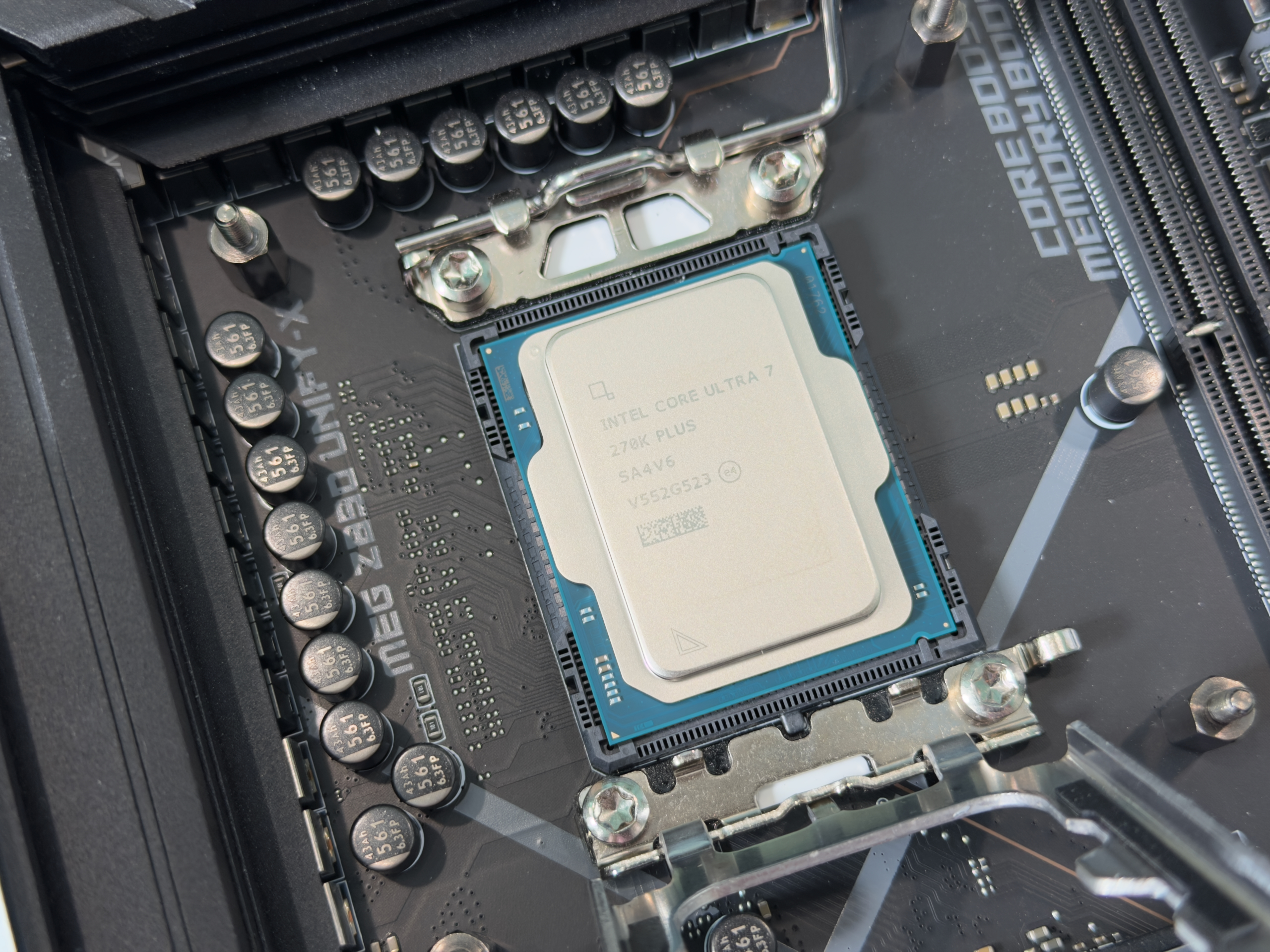
The Core Ultra 270K Plus and Core Ultra 250K Plus are the latest additions to Intel's lineup, bringing enhanced capabilities to the table. These chips are built on the Arrow Lake architecture, which promises improved performance and efficiency compared to previous generations.
One of the key highlights of these CPUs is their power efficiency. Despite the demanding workloads they can handle, the Core Ultra chips maintain a respectable power draw, making them a viable option for a wide range of system configurations, from high-end gaming rigs to compact workstations.
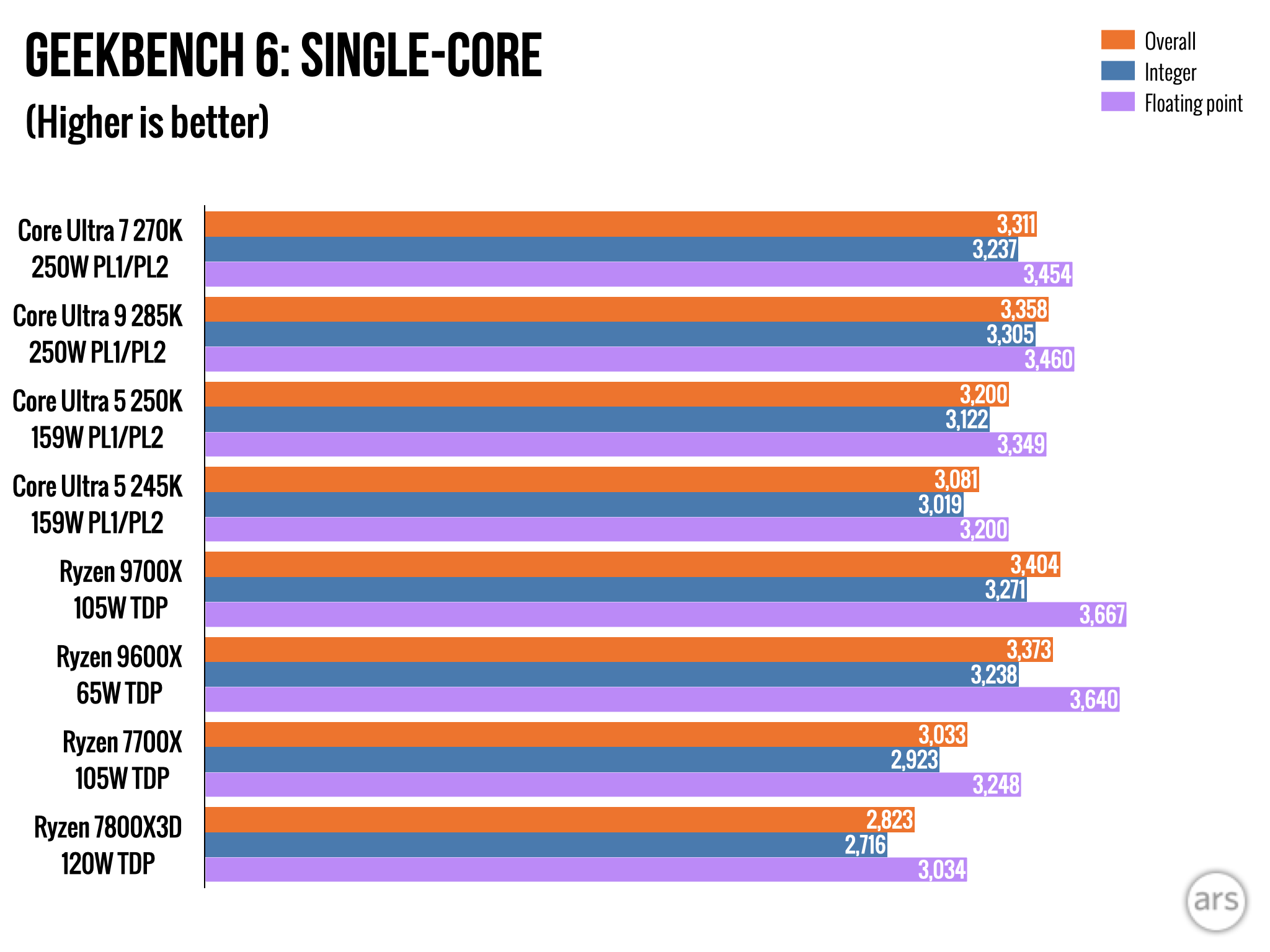
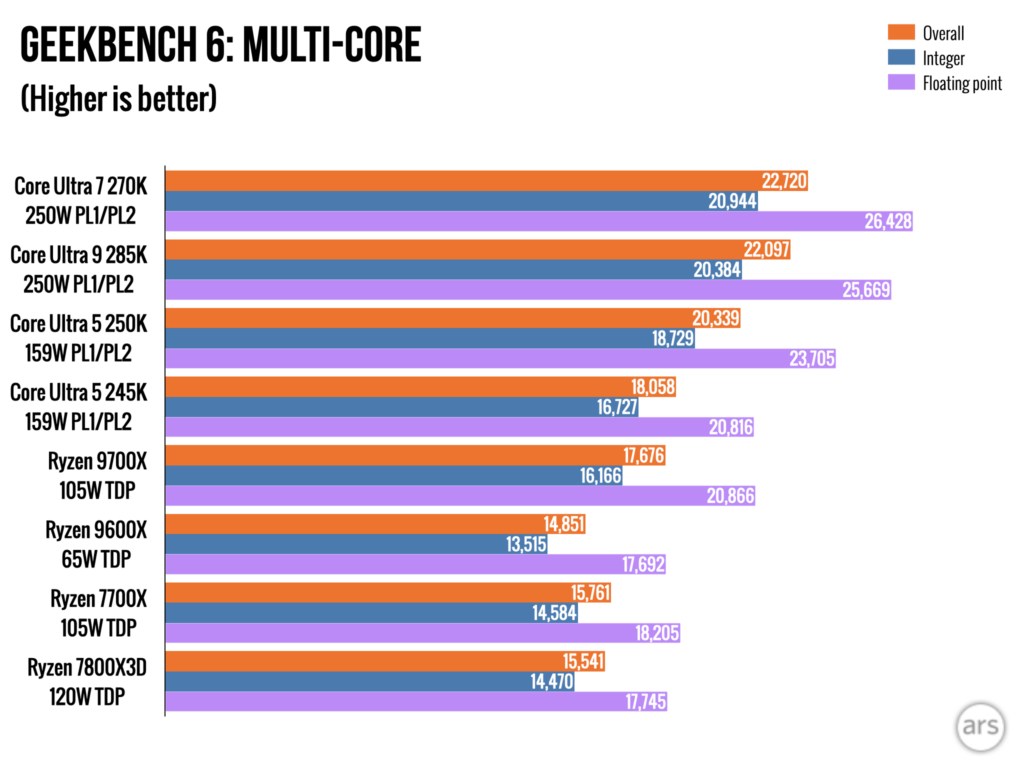
In our testing, the Core Ultra 270K Plus and Core Ultra 250K Plus delivered impressive performance, particularly in multi-threaded workloads. They managed to outshine AMD's current offerings in these scenarios, providing a compelling value proposition for users who rely on heavily parallelized tasks, such as video editing, 3D rendering, or scientific simulations.
However, it's worth noting that even years-old non-X3D AMD chips still maintain a slight edge in gaming performance. While the Core Ultra CPUs are more than capable of delivering a smooth gaming experience, users who prioritize pure gaming performance may find themselves gravitating towards AMD's solutions.
One of the standout features of the Core Ultra CPUs is their power efficiency. Despite their impressive performance, these chips manage to maintain a relatively low power draw, making them a compelling choice for users who value both performance and energy efficiency.
Our testing revealed that the Core Ultra 270K Plus and Core Ultra 250K Plus strike a good balance between raw power and power consumption, making them well-suited for a wide range of system configurations, from high-end gaming rigs to compact workstations.
In conclusion, Intel's Core Ultra 270K Plus and Core Ultra 250K Plus are solid performers that offer a compelling value proposition in the current challenging PC component market. While they may not be the absolute best choice for pure gaming performance, their multi-threaded prowess and power efficiency make them a strong contender for users who require a well-rounded, high-performance CPU for their next build or upgrade.
Source: Ars Technica


