
Unveiling a New Geopolitical Landscape: Middle East Quartet Talks Pave the Way

Discover how the foreign ministers' meeting in Islamabad signals the birth of a groundbreaking initiative to reshape the Middle East's political landscape after the Iran war.
The recent gathering of foreign ministers from Egypt, Pakistan, Saudi Arabia, and Turkey in Islamabad has sparked a flurry of diplomatic activity, signaling the birth of a new initiative that aims to redefine the geopolitical landscape of the Middle East in the aftermath of the Iran war. This one-day meeting was more than just a routine diplomatic engagement; it was the official opening ceremony of a bold plan that has captured the attention of diplomats worldwide.
While these four nations have convened as a quartet before, the Islamabad summit marked a significant milestone, as it laid the groundwork for a concerted effort to curb the influence of Israel and Iran in the region. The meeting was not merely a discussion of a ceasefire in Iran, but a strategic move to establish a new order that would reshape the power dynamics in the Middle East.
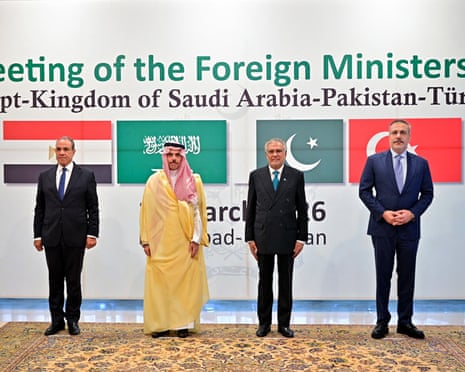
The meeting in Islamabad was the culmination of months of behind-the-scenes diplomacy, as the four countries sought to find common ground and a unified approach to addressing the complex challenges facing the region. Egypt, Pakistan, Saudi Arabia, and Turkey have long been key players in the Middle East, and their collective influence has the potential to significantly alter the course of events in the post-war era.
One of the primary goals of this new initiative is to counterbalance the dominance of Israel and Iran, two of the region's most powerful and influential actors. The four nations, each with its own unique geopolitical interests and alliances, have recognized the need for a coordinated effort to assert their influence and shape the future of the Middle East.
The meeting in Islamabad was a significant step forward in this endeavor, as the foreign ministers engaged in intensive discussions and negotiations to establish the framework for this new order. The details of the plan remain closely guarded, but it is clear that the four nations are committed to working together to address the challenges and opportunities that lie ahead.
As the world watches the unfolding events in the Middle East, the Islamabad meeting has become a crucial turning point in the region's geopolitical landscape. The foreign ministers' discussions have set the stage for a new era of cooperation and strategic positioning, as these four influential nations seek to assert their collective power and influence in the post-war era.
The significance of this initiative cannot be overstated. It represents a fundamental shift in the balance of power in the Middle East, with the potential to reshape the region's political and economic dynamics for years to come. As the world waits to see how this new order will unfold, one thing is certain: the Islamabad meeting has laid the foundation for a profound and lasting change in the geopolitical landscape of the Middle East.
Source: The Guardian


