
Unveiling the Powerful M5 Pro and M5 Max: A Leap Forward in Apple Silicon

Discover the surprising departures and technical advancements of Apple's latest M5 Pro and M5 Max chips, reshaping the future of Apple Silicon.
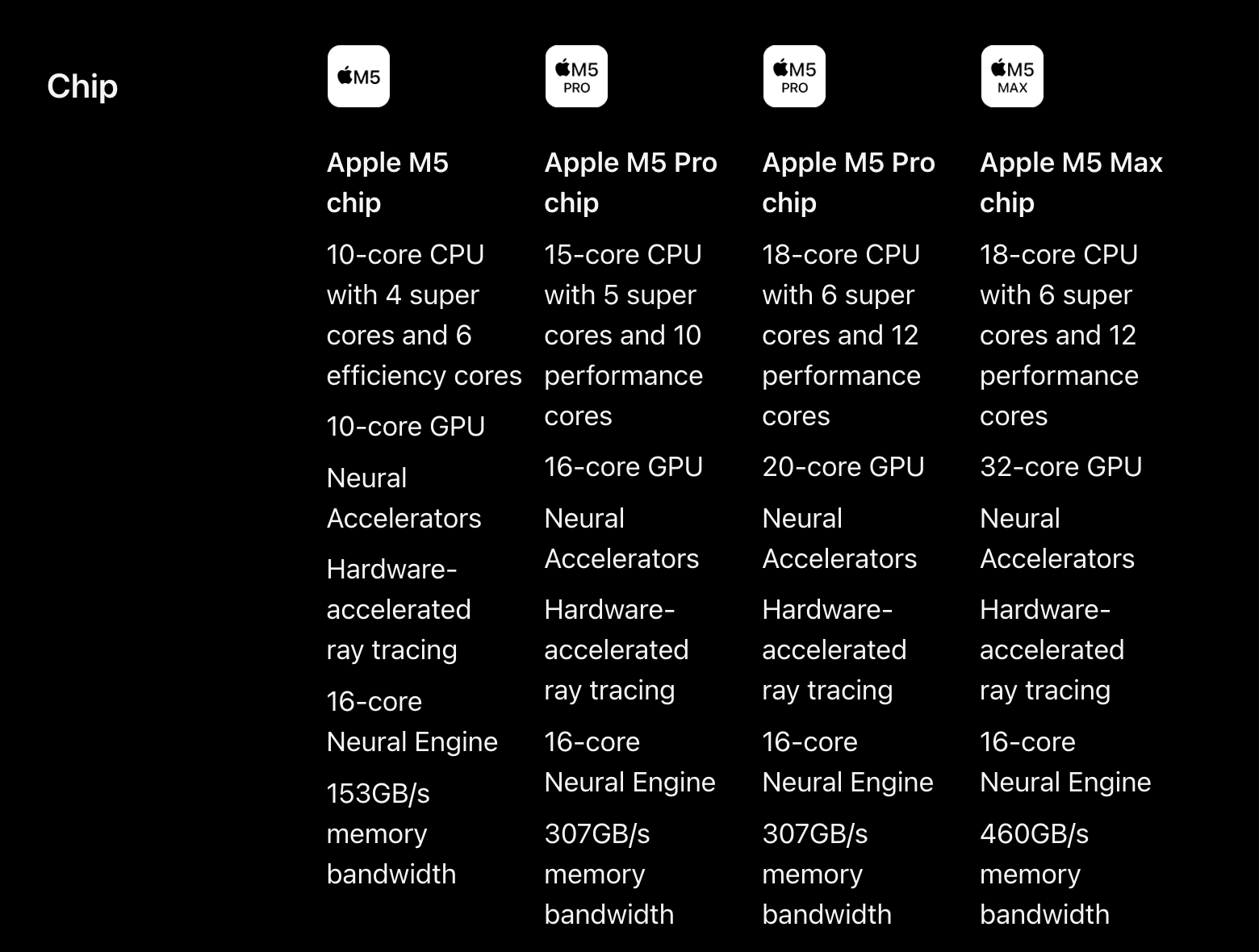
Apple has unveiled the highly anticipated M5 Pro and M5 Max, the newest members of the M5 chip family, as part of the latest MacBook Pro update. Traditionally, the Pro and Max chips have built upon the basic chip's foundation, scaling up the CPU cores, GPU cores, and memory bandwidth. However, the M5 chips represent a surprisingly significant departure from past generations, both in terms of the CPU architectures they employ and how they are packaged together.
While the full impact of these changes on performance remains to be seen until we have the hardware in hand for testing, the technical details revealed about the new updates offer a glimpse into how the M5 chip family stacks up against the previous generations of Apple Silicon chips.
CPU Architecture: The M5 chips feature a significant shift in CPU architecture, moving away from the familiar Firestorm and Icestorm cores used in past M-series chips. Instead, they now incorporate a new Nitro core design, which is expected to deliver improved performance and efficiency.
This architectural change is a departure from the incremental updates we've seen in previous M-series chips, suggesting Apple has invested significant resources in developing a more advanced CPU design for the M5 family.
Chip Packaging: Another noteworthy change is in how the M5 chips are packaged. Unlike the monolithic design of previous M-series chips, the M5 Pro and M5 Max feature a multi-die configuration, where the CPU, GPU, and other components are housed in separate dies and connected via high-speed interconnects.
This approach allows for greater flexibility in scaling and customization, enabling Apple to tailor the chip's capabilities to specific use cases and power requirements more efficiently.

Performance Implications: The architectural and packaging changes in the M5 chips are expected to have a significant impact on performance, power efficiency, and thermal management. While we'll have to wait for hands-on testing to see the full extent of these improvements, the M5 family is poised to set a new benchmark for Apple Silicon, pushing the boundaries of what's possible in mobile computing.
As the tech world eagerly anticipates the arrival of the new MacBook Pro models equipped with these cutting-edge M5 chips, the industry is abuzz with speculation about the transformative potential of these advancements in Apple's silicon journey.
Source: Ars Technica


