
US-Australia Minerals Deal Enabled Alcoa Forest Clearing

Secret document reveals Australia's decision to let Alcoa continue clearing WA jarrah forest was influenced by Trump-era critical minerals agreement.
A previously undisclosed government document has exposed that Australia's critical minerals agreement with the United States played a pivotal role in the controversial decision to permit American mining corporation Alcoa to continue its extensive clearing operations in Western Australia's pristine jarrah forest ecosystem. The revelation comes amid growing scrutiny over the balance between economic partnerships and environmental protection in Australia's resource sector.
The internal documentation further exposes a troubling pattern of illegal forest clearing that persisted for more than a decade and a half, with Alcoa conducting unauthorized land clearing for its bauxite extraction operations despite repeated warnings and compliance notices from federal environmental authorities. This extended period of non-compliance raises serious questions about regulatory oversight and enforcement mechanisms within Australia's environmental protection framework.
Environmental advocacy groups have responded with fierce criticism to what they characterize as an "unprecedented" financial penalty of $55 million, arguing that the punishment addresses only a fraction of the company's alleged environmental violations. The enforceable undertaking penalty specifically targets clearing activities that occurred during a six-year window from 2019 to 2025, leaving fifteen years of earlier unauthorized clearing practices effectively unaddressed by regulatory action.
Conservation organizations have expressed particular frustration that the substantial monetary penalty fails to encompass the full scope of environmental damage allegedly caused by Alcoa's operations in the region south of Perth. They argue that this selective enforcement approach sets a dangerous precedent for multinational corporations operating in Australia's environmentally sensitive areas.
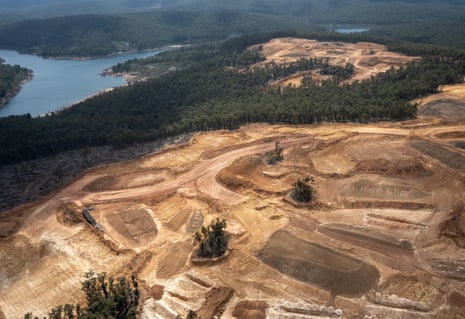
Environment Minister Murray Watt announced the penalty during a Wednesday press conference, confirming that the enforceable undertaking specifically addresses unauthorized clearing of known habitat areas that provide critical support for nationally protected species. The clearing activities occurred without proper approval under the Environment Protection and Biodiversity Conservation (EPBC) Act, Australia's primary federal environmental legislation designed to protect matters of national environmental significance.
The minister's announcement detailed how Alcoa's operations had systematically removed vegetation from areas identified as crucial habitat for threatened species, including several varieties of native wildlife that depend on the jarrah forest ecosystem for survival. These protected species have experienced significant population pressures due to habitat loss and fragmentation across Western Australia's southwest region.
In conjunction with the penalty announcement, Watt revealed his decision to grant Alcoa a national interest exemption that permits the company to continue its forest clearing activities for an additional 18-month period. This exemption allows ongoing operations in the northern jarrah forest while government officials conduct a comprehensive evaluation of Alcoa's ambitious expansion proposal for its Huntly and Willowdale mining facilities.
The proposed expansion would extend Alcoa's mining operations through 2045, representing a significant long-term commitment to bauxite extraction in the region. The expansion plans encompass substantial additional areas of jarrah forest, raising concerns among environmental scientists about cumulative impacts on ecosystem integrity and biodiversity conservation efforts in Western Australia.

The newly revealed document provides crucial insight into the geopolitical considerations that influenced Australia's regulatory approach to Alcoa's operations. The Australia-US minerals partnership, negotiated during the Trump administration, established a framework for enhanced cooperation in critical minerals supply chains, positioning Australia as a key strategic supplier for American industrial and defense requirements.
This bilateral agreement encompasses various mineral commodities considered essential for national security purposes, including rare earth elements, lithium, and bauxite – the primary ore used in aluminum production. The partnership reflects broader concerns about supply chain security and reducing dependence on Chinese mineral exports, making Australian mining operations strategically significant for both nations' economic and security interests.
Industry analysts note that bauxite mining represents a crucial component of Australia's export economy, with Western Australian operations supplying significant quantities of raw materials to global aluminum production facilities. The jarrah forest region contains some of the world's highest-grade bauxite deposits, making it economically attractive for continued extraction despite environmental concerns.
The economic implications of restricting Alcoa's operations extend beyond immediate mining activities to encompass downstream processing facilities, transportation infrastructure, and regional employment opportunities. Thousands of workers depend directly or indirectly on bauxite mining operations throughout Western Australia's southwest region, creating complex social and economic considerations for regulatory decision-making.
Environmental scientists have raised serious concerns about the long-term ecological consequences of continued clearing in the jarrah forest ecosystem. Research indicates that these ancient forest systems support extraordinary biodiversity, including numerous endemic species found nowhere else on Earth. The jarrah forest's unique evolutionary history has produced complex ecological relationships that take centuries to develop and cannot be easily restored once disrupted.
The forest ecosystem provides critical habitat for several nationally threatened species, including various bird species, mammals, and plant communities that have adapted specifically to jarrah forest conditions. Scientists warn that ongoing fragmentation and clearing activities threaten to push these species toward extinction, particularly when combined with other stressors such as climate change and urban development pressures.
Recent ecological studies have documented declining populations of key indicator species throughout the jarrah forest region, with habitat loss identified as a primary contributing factor. The cumulative impact of multiple mining operations, combined with historical clearing for agriculture and urban development, has already significantly reduced the total area of intact jarrah forest ecosystem remaining in Western Australia.
Conservation biologists emphasize that the jarrah forest's ecological value extends far beyond individual species protection to encompass broader ecosystem services including carbon sequestration, water cycle regulation, and climate moderation. These functions become increasingly important as Australia grapples with the escalating impacts of climate change and seeks to meet international commitments for emissions reduction and environmental protection.
The regulatory framework governing mining approvals in Australia involves complex interactions between federal and state authorities, with environmental protection responsibilities distributed across multiple agencies and jurisdictions. The EPBC Act provides federal oversight for matters of national environmental significance, while state governments maintain primary responsibility for mining regulation and approval processes.
Legal experts suggest that the extended period of unauthorized clearing revealed in the government document highlights potential weaknesses in coordination between regulatory agencies and enforcement mechanisms. The fifteen-year timeframe of alleged non-compliance raises questions about monitoring systems and the effectiveness of existing penalty structures in deterring environmental violations by major corporations.
The enforceable undertaking mechanism represents one of several regulatory tools available to address environmental violations, allowing for negotiated settlements that combine financial penalties with specific commitments for environmental improvement and compliance enhancement. Critics argue that this approach may be insufficient to address the scale of environmental damage allegedly caused by prolonged unauthorized clearing activities.
Mining industry representatives contend that modern extraction and rehabilitation practices have evolved significantly over the past two decades, with improved technologies and methodologies designed to minimize environmental impacts and enhance ecosystem restoration outcomes. They argue that contemporary mining operations incorporate sophisticated environmental management systems and monitoring protocols that were not available during earlier phases of resource extraction.
The strategic importance of critical minerals partnerships has gained prominence in recent years as nations seek to secure reliable supply chains for materials essential to renewable energy technologies, advanced manufacturing, and defense applications. Australia's abundant mineral resources position the country as a crucial supplier for global efforts to transition toward cleaner energy systems and reduce greenhouse gas emissions.
However, the tension between resource extraction and environmental protection continues to challenge policymakers as they navigate competing priorities for economic development and ecological conservation. The Alcoa case exemplifies these broader conflicts, highlighting the difficulty of balancing immediate economic benefits with long-term environmental sustainability objectives in resource-dependent economies.
International observers note that Australia's approach to mining regulation and environmental enforcement will influence global perceptions of the country's commitment to sustainable development principles and environmental stewardship. The resolution of the Alcoa situation may establish important precedents for how future conflicts between mining interests and environmental protection are addressed within Australia's regulatory framework.
As the government continues its evaluation of Alcoa's expansion proposal, stakeholders across the environmental, economic, and political spectrum are closely monitoring developments that could shape the future of resource extraction in Western Australia's remaining native forest ecosystems.
Source: The Guardian


