
US-China Summit Photo Sparks Outrage Over All-Male Delegation

A photograph from Trump and Xi's Beijing meeting drew criticism for the complete absence of women, raising concerns about gender representation in global diplomacy.
A significant diplomatic moment between the United States and China has become the center of controversy, not over policy matters or trade discussions, but over what was noticeably absent from the official delegation photograph. During Donald Trump and Xi Jinping's high-profile meeting at Beijing's Great Hall of the People, observers were struck by the all-male composition of both delegations, prompting widespread criticism about gender representation in international relations and the visibility of women's participation in shaping global affairs.
The bilateral meeting itself was marked by all the traditional ceremonial elements expected at such a prestigious international gathering. The Chinese hosts orchestrated an elaborate display featuring meticulously choreographed Chinese military personnel, children enthusiastically waving both American and Chinese flags, and carefully arranged rows of senior government officials alongside America's most prominent business executives. Every detail appeared carefully planned to project power, stability, and diplomatic gravitas.
Yet beneath the surface of this carefully constructed visual narrative lay a glaring omission that did not escape the attention of gender equality advocates and international relations observers. When the delegations gathered around the table for the official photograph, not a single woman was present from either the American or Chinese side of the negotiations. This conspicuous absence immediately sparked a wave of criticism across social media platforms and among commentators who viewed the image as a powerful and troubling symbol of patriarchal dominance in global diplomacy.
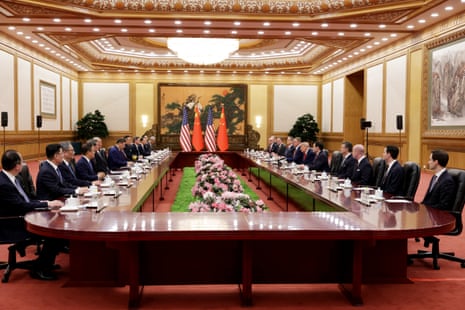
The photograph quickly became a focal point for discussion about gender dynamics in international relations and political leadership. Critics characterized the image as "masculine, militarized and exclusionary," arguing that it sent a clear message about whose voices matter in determining the direction of global policy. The visual representation of an entirely male-led delegation appeared to suggest that decisions affecting billions of people worldwide were being made exclusively by men, without the input or perspective of women leaders and experts.
Many observers drew connections between the composition of the delegation and broader concerns about women's participation in high-level diplomatic negotiations. Advocates pointed out that the photograph seemed to reinforce outdated notions of power and leadership, suggesting that international relations remained a domain where women were systematically excluded from the table where consequential decisions are made. The symbolism was particularly noteworthy given that both countries have accomplished female leaders and experts who could have contributed meaningfully to discussions about trade, security, technology, and other critical bilateral issues.
The criticism was framed in terms of what the photograph communicated about global priorities and values. Commentators emphasized that women's voices and perspectives are essential in shaping international policy, particularly on issues that affect gender-specific concerns such as labor rights, education, healthcare, and human rights. By presenting an entirely male delegation, the photograph appeared to discount the relevance of these perspectives in bilateral negotiations that would have far-reaching consequences.
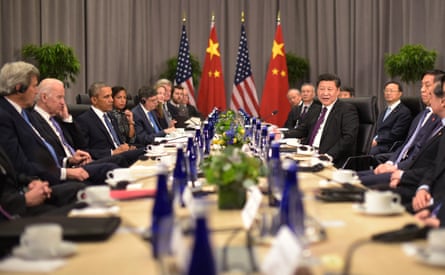
The controversy also raised questions about how both nations approach gender representation in their diplomatic corps and executive leadership. Observers noted that while both the United States and China have women in positions of significant authority and expertise, none were selected to be part of this high-profile delegation. The decision to exclude women from such a prominent meeting and its official documentation prompted discussions about whether female leaders were being deliberately sidelined or whether institutional biases were at play in the selection process.
Beyond the immediate criticism, the incident highlighted broader patterns in international diplomacy where gender representation in negotiations remains a persistent challenge. Historical analysis of major diplomatic summits and trade negotiations has shown that women frequently comprise a smaller percentage of delegations than their representation in government or business leadership would suggest. This pattern suggests systemic issues in how delegations are selected and who is considered essential for high-stakes international discussions.
The visual nature of the photograph made the absence of women impossible to ignore or dismiss. Unlike statistical reports or employment data that can be debated or contextualized, the image provided stark, undeniable evidence of the all-male composition of the delegations. This concrete visual representation proved far more impactful than abstract discussions about gender gaps in international relations, making it difficult for anyone to overlook or rationalize the exclusion.
Some defenders of the delegation composition argued that individual participants were selected based on their specific expertise and relevance to the bilateral agenda. However, critics countered that this argument itself revealed the underlying problem: if women were not selected based on expertise, it suggested either that they were not considered to possess relevant expertise, or that their expertise was not being adequately valued or recognized. Either interpretation pointed to systemic issues in how international diplomacy values and includes women's contributions.
The incident also occurred within a broader context of global conversations about gender equity in leadership across all sectors. International organizations, corporations, and governments increasingly faced pressure to demonstrate meaningful progress toward gender parity in senior positions and key decision-making roles. A high-profile diplomatic meeting that excluded women entirely appeared to represent a step backward in these efforts, particularly given the global platform and media attention surrounding the event.
The photograph served as a powerful reminder that despite decades of progress toward gender equality, women remain significantly underrepresented in the highest levels of international relations and diplomatic negotiations. The absence of women from this delegation was not merely an oversight or coincidence, but rather reflected deeper structural issues in how both nations approach representation and inclusion in their most important foreign policy activities. The visual message was clear: women's voices, perspectives, and expertise were deemed unnecessary for determining the course of US-China relations and global affairs.
Moving forward, the controversy surrounding this photograph may prompt both nations to reevaluate their delegation practices and consider more inclusive approaches to assembling representatives for major international meetings. The international community's reaction demonstrated that such oversights no longer go unnoticed or unchallenged, particularly when they involve such visible and consequential diplomatic moments. Whether this criticism translates into meaningful change in how delegations are selected and composed remains to be seen, but the discussion has certainly elevated awareness about the ongoing challenge of achieving gender equity in international diplomacy and global governance.
Source: The Guardian


