
US Clears 10 Chinese Firms for NVIDIA H200 AI Chips

US reportedly permits Chinese companies to purchase NVIDIA's advanced H200 AI chips. Reuters reports no deliveries have been made yet despite approval.
In a significant development regarding the complex geopolitical landscape surrounding artificial intelligence chip exports, the United States has reportedly granted approval for approximately 10 Chinese companies to purchase NVIDIA's latest and most sought-after H200 AI chips. This decision marks an important moment in the ongoing negotiations between Washington and Beijing over advanced semiconductor technology, which has become increasingly contentious amid broader trade tensions and concerns about technological supremacy.
According to reporting from Reuters, the approval represents a notable shift in US export policy toward China, particularly given the stringent controls that have been implemented in recent years to prevent cutting-edge AI hardware from reaching Chinese entities that might use the technology for military or surveillance purposes. The H200 chips from NVIDIA are among the most advanced artificial intelligence accelerators available on the market, designed to handle complex machine learning workloads and large language model operations that power modern AI applications.
However, despite receiving the green light from US authorities, Reuters indicates that NVIDIA has yet to execute any actual deliveries of the H200 chips to these approved Chinese companies. This gap between regulatory approval and physical product transfer suggests that additional steps or procedures may need to be completed before the semiconductor shipments can be finalized, or that the companies may still be in the procurement and planning phases of their orders.
The situation highlights the delicate balance that technology companies like NVIDIA must maintain between commercial interests and government regulations. NVIDIA, as a US semiconductor manufacturer, is bound by Export Administration Regulations (EAR) and must obtain appropriate licenses before selling certain advanced chips to foreign entities, particularly those in countries subject to trade restrictions. The company has been navigating these regulatory frameworks carefully as it seeks to maintain its position as the global leader in AI accelerator hardware.
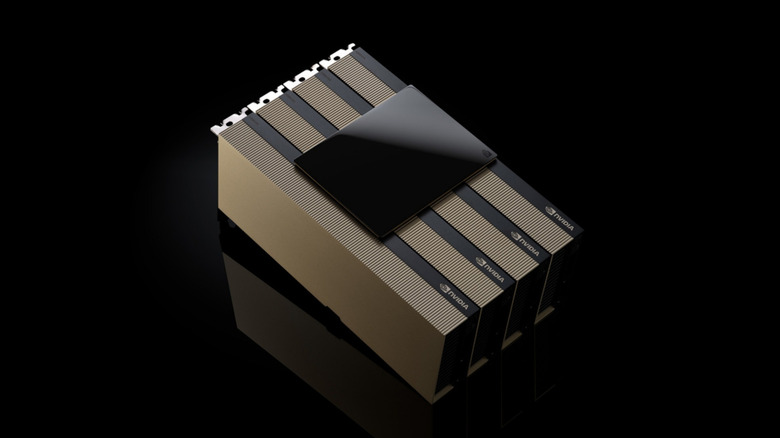
The H200 chip represents NVIDIA's latest advancement in their Hopper architecture family, offering significant improvements in memory bandwidth, computational throughput, and efficiency compared to previous generations like the H100. These specifications make it particularly valuable for organizations developing large language models, conducting AI research, or implementing enterprise-scale machine learning infrastructure. The chip's capabilities have made it extraordinarily difficult to obtain through normal commercial channels, with demand far outpacing supply across global markets.
The approval of these 10 Chinese companies for H200 purchases comes at a time when the US government has been working to establish a more nuanced approach to semiconductor export controls. Rather than implementing blanket prohibitions, the Biden administration has explored mechanisms that allow for controlled access to certain technologies while still maintaining security safeguards. This approach attempts to balance national security concerns with the practical reality that complete decoupling between US technology firms and the Chinese market may be neither feasible nor economically desirable.
The identities of the 10 approved Chinese companies have not been widely disclosed in public reporting, though industry analysts suggest they likely include major technology firms, cloud service providers, and research institutions that have legitimate applications for AI computing infrastructure. These organizations may be using the advanced AI hardware for developing machine learning models, providing cloud computing services to customers, or conducting research in various AI domains including natural language processing, computer vision, and generative AI applications.
From NVIDIA's perspective, even the approval to sell chips without actual deliveries having occurred represents a positive development. The company has faced significant pressure from its Chinese customer base, which represents a substantial portion of its potential market for high-end AI accelerators. NVIDIA's CEO and founder Jensen Huang has previously acknowledged the importance of the Chinese market to the company's long-term growth trajectory, while also demonstrating willingness to comply with US government regulations regarding export controls.
The timeline for actual deliveries remains uncertain, and several factors could influence when and whether NVIDIA fulfills orders from these approved Chinese firms. These factors include the completion of internal compliance procedures at NVIDIA, logistics arrangements for international shipment of sensitive technology, payment and financial arrangements, and any additional regulatory clearances that might be required at either the US or Chinese ends of the transaction. Reuters' reporting suggests that these preliminary steps have not yet been fully completed.
This development also reflects broader trends in how the US government is attempting to manage its semiconductor export policy in an era of great power competition with China. Rather than implementing across-the-board restrictions that could harm American companies competitively, the administration has been considering more targeted approaches that grant exceptions for specific entities while maintaining overall strategic restrictions. The approval for these 10 Chinese companies to purchase H200 chips may represent a test case for this kind of tailored regulatory approach.
The approval and potential sales also come as NVIDIA faces intense competition in the AI chip market, with other manufacturers including AMD, Intel, and emerging Chinese chip designers working to develop competitive alternatives to NVIDIA's offerings. By allowing some access to its cutting-edge technology in the Chinese market, NVIDIA may be positioning itself to maintain relationships with important customers and prevent them from turning entirely to alternative suppliers, whether homegrown Chinese options or chips from other international manufacturers.
Industry observers and market analysts will likely be watching closely for any announcements regarding actual H200 chip deliveries to China or updates on the status of these approved orders. The pace at which NVIDIA executes these sales, should they proceed, could provide important signals about the direction of US-China technology policy and the government's willingness to allow continued commerce in advanced semiconductor technology. As the AI chip market continues to evolve and competition intensifies, these regulatory decisions may have significant implications for how the global artificial intelligence industry develops over the coming years.
The situation underscores the increasingly complex relationship between technology, commerce, and geopolitics in the 21st century. Both the United States and China recognize that artificial intelligence capabilities will likely be central to economic competitiveness and national security in the decades ahead. Consequently, the regulation of chips used to develop and deploy AI systems has become one of the most closely watched and heavily negotiated aspects of US-China technology relations, with implications that extend far beyond any single company or product line.
Source: Engadget


