
US Halts Taiwan Arms Sales Over Iran Military Needs

Acting US Navy Secretary Hung Cao announces pause in Taiwan weapons package amid Iran operations, raising concerns about American commitments to the island.
The United States has temporarily suspended arms sales to Taiwan, marking another significant development in the complex relationship between Washington, Taipei, and Beijing. According to Hung Cao, the acting secretary of the US Navy, the pause in military assistance to the self-governed island has been implemented to prioritize munitions stockpiles needed for ongoing military operations in the Iran region. This announcement represents the latest in a series of setbacks for Taiwan's defensive capabilities, coming at a particularly sensitive time when the island faces mounting pressure from China.
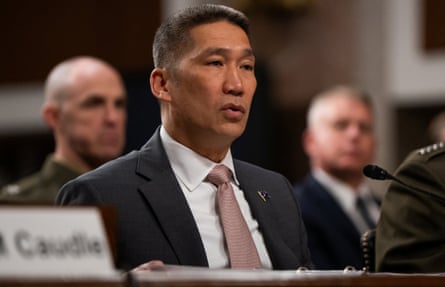
During a congressional hearing held on Thursday, lawmakers pressed Cao regarding the status of a substantial $14 billion weapons package that has remained in limbo awaiting approval from the Trump administration for several months. The comprehensive arms deal, originally designed to bolster Taiwan's military defenses and modernize its aging defense systems, includes advanced radar systems, missiles, and other critical defense technologies. Cao's response provided clarity on the administration's prioritization of resources, though it simultaneously raised concerns about the timeline for delivering promised military support to Taiwan.
When directly questioned about the delay affecting the weapons package, Cao stated: "Right now we're doing a pause in order to make sure we have the munitions we need for Epic Fury – which we have plenty." This reference to Epic Fury, the codename for US military operations related to Iran, underscores the administration's focus on ensuring adequate supplies for ongoing Middle Eastern military commitments. The statement suggests that despite claiming sufficient munitions reserves, the military leadership has determined that temporarily redirecting resources remains necessary to maintain operational readiness in multiple theaters of operation.

Cao's remarks come at a particularly challenging moment for Taiwan's government and its allies who advocate for strengthened US-Taiwan security relationships. The pause in Taiwan arms sales follows a series of public statements from former President Donald Trump that have cast serious doubts on the reliability of America's long-standing commitment to supporting Taiwan's defense. Trump has previously questioned the rationale for maintaining such significant military aid to the island, and his recent comments have fueled uncertainty about the future direction of US-Taiwan relations.
The announcement of the arms sales pause has immediate implications for Taiwan's strategic planning and defense doctrine. Taiwan has been actively seeking to modernize its military capabilities to counter the growing threat posed by China's increasingly sophisticated armed forces. The island nation faces an unprecedented military challenge from across the Taiwan Strait, where China has been conducting more frequent military exercises and demonstrating advanced weaponry capabilities. Without timely receipt of promised defensive systems, Taiwan's military officials have expressed concern about their ability to adequately prepare for potential security threats.
The $14 billion weapons package represents one of the most substantial military aid commitments to Taiwan in recent years. The deal encompasses various categories of advanced military hardware, including anti-ship and air-to-air missiles, radar systems for early warning detection, and equipment designed to enhance the island's air defense capabilities. These systems are considered essential by Taiwan's military strategists for maintaining a credible deterrent against potential military aggression from mainland China, whose defense spending continues to grow at double-digit annual rates.
The broader context of US military resource allocation reflects a fundamental challenge facing American strategic planning: balancing commitments across multiple regions while managing finite military production capacity and munitions inventories. The Middle East remains a critical area of focus for US military operations, with ongoing engagements and the need to maintain forward-deployed forces across various locations. However, the Asia-Pacific region has increasingly been identified as a primary strategic priority in official US defense policy documents and congressional testimonies.
Taipei's government has publicly expressed concerns about the timeline for receiving the promised weapons systems. Taiwan's Defense Ministry has emphasized the urgency of modernizing its military infrastructure given the rapid advancement of China's military capabilities. Officials in Taipei have indicated that delays in arms delivery could impact their defense readiness during a period when cross-strait tensions remain elevated and the security situation remains unpredictable. The island's government continues to press Washington for clarity on when the arms package will receive final approval and when deliveries might commence.
The timing of Cao's announcement also reflects broader uncertainties about the Trump administration's approach to international alliances and military commitments. Trump has previously questioned the value of various alliance relationships and has suggested that allied nations should shoulder greater responsibility for their own defense. These statements have created apprehension not only in Taiwan but among other US allies in the Asia-Pacific region who depend on American security guarantees as a cornerstone of regional stability and deterrence against Chinese expansion.
Congressional representatives from both parties have expressed concern about the implications of the arms sales pause. Some lawmakers have argued that delaying military assistance to Taiwan undermines deterrence and could embolden more aggressive actions by China. Others have questioned whether the pause truly reflects operational necessities or represents a shift in administration policy toward Taiwan. The congressional hearing revealed deeper questions about how the Trump administration weighs competing strategic priorities and how such decisions will shape regional security dynamics in East Asia.
The US-Taiwan defense relationship has historically been based on the Taiwan Relations Act of 1979, which obligates the United States to provide Taiwan with defensive weapons sufficient to maintain its ability to defend itself against external threats. This legal framework has guided military assistance for decades and has been interpreted by successive administrations as a commitment to ensure Taiwan maintains adequate defensive capabilities. However, the current pause suggests potential flexibility in how this commitment is being implemented, at least during periods when military resources are needed elsewhere.
Looking forward, the resolution of the arms sales pause will likely depend on several factors, including the trajectory of military operations in the Iran region, decisions about munitions production and allocation, and broader policy considerations within the Trump administration regarding Taiwan and US-China relations. Taiwan's government and its supporters in Washington remain hopeful that the pause will be temporary and that the weapons package will ultimately receive approval. However, the uncertainty created by recent statements and policy announcements has injected a new element of concern into discussions about long-term Taiwan security assistance and the future of US military support for the island's defense.
The pause in arms sales to Taiwan underscores the complex challenges facing US policymakers as they attempt to manage multiple security commitments across different regions of the world. While ensuring adequate military resources for ongoing operations remains a legitimate concern, the timing and messaging of the announcement have raised questions about the administration's broader strategic priorities and its commitment to regional stability in the Asia-Pacific. As discussions continue in Congress and within the administration, the ultimate resolution of this pause will likely have significant implications for Taiwan's defense preparedness and the future trajectory of US-Taiwan relations during this period of heightened uncertainty in Asia.
Source: The Guardian

