
US-Iran Conflict Intensifies with No End in Sight, Pentagon Seeks Billions More

US Defense Secretary Pete Hegseth says there is no timeline for ending the US war against Iran, as the military offensive widens and the Pentagon seeks more funding.
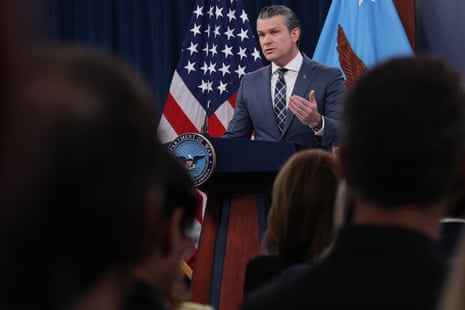
US Defense Secretary Pete Hegseth said on Thursday there is no "timeframe" for ending the US war against Iran and did not deny reports that the Pentagon could seek an extra $200bn in taxpayer funding.
The military US-Israeli offensive began three weeks ago and continues to widen. Donald Trump threatened on Wednesday to "massively blow up" the world's biggest gasfield after Israeli strikes on the Iranian site prompted Tehran to escalate strikes on oil and gas facilities around the Persian Gulf.
The ongoing conflict has dramatically escalated in recent weeks, with the US and Israel launching an intense military campaign against Iran that shows no signs of slowing down. Hegseth refused to provide any timeline for when the war might end, indicating that the Pentagon is prepared for a prolonged and costly engagement.
Critics have raised concerns about the ballooning costs of the conflict, with reports suggesting the Pentagon may seek an additional $200 billion in funding to sustain the operations. This would come on top of the already massive defense budget, further straining US taxpayers and resources.
The US-Iran tensions have also had significant global implications, with the attacks on energy infrastructure in the Persian Gulf threatening to disrupt international oil supplies and exacerbate the ongoing energy crisis. The Trump administration's aggressive posturing has drawn criticism from US allies and the international community, who fear the conflict could spiral out of control.
Despite the growing concerns, Hegseth remained defiant, suggesting that the US military is prepared to escalate the offensive even further. He promised that Thursday would see the "largest strike package yet" against Iran, promising "death and destruction from above".
The continued lack of a clear endgame or exit strategy from the US government has fueled anxiety and uncertainty about the future of the US-Iran conflict. As the fighting drags on, the stakes continue to rise, with the potential for further regional destabilization and global economic disruption.
Analysts and policymakers will be closely watching the developments in the coming weeks and months, as the US and Israel seek to maintain their military pressure on Iran. The outcome of this conflict could have far-reaching implications for the geopolitical landscape in the Middle East and beyond.


