
US May Day Economic Blackout: Work Stoppage Planned

Labor unions and community groups organize massive economic blackout for May Day 2024, calling for 'no school, no work, no shopping' across thousands of US cities.
As spring arrives, the United States is bracing for one of the largest coordinated economic protests in recent memory. Labor unions, democratic organizations, and community groups are mobilizing to organize an expansive economic blackout this year to commemorate May Day, also known as International Workers Day. The movement has been inspired by the powerful economic shutdown that took place in Minnesota during a significant immigration enforcement operation, demonstrating the potential impact of coordinated community action on a national scale.
The May Day Strong initiative represents a grassroots effort to coordinate protests across the United States, with organizers and participating groups explicitly calling for "no school, no work, no shopping" as a demonstration against what they characterize as government policies that prioritize billionaire interests over the welfare and livelihoods of working-class Americans. This direct action strategy aims to showcase the economic power that workers and consumers collectively wield when unified around shared political demands and social justice concerns.
According to the latest reports and coordination efforts, the scope of this year's May Day economic blackout is expected to be unprecedented in scale, with actions anticipated to exceed 3,000 separate events happening simultaneously across cities, towns, and communities throughout the nation. This remarkable expansion of protest activity reflects growing frustration among workers, immigrants' rights advocates, and their allies regarding what they perceive as systematic inequalities embedded within American economic and political structures.
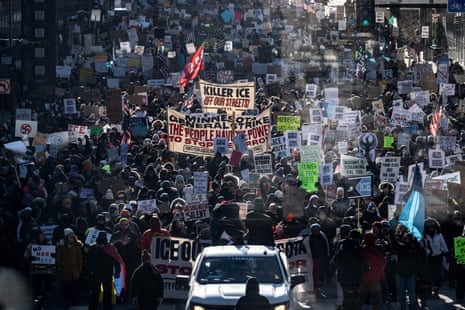
The impetus for this national coordination stems directly from the Minnesota ICE crackdown that preceded these planning efforts. During that significant immigration enforcement operation, which involved extensive raids targeting undocumented immigrants in the state, Minnesota communities responded with a remarkable display of solidarity through economic action. Workers, students, and community members participated in coordinated work stoppages and boycotts, demonstrating tangible consequences when vulnerable populations face government enforcement actions perceived as unjust or overly aggressive.
This previous Minnesota action served as a proof of concept for what organized communities could accomplish through unified economic pressure. The success of that initial blackout effort inspired activists and organizers nationwide to consider expanding the model to a national May Day movement. Recognizing May Day's historical significance as a day honoring workers' struggles and achievements, organizers saw an opportunity to channel this annual commemoration into concrete political action on a much larger scale.
The May Day Strong network encompasses a diverse coalition of participants, including established labor unions that represent millions of American workers, grassroots community organizations focused on immigrant rights and social justice, and democratic groups advocating for progressive policy changes. This broad coalition reflects the understanding that economic justice issues affect workers across multiple demographics, industries, and regions of the country, requiring unity and coordinated action to effect meaningful change.
The specific demands embedded within the May Day Strong messaging target what organizers describe as systemic failures to adequately represent worker interests in policy decisions. They argue that current government policies disproportionately favor wealthy corporations and billionaire-class individuals while working Americans struggle with stagnant wages, inadequate healthcare, insufficient paid leave, and uncertain employment conditions. By withdrawing their participation in economic activity for a designated period, organizers hope to illustrate the critical importance of workers and consumers to the functioning of the American economy.
The call for "no school" represents a particularly significant component of the proposed blackout, as it involves families withdrawing their children from educational institutions. This aspect of the action carries particular resonance for immigrant families and communities of color who have historically been targets of enforcement actions. Student participation in May Day demonstrations adds generational weight to the protest movement, suggesting that younger Americans increasingly support direct action tactics to challenge policies they view as unjust or harmful.
Similarly, the "no work" component asks workers to refrain from performing their regular employment duties, effectively creating a work stoppage or general strike for the designated period. This tactic, with deep historical roots in labor movement history, aims to demonstrate that the American economy fundamentally depends on workers' participation and labor. When workers withdraw that labor, even temporarily, the economic consequences can prompt policymakers and corporate leadership to reconsider their positions on contested issues.
The "no shopping" message calls on consumers to refrain from purchasing goods and services during the blackout period, targeting retail businesses, restaurants, and other consumer-focused enterprises. This consumer boycott component aims to create economic pressure through multiple channels simultaneously, affecting both employers through lost worker productivity and retailers through reduced consumer spending. By coordinating across these multiple dimensions of economic activity, organizers hope to create a comprehensive disruption that cannot be easily dismissed or ignored by political and corporate leadership.
As organizers continue mobilizing support for the May Day economic blackout, they are implementing sophisticated coordination strategies utilizing social media platforms, community networks, labor union communication channels, and local organizing meetings. The decentralized nature of the effort allows local communities to adapt the basic framework to their specific circumstances and priorities, while the national coordination ensures that maximum impact is achieved through simultaneous action across numerous locations.
The success of this coordinated action remains to be seen, but the scale of planning and breadth of organizational participation suggest that May Day 2024 will feature some of the most substantial economic disruption protests the United States has witnessed in recent decades. Whether this effort ultimately achieves its stated policy goals or simply raises public consciousness about worker concerns and immigrant rights remains uncertain, but the movement clearly represents a significant moment of labor movement resurgence and community organizing capacity in the contemporary United States.
Source: The Guardian


