
US Military Bases in Germany: Trump's Threat Explained

Trump threatens to reduce 36,400 US troops in Germany. Explore why the US maintains military bases there and potential NATO implications.
President Donald Trump has once again thrown the international security landscape into uncertainty by indicating the United States is "studying and reviewing the possible reduction" of its military personnel stationed in Germany. This announcement comes at a particularly sensitive moment, following comments from German Chancellor Friedrich Merz suggesting that Washington was being outplayed and "humiliated" by Iran in recent geopolitical tensions. The statement represents another chapter in Trump's contentious relationship with traditional NATO allies and raises critical questions about the future of American military commitments in Europe.
The US military presence in Germany currently comprises approximately 36,400 personnel, making it one of the largest concentrations of American troops stationed anywhere outside the United States. Trump indicated that a final "determination" on the scale and scope of US military operations in Germany would be reached "over the next short period of time," leaving policymakers in Berlin and other European capitals waiting with considerable anxiety. This ongoing review process underscores the uncertainty surrounding long-standing security arrangements that have formed the backbone of European defense strategy for nearly eight decades.
The US military presence in Germany is widely recognized as a cornerstone of NATO defense capabilities in Central Europe, serving as a critical bulwark against potential threats from Russia and other adversaries in the region. Beyond its defensive function, the American military infrastructure in Germany plays an essential role in projecting US military power across Africa, the Middle East, and Asia, serving as a vital hub for operations, logistics, and strategic coordination across multiple theaters of operation. The bases and personnel stationed there are integral to maintaining American global security interests and supporting dozens of military operations worldwide.
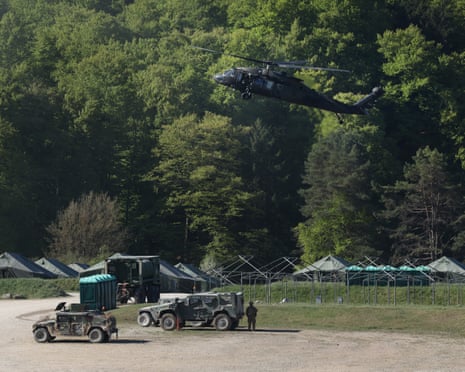
Understanding why the United States maintains such a substantial military footprint in Germany requires examining the historical context that led to this arrangement. Following the conclusion of World War II in 1945, American forces occupied Western Germany as part of the broader Allied military occupation of the defeated Nazi state. As the Cold War emerged and tensions with the Soviet Union escalated throughout the late 1940s and 1950s, the American military presence transformed from occupation force to permanent defensive arrangement designed to protect Western Europe from Soviet expansion.
The establishment of NATO in 1949 formalized and legitimized the continued presence of American troops on German soil, making the United States a crucial guarantor of Western European security through the provision of a nuclear umbrella and conventional military forces. Germany's geographic position, situated directly adjacent to former Communist Eastern Bloc countries and relatively close to Russian territory, made it the ideal location for stationing large numbers of American military personnel and equipment. This strategic positioning allowed the United States to rapidly respond to any Soviet aggression and provided reassurance to NATO allies that American commitment to their defense was genuine and substantial.
Throughout the Cold War decades from the 1950s through the 1980s, the US military bases in Germany served as the primary forward defense position for NATO and housed tens of thousands of American soldiers, along with their families and supporting personnel. These installations became not merely military facilities but entire communities, complete with schools, hospitals, housing, and recreational facilities for the extended American military families stationed there. The economic impact on surrounding German communities was substantial, generating employment, business opportunities, and cultural exchange between American service members and German civilians.
Even following the dramatic collapse of the Soviet Union and the end of the Cold War in 1989-1991, the United States maintained its military presence in Germany at substantial levels, though the specific mission evolved considerably. With the Soviet threat eliminated, American forces based in Germany increasingly focused on power projection to other regions of strategic importance, including the Middle East and North Africa. The base infrastructure and logistical capabilities that had been designed to counter Soviet aggression were repurposed to support American military operations in Iraq, Afghanistan, and other parts of the world, demonstrating the enduring strategic value of the German positioning.
Donald Trump has historically expressed skepticism about American military commitments in Europe, arguing that allied nations should bear greater financial responsibility for their own defense rather than relying so heavily on American military protection and resources. This perspective formed a central element of his foreign policy platform during both his 2016 and 2020 presidential campaigns and has remained consistent throughout his political career. Trump has repeatedly suggested that maintaining large numbers of American troops abroad represents an inequitable burden on American taxpayers while allied nations benefit from security guarantees without adequate financial contribution.
The current threat to reduce troop numbers in Germany specifically emerged amid broader tensions within the NATO alliance and Trump's repeated demands that member states increase their defense spending toward the two percent of GDP target established by the organization. Germany, as Europe's largest economy, has faced particular scrutiny from Trump regarding its defense expenditures, though the German government has made substantial increases to its military budget in recent years, particularly following Russia's 2022 invasion of Ukraine. The timing of Trump's comments, coinciding with friction over how the United States and its allies are responding to Iranian activities, reflects the broader complexity of alliance management in the contemporary security environment.
The potential reduction of American military personnel in Germany would carry significant implications for European security architecture and the overall credibility of NATO's collective defense commitments. A substantial withdrawal of American troops would complicate NATO's ability to rapidly reinforce Eastern European members in the event of Russian aggression and would represent a dramatic shift in the security guarantees that have underpinned European stability for generations. Such a move would likely trigger significant concerns among Poland, the Baltic states, and other frontline NATO members who depend most directly on American military presence as a deterrent against potential Russian adventurism.
The announcement also raises questions about the future of American military infrastructure and capabilities in the European theater more broadly, as the German bases serve functions that extend well beyond Germany itself. Military hospitals, logistics centers, training facilities, and command-and-control infrastructure located in Germany support American military operations and NATO commitments throughout the entire European region and beyond. Any significant reduction in American personnel would require substantial reorganization of existing military capabilities and could create logistical challenges for ongoing American military commitments globally.
German political leaders have responded to Trump's threat with a mixture of concern and determination to strengthen European defense capabilities independent of American guarantees. Chancellor Merz and other German officials have called for increased European defense spending and the development of more autonomous European military capabilities, recognizing that reliance on American commitment cannot be taken for granted indefinitely. This represents a significant shift in German strategic thinking, as the country has historically preferred to avoid large-scale independent military spending and instead relied on the NATO framework and American security guarantees.
The broader implications of Trump's threat extend beyond Germany to encompass the entire future of American engagement with Europe and the global security order that has persisted since the end of World War II. A fundamental reassessment of American military commitments in Europe could trigger cascading effects throughout the region, potentially prompting other nations to reconsider their security arrangements and defense strategies. Some analysts suggest that a substantial American withdrawal could create space for Russian assertiveness in Europe and undermine decades of successful NATO deterrence that has prevented major power conflict on the continent.
The timeline that Trump referenced for making a final determination regarding troop levels remains deliberately vague, leaving considerable uncertainty about when any changes might occur and what specific reductions might be implemented. This ambiguity itself creates challenges for military planning in both the United States and Germany, as commanders struggle to develop strategies when the fundamental parameters of their force posture remain unknown. The ongoing review process essentially keeps American commitment to European defense in a state of suspension, complicating the ability of NATO allies to plan their own defense investments and military strategies with confidence.
As this situation continues to develop, the debate over American military presence in Germany reflects deeper questions about the nature of international alliances in the twenty-first century and the proper role of American military power in maintaining global stability. The outcome of Trump's "determination" regarding troop levels will likely signal important information about the trajectory of American foreign policy and the future strength of NATO as a security alliance. Whether the threat represents a genuine willingness to implement significant withdrawals or rather a negotiating tactic designed to pressure allies into increased defense spending remains to be seen as developments unfold in coming months.
Source: The Guardian


