
US Military Launches Nuclear Orbit Wargames

US Space Command begins classified Apollo Insight wargames series, simulating nuclear threats in orbit with commercial sector participation.
The United States military has initiated a groundbreaking series of classified wargames designed to prepare defense officials for potential catastrophic scenarios in space. US Space Command, the military branch responsible for overseeing all defense operations beyond Earth's atmosphere, has opened its doors to commercial aerospace companies to participate in these critical strategic exercises. The inaugural event in this new initiative simulated an alarming scenario: a nuclear weapon detonation in orbit, representing one of the most severe threats facing modern military and civilian space infrastructure.
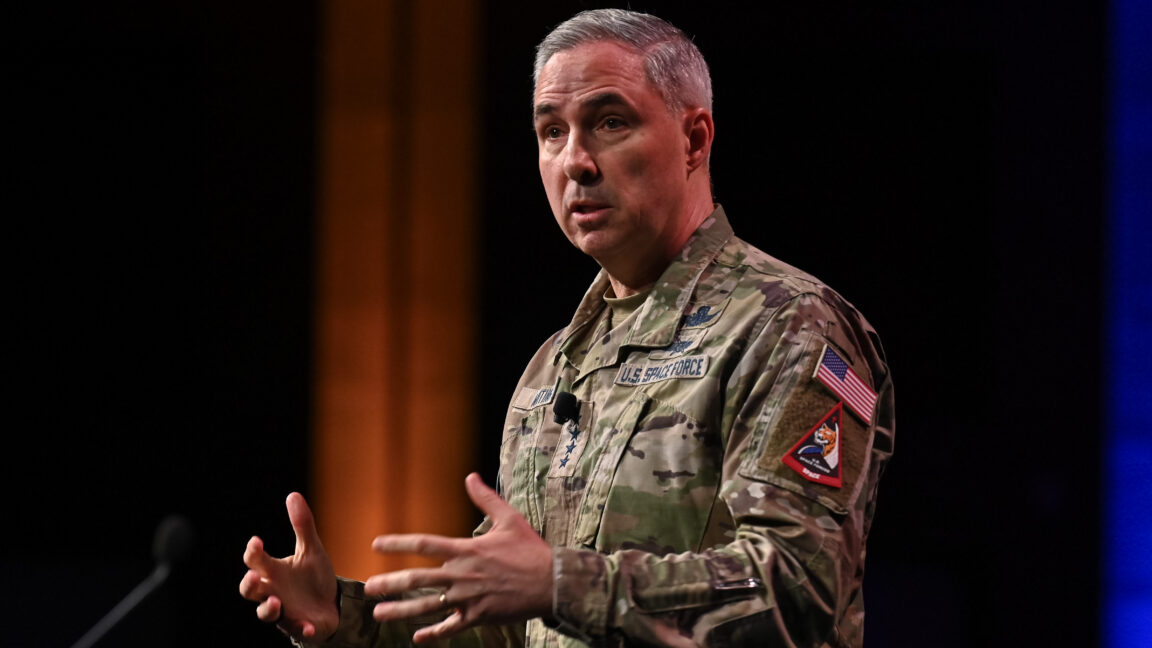
General Stephen Whiting, who serves as the commanding general of US Space Command, unveiled details about this ambitious new program during a presentation at the Mitchell Institute for Aerospace Studies held on Tuesday. Whiting emphasized the importance of coordinating military resources with private sector expertise to develop comprehensive response strategies for emerging threats in the orbital domain. The general's discussion highlighted how the traditional boundaries between military and commercial space operations are increasingly blurring, requiring new models of collaboration and rapid response coordination.
It is crucial to understand the organizational structure underpinning these military space operations. While US Space Command serves as the operational authority for all military activities in space, the Space Force functions as a distinct entity that provides the personnel, equipment, and logistical support necessary to execute Space Command's directives. This organizational separation allows for specialized focus on strategic planning and operational execution, with Space Command concentrating on broader military objectives while the Space Force manages the human and material resources required to achieve those goals.
The new initiative, formally designated as Apollo Insight, represents a significant departure from traditional military planning exercises. Rather than relying solely on internal military expertise, the program deliberately incorporates private sector perspectives and capabilities. This hybrid approach acknowledges that commercial companies now operate critical infrastructure in space, including communications satellites, navigation systems, and Earth observation platforms that support both civilian and military applications. By involving these commercial partners in wargame simulations, Space Command can benefit from their specialized knowledge while also ensuring that private sector operators understand potential military contingencies affecting their operations.
The structure of Apollo Insight employs tabletop exercises as its primary methodology for strategic exploration and response development. These exercises bring together military commanders, civilian officials, and commercial space industry representatives in a controlled environment where they can discuss, debate, and develop responses to complex scenarios without the constraints of real-world consequences. The tabletop format allows participants to explore multiple decision pathways, evaluate the implications of various strategic choices, and identify gaps in current response capabilities.
Space Command has already committed to conducting four comprehensive Apollo Insight exercises throughout the current calendar year, with plans for additional exercises in subsequent years. Each exercise builds upon lessons learned from previous simulations while introducing new variables and complications to test the flexibility and adaptability of participants. This iterative approach ensures that response strategies evolve continuously as new threats emerge and technological capabilities advance.
The scenario involving orbital nuclear detonation selected for the initial exercise represents one of the most catastrophic possibilities contemplated by space security planners. Such an event would produce an electromagnetic pulse capable of disabling or destroying satellites across vast regions of orbit, potentially creating cascading failures throughout space-based infrastructure. The resulting damage could compromise military communications, GPS navigation systems, weather monitoring, and countless other services that modern society depends upon. By simulating this worst-case scenario first, Space Command signals the severity with which it takes the most extreme threats.
The involvement of commercial companies in these military strategic exercises marks a notable evolution in how the defense establishment approaches space security challenges. Private aerospace firms bring unique perspectives shaped by their operational experience, financial considerations, and innovation-driven cultures. Companies like SpaceX, Amazon's Project Kuiper, and various satellite operators have vested interests in maintaining a stable, secure orbital environment. Their participation in Apollo Insight creates opportunities for bidirectional knowledge transfer, where military planners can understand commercial constraints while companies gain insights into potential military scenarios affecting their operations.
General Whiting's presentation at the Mitchell Institute provided a public window into otherwise classified planning processes, suggesting that Space Command believes open discussion of these challenges serves the broader national interest. By acknowledging the existence of these wargames and describing their general parameters, the military can encourage broader thinking about space security within academic institutions, think tanks, and industry circles. This approach balances the need for operational security with the recognition that the most robust defense strategies benefit from diverse perspectives and public understanding.

The timing of Apollo Insight's launch reflects growing international tensions and expanding military capabilities in space. Multiple nations have demonstrated anti-satellite weapons, including kinetic kill vehicles and directed energy weapons. China's 2007 anti-satellite test, which destroyed an old weather satellite and created thousands of pieces of orbital debris, demonstrated the catastrophic potential of space weapons. Russia has also conducted concerning tests involving space-based systems. Against this backdrop, American military planners recognize the urgent necessity of developing robust response strategies for potential space conflicts.
Looking forward, the Apollo Insight series promises to evolve in complexity and scope as participants develop more sophisticated understanding of space security challenges. Subsequent exercises may introduce variables such as degraded communications, contested information environments, or cascading failures across multiple space-based systems. The program may also explore unconventional threats beyond kinetic attacks, including cyber intrusions, jamming operations, or deliberate debris generation. Each exercise builds institutional knowledge and establishes protocols that could prove invaluable if space conflict ever transitions from theoretical scenario to operational reality.
The establishment of Apollo Insight demonstrates that American military leadership takes space security with utmost seriousness. By combining military strategic thinking with commercial operational expertise, developing comprehensive response frameworks through systematic exercises, and maintaining flexibility to address emerging threats, the United States is positioning itself to protect its interests in an increasingly contested orbital environment. As space becomes ever more critical to national security, economic prosperity, and scientific advancement, initiatives like Apollo Insight represent essential investments in understanding and preparing for potential futures.
Source: Ars Technica


