
US Sanctions DR Congo Ex-President Kabila Over Rebel Support

The United States has imposed sanctions on former Democratic Republic of Congo President Joseph Kabila, accusing him of supporting armed rebel groups to destabilize the government.
The United States government has taken decisive action by implementing sanctions against Joseph Kabila, the former president of the Democratic Republic of Congo, citing allegations that he has been providing material support to armed rebel groups operating within the troubled Central African nation. The measures represent a significant escalation in diplomatic pressure aimed at curbing what American officials characterize as a deliberate campaign to destabilize the legitimate government currently led by President Felix Tshisekedi.
According to statements released by the U.S. State Department and Treasury Department, Kabila's alleged activities pose a direct threat to regional stability and democratic governance in one of Africa's largest and most resource-rich nations. The sanctions regime includes asset freezes and prohibitions on American entities from conducting financial transactions with the former leader, effectively isolating him from the global financial system that many former heads of state depend upon for international commerce and wealth management.
Joseph Kabila, who served as president of the DRC from 2001 until 2019, has maintained a largely low public profile since stepping down from office nearly five years ago. However, intelligence reports compiled by Western governments have alleged that from his current base of operations, he continues to wield significant political influence and financial resources that he allegedly channels toward supporting various armed militia groups that operate in the eastern provinces of the Democratic Republic of Congo.
The specific rebel organizations that Kabila is accused of supporting include groups that have been engaged in prolonged armed conflicts in the mineral-rich Kivu region. These armed factions have been linked to widespread human rights abuses, including indiscriminate killings of civilians, sexual violence used as a weapon of war, and the forced displacement of hundreds of thousands of people from their homes. The destabilization caused by these groups has made the eastern DRC one of the world's most volatile and dangerous regions.
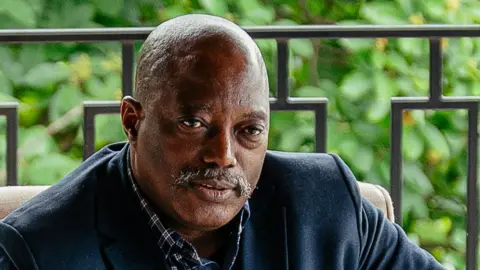
The timing of the sanctions announcement coincides with increased tensions between Kabila's political faction and the current government in Kinshasa. Since leaving office, Kabila has remained a significant force within the Common Front for Congo (FCC), a major opposition coalition that continues to command substantial support among certain segments of the Congolese population. Political analysts suggest that the sanctions on Kabila are partly intended to weaken the opposition's organizational capacity and financial resources ahead of potentially significant political developments.
As of the time of reporting, Joseph Kabila has not issued any formal public response to the American accusations or the imposition of sanctions against him. His representatives have not released statements addressing the specific allegations of rebel group support or explaining his current activities and financial dealings. This silence stands in contrast to his previous pattern of public engagement during his presidency, when he regularly addressed national and international media regarding significant political developments.
The DRC government under President Tshisekedi has publicly welcomed the American sanctions as an important step in addressing the security crisis that has devastated the eastern regions of the country. Government spokespersons have indicated that they view the sanctions as validation of their assertions that external actors, including Kabila, have been impeding their efforts to restore peace and security. However, the Congolese government's capacity to enforce its own sanctions or prevent Kabila's alleged activities remains limited due to weak institutional structures and limited resources.

The international community's response to the U.S. sanctions has been mixed. While some countries, particularly those with strong ties to the United States, have indicated support for the measures, others have expressed concerns about the potential for sanctions to be used as political tools in African conflicts. The European Union has stated that it is reviewing the American actions and considering whether similar measures might be warranted under its own regulatory frameworks.
Experts specializing in Central African geopolitics have noted that the sanctions reflect broader concerns about the role that former leaders and powerful elites play in perpetuating conflict in post-conflict societies. The DRC has struggled with instability since the end of its civil war in the early 2000s, and the persistence of armed groups in the eastern provinces represents a significant obstacle to national reconciliation and development. Kabila's alleged role in supporting these groups has become a focal point for international efforts to address the root causes of regional instability.
The sanctions framework established by the United States carries significant practical implications for Kabila's international financial activities. Any assets he maintains in American financial institutions are now frozen, and any business dealings involving American companies or financial entities are prohibited. This extends to sanctions on entities owned or controlled by Kabila, potentially including business ventures and holdings throughout the region and internationally. The measures are designed to create maximum pressure on the former leader to cease any alleged support for rebel groups.
Looking forward, sanctions compliance will require monitoring and enforcement by American authorities, as well as cooperation from international financial institutions and allied nations. The success of such measures ultimately depends on their ability to change the behavior of the targeted individual or entity. In Kabila's case, the objective appears to be either coercing a cessation of alleged rebel support or at least limiting his financial capacity to continue providing such assistance.
The situation underscores the complex challenges facing the DRC as it attempts to consolidate democratic governance while managing serious security threats. The persistence of well-funded armed groups in eastern provinces has made this region one of the world's deadliest conflict zones in recent years, with mortality figures exceeding those of better-known conflicts in other regions. International efforts to address these challenges have included military interventions, humanitarian assistance, and increasingly, measures like sanctions targeting alleged conflict financiers and supporters.
As developments continue to unfold, the international community will be watching to see whether the sanctions prove effective in their stated objectives. The lack of public response from Kabila thus far has left many questions unanswered regarding his actual involvement in rebel group support and his intentions going forward. Until he addresses the accusations, the full scope of his alleged activities and the evidence supporting the sanctions decision may remain unclear to the general public, though detailed intelligence assessments likely informed the American government's determination.
Source: BBC News


