
US Set to Criminally Indict Former Cuban Leader Raúl Castro

The U.S. government prepares criminal indictment against ex-Cuban leader Raúl Castro, with charges expected soon regarding Cuba's 1996 plane downing incident.
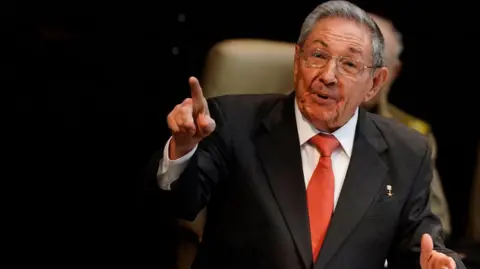
The United States is moving toward criminal indictment of Raúl Castro, the former leader of Cuba, in what represents a significant escalation in diplomatic tensions between Washington and Havana. According to multiple sources familiar with the investigation, federal prosecutors are preparing formal charges that could be filed as early as the following week, marking a substantial development in U.S.-Cuba relations that has remained fraught since the revolution nearly seven decades ago.
The anticipated charges against Castro center on a controversial incident dating back to 1996, when Cuban military forces shot down two American civilian aircraft operated by the Miami-based humanitarian organization Brothers to the Rescue. The downing of these planes resulted in the deaths of four American citizens, an event that shocked the international community and deeply strained diplomatic relations between the two nations. The incident has remained a focal point of contention between the U.S. government and Cuban authorities, with American officials consistently viewing it as an unjustified act of aggression against unarmed civilian aircraft.
This development represents an unusual legal maneuver, as indicting foreign nationals, particularly former heads of state, is an extraordinarily rare occurrence in American criminal justice. The decision to pursue formal criminal charges signals that U.S. officials view the actions surrounding the plane downing as potentially violating American law, despite the significant challenges that would accompany any actual prosecution given Castro's status and Cuba's lack of extradition agreement with the United States. Legal experts suggest that while the indictment may be largely symbolic given the impracticality of enforcing it, it carries substantial diplomatic weight and sends a clear message regarding American values and stance on international law.
The 1996 plane incident itself involved the destruction of two Cessna aircraft belonging to Brothers to the Rescue, a group dedicated to searching for Cuban refugees attempting to reach the United States. The organization's mission placed them in direct conflict with the Cuban government, which viewed their humanitarian operations as hostile interference in Cuban affairs. Cuban officials maintained that the planes had violated Cuban airspace and posed a security threat, justifying the military response. However, the United States and international observers characterized the downing as a disproportionate and excessive response to what were clearly civilian aircraft engaged in rescue operations.
The indictment decision comes as the Biden administration has been gradually reassessing U.S. policy toward Cuba following years of tensions that escalated under previous administrations. This legal action appears to reflect a commitment to holding Cuban leadership accountable for historical grievances while simultaneously maintaining diplomatic channels. The timing of the potential indictment suggests that federal prosecutors have completed sufficient investigation and evidence gathering to move forward with formal charges, though the practical implications of such an indictment remain unclear given the geopolitical complexities involved.
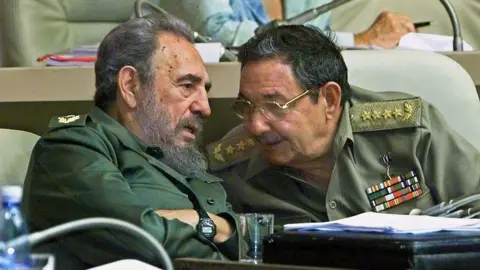
Raúl Castro, who ruled Cuba from 2008 to 2021 following the lengthy tenure of his brother Fidel Castro, has maintained a relatively lower profile since stepping down as the country's formal leader. However, he has continued to exercise influence within Cuba's political structure and communist party. The potential indictment would be the first criminal action of this magnitude directly targeting the former leader, distinguishing it from previous diplomatic disputes and legal complaints.
The families of the four victims killed in the 1996 incident—Armando Alejandre Jr., Carlos Costa, Mario de la Peña, and Pablo Morales—have long sought accountability and justice for the deaths of their loved ones. For nearly three decades, these families have pursued various legal avenues to ensure that those responsible would face consequences. The potential indictment of Castro represents a significant step toward fulfilling their calls for justice, even if practical enforcement remains problematic. Many family members have expressed that the symbolic weight of such charges carries substantial meaning for honoring the memory of those killed.
Legal analysts point out that while the indictment itself may be largely ceremonial, it establishes a formal record of criminal liability that could have implications for Castro's travel, financial dealings, and international standing. Should Castro or his assets ever become accessible to U.S. jurisdiction—whether through travel or financial channels—the indictment could create legal complications. Additionally, the action reinforces the American principle that no individual, regardless of status or position, is beyond the reach of justice for serious crimes.
The broader context of US-Cuba relations has been shaped by decades of tension, embargo, and diplomatic ruptures. The decision to pursue criminal charges against a former head of state must be understood within this historical framework of mutual suspicion and competing interests. The Cold War legacy continues to influence contemporary policy decisions, with both nations maintaining deeply entrenched positions on numerous issues ranging from human rights to democracy and international law compliance.

Officials who have worked on the investigation have reportedly spent considerable time reviewing declassified documents, witness testimony, and military records related to the 1996 incident. The evidence gathering process involved coordination between various federal agencies, including the FBI, the Department of Justice, and the State Department. These agencies collectively determined that sufficient grounds existed to support criminal charges related to the destruction of the civilian aircraft and the resulting deaths.
The anticipated charges represent the culmination of years of advocacy by victims' families, diplomatic pressure, and legal maneuvering. Congressional representatives from Florida, home to many Cuban Americans and family members of the victims, have consistently pushed for accountability measures. These political pressures have contributed to the federal government's decision to move forward with formal criminal charges despite the acknowledged difficulties in enforcement.
As the indictment process moves forward, observers will be watching for any diplomatic response from the Cuban government and for clarification regarding the specific charges that will be filed. The Havana government is expected to reject the indictment as an example of American imperialism and political hostility, consistent with Cuba's historical response to U.S. legal actions. Nonetheless, the formal charging document will serve as an official statement of American legal conclusions regarding the responsibility for the 1996 plane downing incident and the deaths that resulted.
The case represents a unique intersection of criminal justice, international law, diplomatic relations, and historical grievance resolution. While the practical consequences of indicting a former foreign leader remain limited, the symbolic and political significance cannot be understated. This development may set precedents for how the United States addresses historical grievances involving foreign government actions against American citizens, particularly when those incidents resulted in loss of life. The coming weeks will likely bring further developments and official statements from both the U.S. government and Cuban authorities regarding this significant legal action.
Source: BBC News


