
US Slashes 5,000 Troops From Germany Amid Trump-Merz Tensions

The Pentagon announces significant troop reductions in Germany as diplomatic tensions escalate between Washington and Berlin over Iran policy and NATO spending.
The United States Department of Defense has announced a substantial reduction in military personnel stationed in Germany, cutting approximately 5,000 troops from its current deployment levels. This significant decision represents a major shift in the decades-long American military presence in the European nation and comes at a particularly contentious moment in US-German relations. The announcement has sent shockwaves through both capitals, with implications for NATO's stability and transatlantic security arrangements that have been in place since the Cold War era.
The troop reduction emerges amid escalating tensions between US leadership and German Chancellor Friedrich Merz, with disagreements centered primarily on Iran policy and broader strategic disagreements. The diplomatic friction between the two Western allies underscores deeper divisions within the transatlantic partnership that have been simmering for months. Rather than representing a routine military adjustment, the withdrawal signals a cooling of relations between two nations that have historically served as cornerstones of European security and democratic values.
The withdrawal will affect multiple installations across Germany, where the United States has maintained one of its largest overseas military footprints since the conclusion of World War II. Germany has hosted American forces for more than seven decades, with these troops serving as a critical deterrent against Russian aggression and a guarantor of European stability. The reduction marks a dramatic reversal of recent trends, when NATO reinforcements in Europe had been increasing due to renewed security concerns following Russia's invasion of Ukraine in 2022.
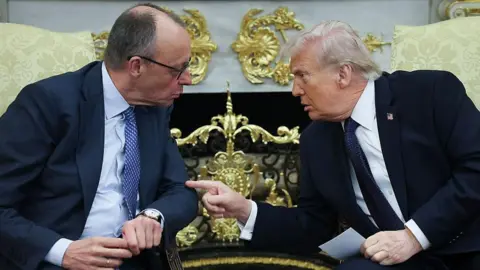
The core of the dispute between Trump administration officials and Chancellor Merz centers on how to approach the Iranian regime and its nuclear ambitions. The disagreement reflects broader philosophical differences about engagement versus confrontation in Middle Eastern affairs and highlights the diverging strategic priorities between Washington and Berlin. These tensions have been exacerbated by recent diplomatic statements from both sides, with each nation taking increasingly hardline positions on key foreign policy issues. The US-Germany military relationship has historically transcended partisan politics, but current dynamics suggest these traditional bonds may be tested.
Germany's Chancellor Friedrich Merz, who recently took office as leader of Europe's largest economy, has found himself at odds with the Trump administration over multiple policy areas simultaneously. The deterioration in bilateral relations comes at an especially delicate moment, as Germany grapples with economic challenges and security concerns related to potential Russian aggression. Merz's government has attempted to balance maintaining transatlantic ties while asserting German independence in foreign policy matters, a balancing act that has proven increasingly difficult.
The announcement of the troop withdrawal has prompted serious concerns among European NATO allies about the reliability of American security commitments. Many European defense officials worry that the reduction signals a weakening of US dedication to European security at a time when Russia continues to pose threats on the continent's eastern borders. The NATO alliance has already been strained by discussions about burden-sharing and defense spending increases, and this development threatens to further complicate alliance cohesion during a critical period.
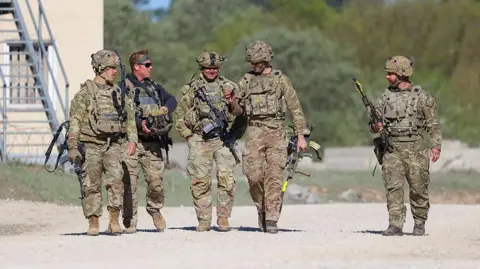
Currently, the United States maintains approximately 36,000 military personnel stationed across Germany, making it the largest concentration of American troops outside the United States. These forces are distributed among numerous installations, including major bases such as Ramstein Air Base, which serves as a critical hub for American military operations across Europe and Africa. The 5,000-troop reduction would decrease this presence by nearly 14 percent, a significant drawdown that will impact military infrastructure, local communities, and operational capabilities. The economic implications for German border regions that depend on American military spending are substantial and concerning to local officials.
The timing of this announcement raises questions about the strategic intentions behind the decision and whether the troop reduction might be reversed through diplomatic negotiations. Some analysts suggest that the withdrawal could be used as leverage in ongoing discussions between the two nations about various policy matters. Others contend that the announcement represents a genuine shift in American strategy, reflecting broader concerns about resource allocation and shifting security priorities in different global regions. The ambiguity surrounding the decision's permanence has added to uncertainty in both European and American policy circles.
Defense analysts have pointed out that the reduction comes amid broader questions about American military posture in Europe and the Pacific. The Pentagon has been conducting reviews of its global force structure, considering how best to allocate limited resources across multiple regions where American interests are at stake. The European security environment remains contested, with Russian military activity continuing to pose challenges along NATO's eastern flank. Germany's strategic location and its role as a staging ground for American military operations make any reduction in troop levels a matter of significant geopolitical importance.
The dispute with Chancellor Merz has been characterized by sharp public statements from both sides, with disagreements extending beyond Iran diplomacy to include concerns about German defense spending and NATO commitment levels. Merz has attempted to position Germany as a stronger voice within Europe while maintaining dialogue with Washington, but recent developments suggest this approach may not be succeeding. The government in Berlin has expressed frustration over what it perceives as inconsistent American policy signals and concerns about the future direction of transatlantic relations under current US leadership.
Economic considerations also play a role in the broader dispute, as German communities hosting American military installations depend heavily on the spending and employment that accompanies these operations. The reduction would eliminate thousands of direct and indirect jobs in regions where military installations serve as economic anchors. Local German officials and business leaders have expressed alarm about the potential economic consequences of the withdrawal, adding domestic political pressure on Chancellor Merz's government to seek a resolution to the bilateral tensions.
Looking forward, the success of any effort to resolve the current tensions between Washington and Berlin will likely depend on diplomatic flexibility from both sides. The transatlantic alliance has weathered previous periods of strain, but the current environment appears particularly fragile given overlapping disagreements on multiple policy fronts. Both nations share fundamental interests in European stability and countering security threats, but translating these shared interests into coordinated policy action has become increasingly challenging. Whether this troop reduction ultimately becomes permanent or represents a negotiating position remains a critical question for the future of US-German relations and broader European security architecture.
The broader implications of this decision extend beyond bilateral US-German relations to affect the entire European security landscape and NATO's operational effectiveness. Other European nations are watching closely to assess whether this represents a lasting change in American commitment to European defense or a temporary measure designed to exert political pressure. The credibility of American security guarantees has become a central concern for European policymakers, particularly given the evolving security environment and changing international dynamics. How both governments navigate this challenge will significantly influence the trajectory of transatlantic relations for years to come.
Source: BBC News


