
USS Gerald R Ford Returns Home After Record Deployment

The world's largest aircraft carrier completes a historic 300+ day deployment involving Middle East operations and Venezuelan operations, heading back to Virginia.
The USS Gerald R Ford, recognized as the world's largest and most advanced aircraft carrier, is set to conclude an extraordinarily significant deployment spanning more than 300 days. This historic mission has included critical military operations in the Middle East and involvement in the capture of Venezuelan leader Nicolás Maduro, according to two senior US officials who confirmed the development on Wednesday. The carrier strike group's return marks a milestone in modern naval operations and demonstrates the extensive global reach of American military capabilities.
The aircraft carrier will depart from the Middle East region in the coming days, with official estimates placing its arrival at Naval Station Norfolk in Virginia around mid-May. Military officials speaking on condition of anonymity revealed these sensitive details regarding the carrier's movement schedule and deployment timeline. The USS Gerald R Ford's homecoming represents the completion of one of the most operationally demanding deployments in recent naval history, showcasing the vessel's critical role in projecting American power across multiple theaters of operation.
During its extended mission, the carrier strike group played a substantial role in ongoing operations against Iranian forces and related regional threats. The deployment also encompassed coordination with allied nations and participation in humanitarian assistance operations throughout the strategic waters of the Middle East. This multifaceted mission underscores the versatility and importance of the USS Gerald R Ford in maintaining regional stability and protecting vital international shipping lanes.
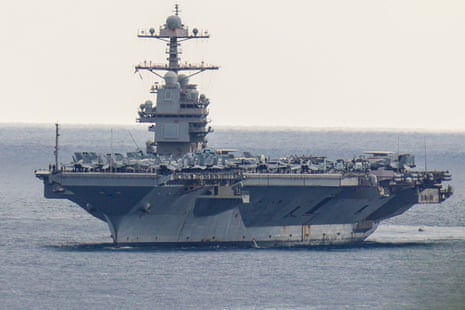
The Gerald R Ford-class carrier represents the latest generation of American naval vessels, incorporating cutting-edge technology and enhanced operational capabilities compared to previous carrier classes. The ship's advanced design allows for increased sortie rates, improved combat effectiveness, and enhanced crew efficiency, making it instrumental in the Navy's strategic vision for the coming decades. The vessel's successful completion of this demanding deployment validates the significant investment made in the development and construction of this class of carrier.
The 300-plus day deployment exceeded typical operational schedules, reflecting the high demand for American naval presence in multiple global hotspots. The extended timeline allowed the carrier strike group to maintain continuous operations across the Middle East and support multiple strategic objectives simultaneously. This extended presence demonstrated the Navy's commitment to protecting American interests and supporting allied partners throughout one of the world's most strategically important regions.
Involvement in the Venezuelan operation represents another significant aspect of the mission, with the carrier strike group providing logistical support and security presence during this sensitive geopolitical event. The operation highlighted the Navy's ability to respond rapidly to emerging situations and provide necessary resources for diplomatic and security initiatives. The military operation underscored America's continued interest in hemispheric security and stability throughout the Western Hemisphere.
The USS Gerald R Ford's capabilities have been extensively tested during this deployment, with the vessel operating advanced radar systems, catapult technology, and automated weapons systems that represent significant improvements over previous generations. The carrier's electromagnetic aircraft launch system (EMALS) has proven particularly valuable in executing sustained air operations without the wear and tear associated with traditional steam catapults. These technological advantages have enabled the carrier strike group to maintain higher operational tempo and greater flexibility in mission execution.
The crew of approximately 5,000 sailors and aviation personnel aboard the USS Gerald R Ford has demonstrated exceptional professionalism and dedication throughout the extended deployment. These service members have maintained constant vigilance, executed complex military operations, and provided humanitarian assistance across the deployment region. Their commitment to excellence has been crucial to the mission's success and the carrier's reputation as a critical asset in American national defense strategy.
The return of the USS Gerald R Ford comes at a time when the United States Navy faces increasing demands for forward-deployed forces throughout multiple strategic regions. The extended deployment reflected the high operational tempo expected from modern naval forces and the importance of maintaining American military presence in critical areas of global interest. Upon returning to port, the carrier strike group will undergo comprehensive maintenance, crew rotation, and training activities to prepare for subsequent deployments.
Naval analysts have noted that the USS Gerald R Ford's successful extended deployment provides valuable data regarding the carrier's performance, crew efficiency, and operational capabilities. The mission has offered insights into how the advanced systems aboard the vessel function during sustained operations and has helped identify areas for potential refinement and improvement. This operational experience will inform Navy doctrine and training programs for years to come.
The Naval Station Norfolk in Virginia, where the USS Gerald R Ford is homeported, serves as the largest naval installation in the world and home to numerous carrier strike groups. The carrier's arrival will bring its personnel together with families and support personnel who have awaited the vessel's return throughout the extended deployment. The homecoming represents a significant milestone for all those involved in the USS Gerald R Ford's operations and support structure.
Looking forward, the USS Gerald R Ford will prepare for future deployments as part of America's commitment to maintaining strategic naval superiority and protecting vital interests throughout the world's oceans. The lessons learned during this record-setting deployment will inform operational planning and training protocols for subsequent missions. The aircraft carrier's continued service exemplifies the Navy's dedication to maintaining a powerful, technologically advanced fleet capable of responding to emerging threats and supporting American strategic objectives globally.
The USS Gerald R Ford's record deployment represents a testament to American engineering excellence, military professionalism, and naval innovation. The successful completion of this extended mission demonstrates the vessel's readiness and the capability of modern naval forces to execute complex, sustained operations across vast geographic distances. As the Navy continues to evolve and modernize, the USS Gerald R Ford remains at the forefront of American maritime strategy and global security operations.
Source: The Guardian


