
Vance's Iran Dilemma: Peacemaker Role Tests Political Convictions

VP JD Vance faces complex challenge balancing Christian peacemaking ideals with political realities in potential Iran negotiations. Explore the tensions ahead.
Vice President JD Vance stands at a significant crossroads as he potentially assumes a central role in what could become one of the most consequential diplomatic initiatives of the current administration. The position presents a profound challenge that forces him to reconcile his deeply held personal convictions with the demands of serving under a president whose foreign policy approach often diverges from positions Vance has publicly articulated in the past.
As someone who openly embraces his Christian faith and frequently references religious principles in his public discourse, Vance cannot help but be mindful of one of Christianity's most foundational teachings: the beatitude from Matthew's Gospel that pronounces "blessed are the peacemakers." This biblical mandate has long resonated with those who view diplomacy and conflict resolution as moral imperatives. For Vance, a devout Catholic convert who has made his spiritual convictions a notable aspect of his public identity, this teaching carries particular weight and significance.
The vice president's position becomes even more intricate when one considers his recent public tensions with Pope Francis, the head of his faith community. These disagreements touched on substantive matters of doctrine and practice, revealing that Vance's relationship with institutional Catholicism is not without friction. This development adds another layer of complexity to his current diplomatic predicament, as it underscores potential tensions between his personal political philosophy and the teachings of the Church he has publicly embraced.
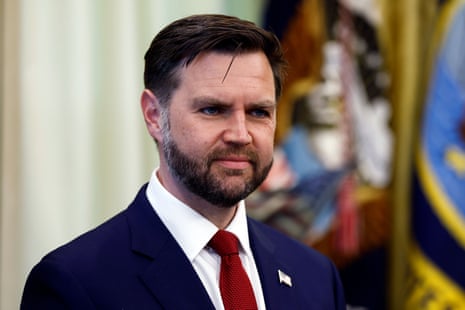
The core of Vance's dilemma lies in a fundamental contradiction between his stated principles and his current responsibilities. For years, before assuming office as vice president, Vance was vocal in his skepticism about military interventions and foreign entanglements. He articulated concerns about the costs—both human and financial—of prolonged military conflicts and advocated for a more restrained approach to American foreign policy. These positions resonated with a significant portion of the American electorate that had grown weary of endless military commitments abroad.
Yet now, Vance finds himself potentially positioned as a key negotiator in Iran talks that could fundamentally reshape regional dynamics and American interests in the Middle East. The assignment puts him in the position of having to advance the foreign policy agenda of his boss, whose approach to international relations can be unpredictable and whose decisions don't always align with conventional diplomatic practice or the cautious restraint Vance once championed.
The situation is further complicated by the administration's current military posture, which includes ongoing or recently concluded conflicts that Vance had previously warned against or criticized. The administration continues to pursue aggressive foreign policy objectives, even as Vance is tasked with pursuing what could theoretically be characterized as a more conciliatory approach to the Iran conflict. This contradiction is not lost on observers of American politics, who note the tension between Vance's former statements and his present duties.
Understanding the stakes requires examining what Iran negotiations might entail and why Vance's involvement matters. The Middle East remains one of the most volatile regions in international relations, and Iran's nuclear program has been a persistent point of contention for successive American administrations. Whether the goal is to resurrect previous diplomatic agreements, forge new arrangements, or pursue entirely different approaches, the negotiations would represent a significant shift in American foreign policy during this administration's tenure.
Vance's potential role as point man in these negotiations is notable because it suggests the administration may be contemplating a pivot toward diplomatic engagement. If true, this would represent a significant departure from some of the more confrontational rhetoric that has characterized the administration's public statements on Iran. Such a shift could position Vance as the architect of a new approach, though it could also expose him to criticism from multiple directions.
From the right, critics may argue that Vance is abandoning the tougher stance they believe America should maintain toward Iran and other adversaries. From the left, observers might note the irony of a figure who once questioned American military interventions now potentially negotiating agreements that could be seen as a form of appeasement. Meanwhile, moderate foreign policy experts might view Vance as the reasonable voice within an administration not always known for measured approaches to international relations.
The challenge for Vance goes beyond merely managing these political contradictions. He must navigate the practical difficulties inherent in any diplomatic negotiation with Iran, an adversary with its own set of demands, red lines, and internal political constraints. Iranian leadership faces its own domestic pressures and must justify any agreement to their constituencies. The complexity of nuclear technology, regional proxy conflicts, and historical grievances on both sides means that even experienced diplomats find these talks extraordinarily difficult.
Perhaps most fundamentally, Vance must contend with the mercurial nature of his boss. The president is known for making sudden decisions, changing course based on new information or shifting moods, and viewing international agreements with skepticism. For a vice president charged with negotiating a potentially historic agreement, the possibility that the president might suddenly withdraw support or demand new conditions must weigh heavily. This unpredictability creates an additional obstacle beyond the usual challenges of international diplomacy.
The situation also raises questions about Vance's personal agency and influence within the administration. Is he genuinely positioned to shape the trajectory of these negotiations, or is he being assigned a role that is ultimately constrained by forces beyond his control? Will his input be valued and heeded, or will he find himself implementing policies he didn't design and might not fully endorse? These questions remain largely unanswered, though his track record suggests he maintains some degree of influence.
Looking forward, Vance's role in Iran peace efforts will likely define a significant portion of his legacy as vice president. Success could position him as a serious foreign policy operator and diplomatic talent, potentially positioning him for future political opportunities. Failure or perceived compromise of his principles could damage his reputation among supporters who valued his previous skepticism about military adventurism.
The vice president's predicament ultimately reflects broader tensions within American politics and governance. How do public servants balance their personal convictions with the demands of office? When does loyalty to a leader conflict with loyalty to principle? These are ancient questions of political philosophy, but they take on acute relevance when a figure like Vance—someone whose personal beliefs are so public and prominent—must navigate them in real time on the world stage.
Source: The Guardian


