
Vance Threatens to Cut Health Funding Over Fraud Compliance

VP JD Vance warns states refusing Trump administration's anti-fraud effort could lose Medicare and Medicaid funding. Medicare pauses hospice signups amid investigations.
The Trump administration is intensifying its efforts to combat what it characterizes as widespread fraud within the nation's healthcare system, with Vice President JD Vance taking center stage in announcing aggressive new enforcement measures. In a significant escalation of federal pressure, Vance has issued a stark warning to state governments: those unwilling to vigorously participate in the administration's anti-fraud initiative face the prospect of losing critical federal funding for essential health programs. This announcement marks a pivotal moment in the administration's approach to Medicare and Medicaid oversight, combining enforcement action with financial leverage to compel compliance across all 50 states.
Medicare, the federal health insurance program serving approximately 67 million Americans, has already taken concrete steps by pausing new signups for hospice and home healthcare agencies as investigators examine potential fraudulent activities within these sectors. The decision to freeze enrollments represents one of the most visible consequences of the fraud investigation efforts currently underway. Federal officials have expressed concerns that certain providers may have been operating outside established regulatory frameworks or misrepresenting services to generate fraudulent billing claims. These investigative actions underscore the administration's determination to protect taxpayer resources while maintaining the integrity of these vital healthcare programs.
Vance's ultimatum extends beyond mere suggestions, positioning federal funding as the primary enforcement mechanism for ensuring state cooperation with the White House anti-fraud effort. States that fail to demonstrate adequate commitment to combating fraud within their borders face the genuine prospect of losing access to Medicaid funding and Medicare reimbursements, resources that virtually every state depends upon to operate their healthcare infrastructure. The vice president's language was unambiguous, indicating that Washington would "turn off" federal health insurance program funding for non-compliant states, transforming the anti-fraud initiative into a federal compliance mandate backed by substantial financial consequences.
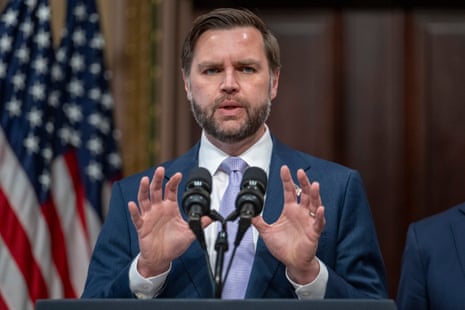
The announcement has immediately drawn criticism from Democratic officials and healthcare advocates who contend that the administration is weaponizing fraud allegations to punish politically opposing states. Critics argue that many of the states most vulnerable to funding cuts are those with Democratic leadership, suggesting that the fraud crackdown may serve dual political purposes beyond legitimate law enforcement. These accusations reflect broader concerns about the administration's use of federal authority to advance partisan objectives, transforming what could be routine healthcare oversight into a politically charged initiative. The controversy underscores the deep partisan divides that characterize American healthcare policy debates.
Healthcare industry analysts have raised additional concerns about the practical implications of the enrollment freeze on hospice and home healthcare services. Patients currently receiving these critical services—often elderly or terminally ill individuals who depend on these programs for quality of life—could face service disruptions if investigations drag on without resolution. The gap between investigation initiation and policy resolution creates genuine uncertainty for both providers and patients navigating these essential healthcare sectors. Industry representatives have begun calling for clearer timelines and more specific fraud allegations to allow providers to defend themselves against unsubstantiated claims.
The broader context for this enforcement action involves increasing federal scrutiny of healthcare program spending at all levels. The Centers for Medicare and Medicaid Services (CMS) has expanded its auditing capabilities and enhanced its data analytics to identify potential fraud patterns across provider networks. These efforts aim to recover billions in potentially fraudulent claims while improving program integrity. However, the expanded enforcement efforts have sometimes resulted in overly broad investigations that catch legitimate providers in their net, creating operational challenges across the healthcare system.
State officials, regardless of political affiliation, have expressed frustration with the ambiguity surrounding specific fraud allegations and expectations for state-level compliance. Without detailed information about which providers, regions, or service categories face investigation, states struggle to develop targeted response strategies. This informational gap has prompted requests for more transparent communication from federal officials about the specific nature of alleged fraud and evidence supporting investigations. State Medicaid directors have emphasized that effective fraud prevention requires collaborative relationships between state and federal agencies, which may be undermined by adversarial approaches.
The healthcare fraud problem is genuine and well-documented, with government estimates suggesting that fraudulent and abusive claims cost taxpayers tens of billions annually. Combating this waste is a legitimate policy objective that transcends partisan boundaries, with healthcare fraud harming both the Medicare Trust Fund and state Medicaid budgets. However, the approach taken by the Trump administration appears to conflate fraud investigation with political leverage, raising questions about whether enforcement efforts will be applied consistently across all states or selectively targeted for political advantage. This distinction between legitimate fraud prevention and politically motivated punishment remains central to the controversy surrounding the announcement.
The timing of Vance's announcement coincides with broader administration efforts to reshape federal-state relationships across multiple policy domains. By linking healthcare funding to fraud compliance, the administration signals its willingness to use financial mechanisms to enforce policy priorities. This approach reflects a more aggressive federalism strategy compared to previous administrations, consolidating federal authority over healthcare program administration. The approach raises constitutional questions about federal funding conditions and state autonomy that legal scholars will likely examine closely.
Looking forward, the success or failure of the administration's anti-fraud initiative will depend significantly on whether the enforcement efforts prove credible and consistent. States will closely monitor whether funding threats are applied uniformly based on objective fraud metrics or selectively based on political considerations. The healthcare industry will watch to see whether the initiative focuses on clear, provable fraud with proper due process protections or casts an excessively broad net that ensnares legitimate providers. These outcomes will ultimately determine whether the anti-fraud effort succeeds in protecting taxpayer interests or devolves into a tool for political leverage.
The federal healthcare funding implications of this policy shift are substantial, potentially affecting millions of patients who depend on Medicare and Medicaid services. The healthcare program integrity initiative represents a significant policy emphasis for the current administration, even as questions persist about its implementation and underlying motivations. As states develop their responses to the compliance requirements, the coming months will reveal whether this approach generates genuine improvements in program integrity or primarily serves as a political instrument for federal control over state healthcare administration.


