
Venezuela Prisoner Release Scheme Faces Criticism

Rights groups express concern as Venezuela's prisoner release program winds down, with over 500 political detainees reportedly still incarcerated.
Venezuela's ambitious prisoner release initiative is drawing intense scrutiny from international human rights organizations as the program appears to be losing momentum and approaching its conclusion. Since the implementation of the amnesty law that was designed to address the country's burgeoning prison population crisis, significant questions have emerged regarding the effectiveness and scope of the releases. Rights groups are now voicing serious concerns about what they view as an incomplete resolution to Venezuela's detention crisis, particularly given the substantial number of political prisoners who remain confined.
According to multiple human rights monitoring organizations, more than 500 political prisoners are believed to still be held in Venezuelan correctional facilities despite the waves of releases that have occurred under the amnesty framework. This figure represents a troubling reality for advocates who have been tracking the situation closely since the law's introduction. The discrepancy between the number of individuals released and those who continue to languish in detention has become a focal point for criticism from both domestic and international observers who question the government's commitment to genuinely addressing political imprisonment.
The amnesty law that initiated this process was originally heralded as a potential breakthrough in Venezuela's long-standing human rights crisis. However, the implementation has proven far more selective and limited than many observers had anticipated or hoped. Rather than providing a comprehensive solution to political detention, the releases have been characterized by critics as sporadic and insufficient, suggesting that the government may be using the process strategically rather than as a genuine commitment to liberation.
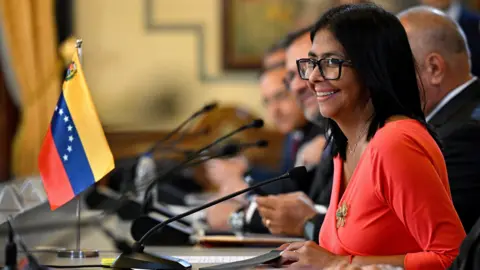
International human rights organizations have become increasingly vocal in their criticism of what they describe as the program's inadequacies. These groups argue that the Venezuelan government's approach to prisoner releases demonstrates a concerning pattern of selective justice rather than comprehensive reform. The organizations emphasize that the continuation of political detention, particularly at the scale suggested by current estimates, contradicts the stated intentions of the amnesty initiative and raises serious questions about the government's sincerity in addressing longstanding grievances related to detention practices.
The situation reflects broader challenges within Venezuela's justice system, which has long been characterized by allegations of arbitrary detention, inadequate legal representation, and poor prison conditions. Human rights monitors have documented numerous cases where individuals accused of political opposition have been held without proper due process or fair trials. The amnesty law was expected to provide relief in these cases, yet the limited scope of releases suggests that fundamental issues within the detention system remain unresolved and continue to affect vulnerable populations.
Political detention in Venezuela has been a persistent concern for international bodies including the United Nations and regional human rights commissions. The country has faced repeated criticism over its treatment of opposition figures, activists, and individuals perceived as threats to government stability. These documented patterns have made Venezuela the subject of multiple international investigations and condemnations, yet practical solutions have remained elusive, and the amnesty initiative has done little to fundamentally alter the landscape of political imprisonment.
The approaching conclusion of the prisoner release scheme comes at a critical moment for Venezuela's international standing regarding human rights compliance. Many observers view the program's limited scope as representative of a broader reluctance by the Venezuelan government to genuinely address systemic issues within its detention apparatus. The maintenance of over 500 political prisoners in custody, even as the release program winds down, suggests that fundamental change in how the government handles political opposition may not be forthcoming in the near term.
Family members of detainees have become increasingly outspoken about their frustration with the slow pace and limited nature of the releases. Many have spent months or years advocating for the freedom of their relatives, attending hearings, and petitioning authorities for information about their loved ones' status. The prospect of the amnesty program ending without securing their family members' release represents a devastating outcome for these individuals who had harbored hope that the initiative would provide a path to liberation.
Advocacy organizations working on the ground in Venezuela have compiled detailed documentation of cases involving political prisoners who remain incarcerated despite qualifying criteria that should have made them eligible for release under the amnesty framework. These documented instances raise questions about the transparency and consistency of the release process and suggest that decisions may be influenced by factors beyond the formal criteria established by the law. The lack of clear communication from authorities regarding why certain individuals remain detained has compounded frustration among advocates and international observers.
The amnesty initiative has also been criticized for its failure to address underlying systemic problems within Venezuela's correctional system. Prison overcrowding, inadequate medical care, limited access to legal representation, and poor sanitation remain persistent issues that affect both political and common prisoners. Rights groups argue that a truly comprehensive approach to addressing Venezuela's detention crisis would require reforms extending far beyond a limited amnesty program, encompassing the entire structure of the justice system and correctional infrastructure.
As the program approaches its conclusion, there is growing concern that the window for securing the release of remaining political prisoners is rapidly closing. Rights advocates are intensifying calls on the Venezuelan government to expand the scope of the amnesty law and ensure that all political detainees receive fair consideration for release. These efforts represent a last-ditch attempt to pressure authorities into more comprehensive action before the program formally ends and whatever leverage the initiative may have provided is lost.
International diplomatic channels have been engaged in discussions about the situation, with various countries and multilateral organizations expressing concern about Venezuela's commitment to honoring its human rights obligations. However, translating diplomatic pressure into concrete policy changes has proven difficult, and the apparent momentum behind the amnesty program suggests that without significant intervention, the current course will continue with limited progress on addressing the broader detention crisis.
The broader implications of the prisoner release scheme's apparent conclusion extend beyond the immediate question of detained individuals' freedom. The initiative has served as a significant barometer of Venezuelan government's willingness to engage with human rights concerns and international pressure. The limited scope of the program and the persistence of large numbers of political prisoners suggest troubling patterns regarding the government's commitment to meaningful reform and adherence to international human rights standards that Venezuela has formally committed to respecting.
Looking forward, observers anticipate that the conclusion of the amnesty program will likely intensify international scrutiny of Venezuela's human rights record and may prompt renewed calls for intervention through regional and international mechanisms. The failure to comprehensively address political detention through this initiative may ultimately prove counterproductive for Venezuelan authorities, as it demonstrates a resistance to genuine reform that could further isolate the country internationally and undermine efforts to improve its global standing on human rights issues.
Source: BBC News


