
Venezuelan Opposition Leader Freed Under New Amnesty Law

Juan Pablo Guanipa, prominent Venezuelan opposition politician, announces his release after nearly nine months of imprisonment following amnesty legislation.
Venezuelan opposition politician Juan Pablo Guanipa has announced his release from prison after spending nearly nine months in detention, following the passage of new amnesty legislation in the South American nation. The prominent political figure's freedom marks a significant development in Venezuela's ongoing political crisis and highlights the potential impact of recent legislative changes on political prisoners.
Guanipa, who has been a vocal critic of the current Venezuelan government, confirmed his release through social media channels, stating that he had been freed after "almost nine months" of imprisonment. His detention had been widely criticized by international human rights organizations and opposition groups, who viewed it as part of a broader crackdown on political dissent in the country.
The Venezuelan opposition leader's release comes amid a complex political landscape in Venezuela, where tensions between government forces and opposition groups have persisted for years. Guanipa's case had become symbolic of the challenges faced by political opposition figures in the country, drawing attention from international observers and human rights advocates.
The newly passed amnesty law represents a potential shift in Venezuela's approach to political prisoners and opposition figures. Legal experts suggest that this legislation could pave the way for the release of additional political detainees, though the full scope and implementation of the law remain subjects of ongoing analysis and debate among legal scholars and political observers.
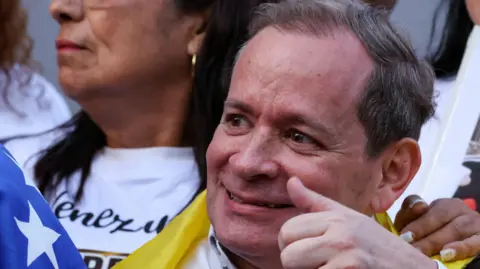
Guanipa's political career has been marked by his consistent advocacy for democratic reforms and his opposition to authoritarian practices. As a member of the Venezuelan opposition movement, he has participated in numerous campaigns aimed at promoting electoral transparency and protecting civil liberties. His imprisonment had been seen as a significant blow to opposition organizing efforts in the country.
The circumstances surrounding Guanipa's initial detention reflected broader patterns of political persecution that have characterized Venezuela's political environment in recent years. Opposition figures, journalists, and civil society activists have faced increasing pressure, with many reporting harassment, detention, and other forms of intimidation designed to suppress dissenting voices.
International human rights organizations had previously called for Guanipa's immediate release, arguing that his detention violated fundamental principles of due process and freedom of expression. The Inter-American Commission on Human Rights and other regional bodies had expressed concern about his case, viewing it as indicative of broader human rights challenges in Venezuela.
The passage of the amnesty legislation that facilitated Guanipa's release involved complex negotiations within Venezuela's political system. Political analysts suggest that the law's approval may reflect changing dynamics within the country's leadership or potential responses to international pressure regarding human rights conditions.
Guanipa's freedom has been welcomed by fellow opposition politicians and supporters, who view his release as a positive step toward improving conditions for political prisoners in Venezuela. However, many observers emphasize that significant challenges remain for opposition figures and that sustained efforts will be necessary to ensure broader protections for political rights and civil liberties.
The Venezuelan political opposition continues to face numerous obstacles in its efforts to participate effectively in the country's democratic processes. Despite Guanipa's release, questions persist about the overall treatment of opposition figures and the space available for legitimate political dissent and debate.
Legal experts are closely monitoring the implementation of the new amnesty law to assess its potential impact on other cases involving political prisoners. The law's effectiveness will likely depend on how it is applied in practice and whether it represents a genuine commitment to addressing human rights concerns or serves primarily symbolic purposes.
Guanipa's case has also highlighted the role of international pressure in influencing domestic political developments in Venezuela. The attention drawn to his detention by foreign governments and international organizations may have contributed to the conditions that ultimately led to his release under the new amnesty provisions.
As Venezuela continues to navigate its complex political challenges, the treatment of opposition figures like Guanipa remains a critical indicator of the country's commitment to democratic principles and human rights protections. His release, while significant, occurs within a broader context of ongoing political tensions and institutional challenges.
The international community continues to monitor developments in Venezuela closely, with particular attention to issues related to political prisoners and the protection of democratic institutions. Guanipa's freedom may influence future diplomatic efforts and international assessments of Venezuela's human rights record.
Moving forward, opposition leaders and civil society organizations are likely to view Guanipa's release as both a victory and a reminder of the work that remains to be done to ensure full protection of political rights in Venezuela. The effectiveness of the amnesty law and its application to other cases will be crucial factors in determining whether this development represents meaningful progress or remains an isolated incident.
Source: BBC News


