
Venice Biennale Criticized for Russian Participation Amid Ukraine War

The renowned Venice Biennale faces significant backlash after deciding to include Russian artists for the first time since Russia's full-scale invasion of Ukraine began.
The prestigious Venice Biennale, one of the world's most influential contemporary art exhibitions, has become the center of considerable controversy following its decision to include Russian artists for the first time since Russia's devastating full-scale invasion of Ukraine in February 2022. The inclusion has sparked immediate and vocal protests from activists, artists, and cultural commentators who argue that showcasing Russian art at this moment sends a deeply troubling message about complicity and cultural diplomacy during an ongoing armed conflict.
Multiple demonstrations have erupted at the renowned Venice art fair, with protesters gathering to voice their opposition to what they perceive as an inappropriate rehabilitation of Russian cultural participation on the international stage. The backlash has intensified discussions about the responsibilities of major cultural institutions when it comes to geopolitical conflicts and the ethical dimensions of artistic representation during wartime.
The decision to reinstate Russian representation at the Biennale represents a significant reversal in policy, as previous iterations of the exhibition had effectively excluded Russia from official participation in the years immediately following the invasion. This shift in curatorial direction has raised questions about the motivations behind the inclusion and whether such decisions adequately consider the humanitarian crisis unfolding in Ukraine.
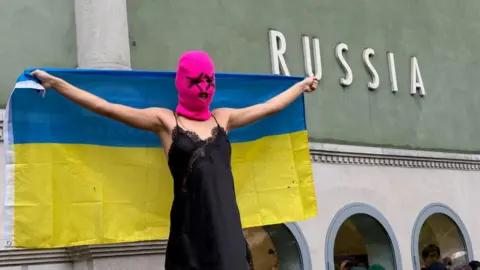
The conflict between Russia and Ukraine has profoundly impacted cultural institutions worldwide, forcing them to grapple with difficult questions about how to respond to geopolitical tensions through their programming and curation. Many cultural organizations initially implemented swift responses to the invasion, including canceling performances by Russian artists, suspending collaborations with Russian institutions, and withdrawing Russian works from exhibitions. However, the passage of time has led some institutions to reconsider these positions, viewing them as potentially counterproductive to long-term cultural dialogue.
The Venice Biennale's leadership has attempted to justify their decision by framing it as a commitment to artistic freedom and the universal nature of creative expression. According to their position, art transcends political boundaries and should not be weaponized as a tool of geopolitical conflict. This perspective suggests that excluding artists based on nationality runs counter to the fundamental principles that contemporary art institutions are meant to uphold.
However, critics argue that such reasoning fundamentally misunderstands the gravity of the situation in Ukraine, where tens of thousands have died and millions have been displaced from their homes. They contend that the principle of artistic freedom cannot be divorced from the material realities of war and human suffering. For many, including Russia at the Biennale feels like a premature normalization of relations before any meaningful resolution to the conflict has been achieved.
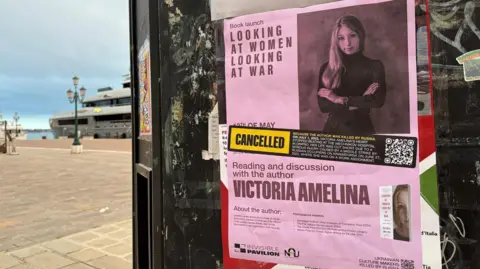
The international art community has remained deeply divided on this issue, with some institutions maintaining their stance against Russian participation while others have begun to soften their positions. This divergence reflects broader disagreements about the relationship between cultural institutions and political responsibility. Some artists and curators have argued that isolation of Russian cultural figures is counterproductive and may ultimately harm efforts toward eventual reconciliation and peace.
Ukrainian artists and cultural organizations have been particularly vocal in their opposition to the Biennale's decision. Many Ukrainian creatives see their own exclusion from platforms during wartime as an injustice, yet witness the inclusion of artists from the aggressor nation. This perceived imbalance has fueled accusations that international cultural institutions are failing to adequately support those most affected by the conflict and may even be inadvertently legitimizing the actions of those responsible for the invasion.
The timing of the inclusion decision has also drawn criticism, as it comes at a moment when the war shows no signs of resolution and when humanitarian concerns about Ukraine remain at the forefront of international discourse. Many protesters argue that institutions of the Biennale's stature have a responsibility to use their platform to amplify voices of solidarity with victims of aggression, rather than appearing to brush aside the political dimensions of art.
The controversy surrounding the Venice Biennale highlights the complex relationship between art and politics in the contemporary world. Increasingly, major cultural institutions find themselves at the intersection of aesthetic questions and geopolitical considerations, forced to navigate between competing principles of artistic freedom and political responsibility. The decisions they make carry symbolic weight that extends far beyond the confines of exhibition halls.
Historical precedent offers limited guidance on how to handle such situations. While cultural boycotts have been employed as political tools in the past, most notably regarding South African apartheid, the mechanisms by which such boycotts contribute to meaningful change remain contested among scholars and activists. The Venice Biennale situation suggests that there is no consensus within the global arts community about best practices for responding to international conflicts through curatorial decisions.
As the Biennale prepares to open its doors to exhibitors and visitors, the organization faces mounting pressure to address the concerns raised by protesters and stakeholders. The institution's leadership must balance their stated commitment to artistic freedom with acknowledgment of the legitimate concerns raised by those affected by the Ukraine conflict. How they navigate this challenge will likely have implications for how other major cultural institutions approach similar questions in the future.
The broader implications of the Venice Biennale's decision extend beyond the immediate context of the current conflict. It raises fundamental questions about how cultural institutions should respond to geopolitical crises and whether isolation or engagement represents the more ethical path forward. These questions will continue to resonate throughout the cultural world as other institutions develop their own responses to evolving international circumstances and conflicts.
Looking forward, the controversy may prompt art institutions globally to develop clearer frameworks for addressing political dimensions of their programming. Whether the inclusion of Russian artists at the Venice Biennale ultimately proves controversial or becomes accepted as appropriate may depend on broader developments in the Ukraine conflict and evolving international sentiment regarding how best to address cultural participation from nations involved in armed aggression.
Source: BBC News


