
Venice Biennale Opens Amid Political Turmoil

The 61st Venice Biennale begins under dark skies with Russia pavilion closed and protests over Israel's participation intensifying amid resignations.
The 61st Venice Biennale vernissage officially commenced on Tuesday amidst overcast weather conditions and intermittent rainfall, setting a sobering tone for what is widely regarded as one of the most prestigious and influential art events in the global contemporary art calendar. The opening day proved to be far more contentious than organizers may have anticipated, as political tensions, ceremonial festivities, and organized demonstrations overshadowed much of the celebration, underscoring the increasingly fraught relationship between the art world and geopolitical realities. Despite the meteorological challenges and the heavy atmosphere of discord, the event proceeded with its traditional grandeur, though the underlying currents of controversy remained impossible to ignore throughout the proceedings.
The decision to maintain closure of the Russian pavilion continues to reverberate throughout the international art community, serving as a potent reminder of the ongoing tensions stemming from geopolitical conflicts. This controversial move has become emblematic of how the art world grapples with questions of representation, diplomatic relations, and institutional responsibility in an increasingly polarized global landscape. The absence of Russia's cultural presence at the Venice Biennale marks another significant moment in the ongoing isolation of Russian cultural institutions on the international stage, a consequence that reverberates far beyond the confines of the art world.
Simultaneously, the inclusion of Israel in this year's programming has sparked considerable outcry from activists, artists, and cultural commentators who view the participation as problematic given the current geopolitical situation. The protests surrounding Israel's participation have grown increasingly vocal and organized, with demonstrators gathering outside the venue to voice their objections to the Palestinian-Israeli conflict and what they perceive as the institution's complicity through its hosting of Israeli cultural representation. This groundswell of activism reflects broader societal debates about how cultural institutions should navigate their roles during periods of international conflict and human rights concerns.

In a striking development that underscores the internal conflicts within the art establishment, several prominent individuals have tendered their resignations in response to these ongoing controversies. These departures from key positions within the organizational structure have added another layer of complexity to an already fraught situation, raising questions about institutional governance and the values that guide decision-making at major cultural venues. The resignations themselves have become newsworthy, attracting significant media attention and further amplifying the discord surrounding the event's opening.
Amidst the prevailing atmosphere of tension and disagreement, British artist Lubaina Himid has emerged as one of the standout participants in this year's Venice Biennale, representing the United Kingdom with a compelling and ambitious exhibition. Himid, whose artistic practice is deeply rooted in interrogating and deconstructing her nation's colonial legacy, has transformed the British pavilion into a powerful space of creative expression and historical reckoning. Her career-spanning body of work has consistently challenged comfortable narratives about British history, bringing overlooked stories and perspectives to the foreground of contemporary discourse.
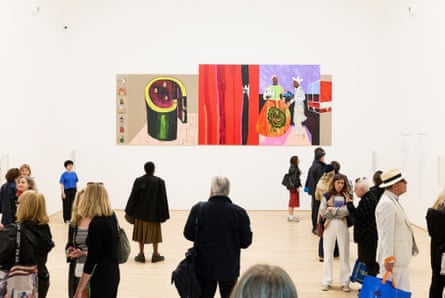
The artist's presentation at the Venice Biennale features expansive large-scale paintings that command attention through their visual presence and emotional resonance. In addition to these monumental works, Himid has incorporated a sophisticated sound collage component into her installation, which evokes the sensory experience of what she describes as a "perfect British summer's day." This multisensory approach to her exhibition demonstrates a sophisticated curatorial vision that moves beyond traditional painting-based presentations, creating an immersive environment that engages viewers on multiple levels simultaneously.
The thematic underpinnings of Himid's work resonate particularly powerfully within the current moment, as her artistic investigations into historical injustices and overlooked narratives align with broader conversations happening throughout the art world regarding representation, accountability, and the responsibility of cultural institutions. Her presence at the Biennale provides a counterpoint to some of the more contentious aspects of the opening, offering audiences an opportunity to engage with art that provokes thoughtful reflection rather than merely responding to political controversy. The universality of her artistic concerns about memory, identity, and historical truth speaks to audiences far beyond the British context.
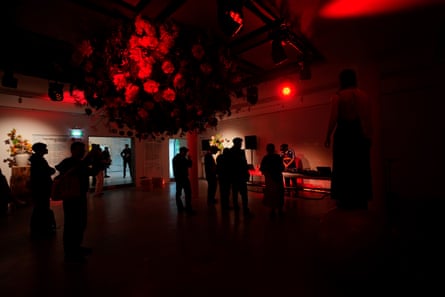
An unexpected moment of levity emerged during the otherwise tense proceedings when a nesting seagull became an unlikely participant in the opening day events. The bird, which had established itself within the venue's architecture, provided an amusing and somewhat whimsical distraction from the heavy political atmosphere that had dominated much of the day's proceedings. This small, natural intrusion into the carefully orchestrated world of high-stakes contemporary art became the subject of considerable commentary and social media attention, offering a brief respite from the weightier discussions consuming the art world.
The presence of this seagull at the Venice Biennale opening has taken on symbolic significance for many observers, who see in the creature's indifference to human concerns and artistic hierarchies a refreshing perspective on the proceedings. In an environment saturated with ideological debate and institutional conflict, the simple existence of a bird going about its natural business became oddly comforting and grounding. The incident serves as a gentle reminder that despite all the human drama and political machinations, nature continues its courses with beautiful disregard for our carefully constructed systems of meaning and value.
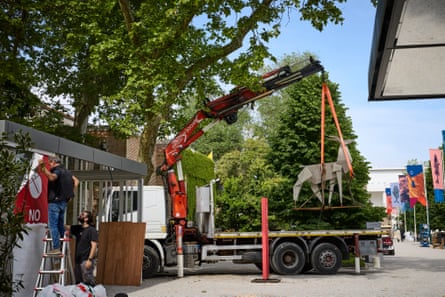
The 61st Venice Biennale thus opens as a microcosm of contemporary society's broader challenges, where artistic expression intersects with political ideology, institutional responsibility clashes with questions of representation, and carefully laid plans face unexpected disruptions from both human dissent and natural intrusion. The event's opening day has already established itself as a complex and contested occasion, one that will likely be analyzed and debated for years to come. Whether the Biennale can ultimately transform these tensions into opportunities for meaningful dialogue and artistic innovation remains to be seen as the exhibition continues throughout its run.
Source: The Guardian


