
Viral Volleyball Star Jordan Lucas on Fame and Identity

Cal State Northridge's Jordan Lucas breaks down his viral stardom, flamboyant style, and navigating public discourse as a gay athlete in college sports.
Jordan Lucas, the dynamic outside hitter for Cal State Northridge's men's volleyball team, has experienced a remarkable surge in online visibility that has fundamentally transformed his college athletic experience. The charismatic athlete has captured the attention of millions through his distinctive celebratory gestures—particularly his signature hair flicks and dismissive waves toward opponents—that have sparked widespread conversation across social media platforms. What distinguishes Lucas from other viral college athletes is not merely the highlight reels themselves, but rather the broader cultural dialogue that surrounds his performances and his identity as a prominent gay athlete in collegiate sports.
"I think people are really enamored with me because you don't often see someone like me – animated, flamboyant – but still able to back it up on the volleyball court," Lucas explains when discussing his unexpected rise to prominence. His assessment reveals an important insight about representation in college athletics and the intersection of personality, performance, and authenticity. The combination of his on-court excellence and uninhibited self-expression has resonated with audiences in ways that transcend traditional sports fandom, creating a cultural moment that extends well beyond the boundaries of competitive volleyball.
While college volleyball maintains a dedicated following with the capacity to draw impressive crowds—including a historic 92,000 fans who attended Nebraska's match against Omaha in 2023—the sport has historically struggled to achieve mainstream media attention comparable to basketball or football. However, the emergence of Lucas's viral moments has begun to shift that narrative, bringing unprecedented scrutiny and engagement to the sport. The clips showcasing his expressive playing style have accumulated millions of views across various social media platforms, introducing college volleyball to audiences who might never have otherwise engaged with the sport.

The phenomenon of college athletes achieving viral fame is certainly not without precedent in modern sports culture. Notable figures such as Paige Bueckers in basketball, Harper Murray in gymnastics, Olivia Dunne in gymnastics, and Shedeur Sanders in football have all experienced their own viral moments that translated into significant social media followings and commercial opportunities. These athletes have successfully leveraged their on-court or on-apparatus performances to build personal brands that extend far beyond their respective sports. However, Lucas's situation presents a distinctive dimension that sets it apart from these comparable cases, introducing complexities that go beyond typical athletic stardom.
What makes Lucas's case fundamentally different is that his viral prominence cannot be separated from discussions about his sexual orientation and identity. Lucas is openly gay, and this aspect of his identity has become inextricably linked with how audiences, commentators, and sports media engage with his performances and public persona. The conversations surrounding his viral clips frequently center not just on his athletic abilities or entertainment value, but on broader questions about representation, visibility, and the role of LGBTQ+ athletes in collegiate sports. This intersection of identity and athleticism has created a unique cultural moment that transcends typical sports discourse.
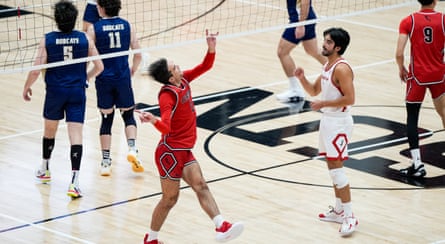
The viral ascent of Lucas's celebratory style represents more than just entertaining clips from volleyball matches—it speaks to a deeper hunger within sports audiences for authenticity and self-expression. His hair flicks and dismissive waves, which might have been overlooked or even discouraged in previous eras of college athletics, have found an enthusiastic audience in the contemporary social media landscape. These gestures, while seemingly minor details of athletic performance, carry significant cultural weight as expressions of individuality and confidence that challenge conventional notions of how athletes should conduct themselves on the court.
Navigating the fallout and consequences of viral fame has effectively become a secondary career in itself for Lucas. The attention has brought both opportunities and challenges, requiring him to manage increased scrutiny, engagement from diverse audiences, and conversations about representation that extend well beyond athletics. He has had to develop strategies for processing the volume of attention while maintaining focus on his primary role as a competitive athlete and college student. The mental and emotional dimensions of sudden fame represent significant challenges that athletes of previous generations rarely had to confront with such intensity or immediacy.
The broader context of LGBTQ+ representation in college sports provides important framework for understanding the significance of Lucas's viral moment. For decades, college athletics have been dominated by heteronormative culture with limited visible representation of openly gay athletes, particularly in traditionally masculine sports like volleyball. The emergence of athletes willing to express themselves authentically and challenge conventional athletic archetypes represents a meaningful shift in the culture of collegiate competition. Lucas's unapologetic approach to self-expression serves as a form of visibility that can inspire other athletes to embrace their authentic selves.
When discussing how his celebratory style differs from the norm in sports, Lucas explains that he is "celebrating like NFL players, just in a more feminine way." This statement directly addresses the gendered expectations placed on male athletes to conform to narrow expressions of masculinity while competing. Football players regularly engage in elaborate, expressive celebrations that are widely embraced and celebrated in sports media and popular culture. Lucas's assertion that he is engaging in fundamentally similar behavior—merely filtered through a different expression of gender and identity—highlights the double standards that often apply to male athletes who deviate from traditional masculine norms.
The social media landscape has fundamentally transformed how college athletes build their personal brands and connect with audiences. Platforms like TikTok, Instagram, and Twitter have democratized the process of athletic stardom, allowing individual athletes to cultivate followings independent of traditional sports media gatekeeping. Lucas's viral clips represent the power of social media to elevate athletes whose charisma and personality resonate with online audiences, regardless of whether they receive extensive coverage from mainstream sports broadcasters. This shift has created new opportunities and pressures for college athletes navigating the intersection of competition, personal brand development, and public identity.
The response to Lucas's viral moments has been notably mixed, reflecting broader cultural divisions about identity expression, masculinity, and inclusion in sports spaces. While substantial segments of the online community have embraced his authenticity and celebrated his visibility as a queer athlete, other commentators have offered critical or dismissive responses. These varying reactions illuminate the ongoing tensions within sports culture regarding who belongs, how athletes should conduct themselves, and what kinds of self-expression are deemed acceptable within competitive athletic contexts. Lucas has had to develop resilience in the face of both celebration and criticism.
Moving forward, Lucas's continued presence in the viral sports landscape will likely influence broader conversations about representation, authenticity, and inclusion in college athletics. His willingness to be unapologetically himself while competing at a high level has created a template for how queer athletes can navigate collegiate sports without compromising their identity or performance. The millions who have viewed his clips represent an audience with demonstrated interest in seeing diverse expressions of athleticism and identity. As college sports continue to evolve, figures like Lucas may well prove to be catalysts for meaningful cultural change within these institutions and the broader sporting world.
Source: The Guardian


