
Volunteer Firefighter Shortage Leads to Closures Across the US

Lack of volunteers forces fire departments to shut down in some states, raising concerns about public safety.
Volunteer firefighters, who make up about 65% of the US firefighting force, have been steadily declining in number, leading to the closure of entire departments in some states. In 2008, there were 827,000 volunteer firefighters nationwide, but that figure dropped to 635,000 in 2023, the last year data is available.
Officials have warned of serious consequences as a result of this trend, with New York state reporting that the number of volunteer firefighters has fallen to the lowest level in 40 years. This shortage has forced some communities to rely solely on paid professional firefighters, which can be costly and challenging to maintain, especially in rural areas.
The decline in volunteer firefighters is attributed to a variety of factors, including the increasing demands of modern firefighting, the time commitment required, and the difficulty of balancing volunteer duties with regular jobs and family obligations. As a result, many fire departments have struggled to recruit and retain enough volunteers to maintain their services.
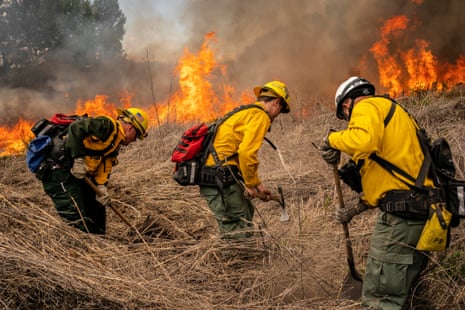
In some states, the lack of volunteers has led to the closure of entire fire departments, leaving communities without immediate access to emergency services. This has raised concerns about public safety and the ability of local governments to respond effectively to fires and other emergencies.
To address this issue, some states and municipalities have implemented various initiatives, such as offering financial incentives, training programs, and flexible schedules to attract and retain volunteer firefighters. However, the problem remains a significant challenge for many communities across the United States.
The decline in volunteer firefighters is a complex issue with far-reaching implications for public safety. As communities continue to grapple with this challenge, officials and policymakers will need to find creative solutions to ensure that essential emergency services remain available and accessible to all citizens.
Source: The Guardian


