
Waymo Autonomous Vehicles Struggle With Flooded Roads

Waymo's self-driving cars in Atlanta and San Antonio continue navigating hazardous flooded streets during extreme weather events, revealing challenges for autonomous vehicle technology.
Autonomous vehicle technology continues to face significant challenges when confronted with severe weather conditions, as recent incidents involving Waymo's fleet in Atlanta and San Antonio demonstrate the complexities of operating self-driving cars in unpredictable environmental circumstances. The San Francisco-based company, which has been expanding its robotaxi services across multiple major American cities, has encountered recurring issues with its vehicles attempting to navigate roadways submerged by floodwaters during periods of intense precipitation and extreme weather events.
The incidents underscore a critical gap in how self-driving cars perceive and respond to hazardous road conditions that human drivers instinctively avoid. When heavy rainfall transforms city streets into temporary waterways, Waymo's autonomous vehicles have continued attempting to traverse these dangerous flooded routes rather than recognizing the threat and rerouting to safer alternatives. This behavior suggests that the vehicles' sensor arrays and decision-making algorithms may not adequately account for the risks associated with driving through water accumulation on roadways.
In Atlanta, where heavy rain events are becoming increasingly common due to shifting climate patterns, Waymo vehicles have been observed slowly moving through standing water despite the obvious hazards involved. Similarly, in San Antonio, reports indicate that autonomous Waymos have ventured into flooded intersections and street sections where the depth of water and underlying road conditions remain unknown to the vehicle's perception systems. These incidents have raised concerns among city officials and residents about the reliability of autonomous vehicles during severe weather scenarios.
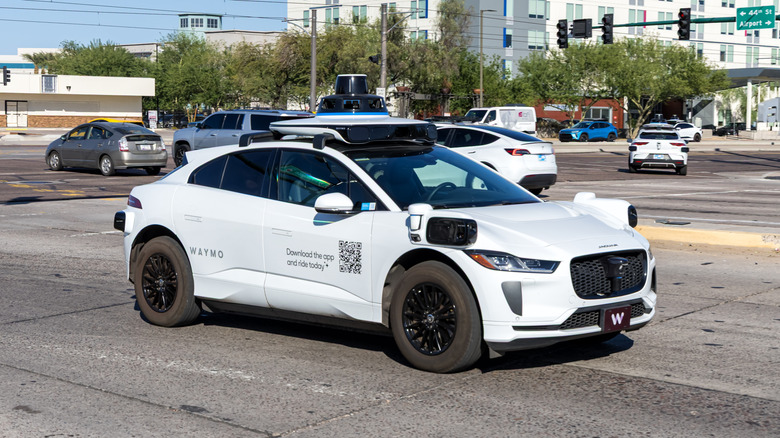
The challenge of weather detection for autonomous vehicles represents one of the most significant obstacles facing the broader adoption of self-driving technology in real-world conditions. Unlike human drivers who can assess visual cues, draw upon experience, and make intuitive judgments about water depth and road safety, autonomous vehicles rely entirely on their sensor fusion systems—combining data from cameras, LIDAR, radar, and other detection equipment. When environmental conditions obscure or confuse these sensors, the vehicles may fail to recognize dangerous situations until they are already committed to a course of action.
Water presents a particularly vexing problem for autonomous systems because it can obscure road markings, bridge infrastructure, and other visual reference points that vehicle algorithms use for localization and navigation. Additionally, water accumulation can hide potholes, debris, and structural damage to the road surface, creating risks that are difficult for sensors to detect. The inability to reliably sense these hazards means that autonomous driving systems may proceed into dangerous conditions without fully understanding the risks involved.
Waymo has invested heavily in machine learning models trained on diverse driving scenarios, yet the company's systems appear to lack adequate training data or decision logic for handling flooded road conditions. The autonomous vehicle industry generally has focused on sunny day performance and standard weather, with severe weather capabilities receiving less attention and resources than they deserve. This relative neglect of extreme weather scenarios reflects the commercial priorities of the industry but leaves a notable vulnerability in the systems' real-world applicability.
Climate change and extreme weather events are increasing in frequency and intensity, making flood-resistant autonomous vehicle systems increasingly essential rather than optional. Cities like Atlanta and San Antonio experience regular flooding during hurricane season and after intense rainfall events, and these conditions are expected to become more common in coming decades. If autonomous vehicle technology cannot safely handle these predictable environmental challenges, widespread deployment in flood-prone regions could pose genuine public safety risks.
The Waymo incidents have prompted discussions within the autonomous vehicle industry about the need for better environmental awareness and decision-making protocols. Some experts argue that vehicles should be programmed with more conservative behavior in uncertain conditions, essentially defaulting to caution when sensor data suggests potential hazards. Others propose that vehicles should maintain real-time connections to weather services and road condition databases that could alert them to known flooding before they encounter it.
From a regulatory perspective, these incidents raise questions about whether current autonomous vehicle testing and approval processes adequately evaluate performance under extreme weather conditions. Most regulatory frameworks and safety standards for autonomous vehicles were developed with an emphasis on normal operating conditions, and severe weather testing remains relatively underdeveloped. The Federal Highway Administration and state-level regulators may need to establish more rigorous testing requirements specifically focused on extreme weather scenarios.
Waymo's response to these incidents will be closely watched by competitors, regulators, and the broader autonomous vehicle industry. The company has not yet released detailed explanations of why its vehicles attempted to navigate flooded roadways or what specific sensor or algorithmic failures contributed to these situations. Whether Waymo provides comprehensive technical analysis or merely addresses the incidents quietly could influence how investors, insurers, and the public perceive the maturity and safety of the company's autonomous driving technology.
The broader implications extend beyond Waymo to other companies developing autonomous vehicles, including Cruise, Uber ATG, and numerous other startups and established automotive manufacturers. If any company's autonomous vehicle fleet cannot reliably avoid flooded roads, then that technology may not be ready for unrestricted deployment in real-world conditions. The public safety stakes are substantial, as vehicles attempting to traverse flooded roads risk not only damage to themselves but also potential hazards to other road users and pedestrians.
Looking forward, solving the flooding problem will require advances in sensor technology, more sophisticated environmental modeling, and decision-making systems that can appropriately assess risk and defer to human drivers when conditions exceed the autonomous system's capabilities. Some manufacturers are exploring the possibility of vehicles that can request a human operator to take control during challenging conditions, essentially creating a graduated autonomy model where vehicles handle standard scenarios independently but escalate to human supervision during edge cases.
The incidents in Atlanta and San Antonio serve as a useful reminder that the journey toward fully autonomous vehicles is far more complex than early promoters acknowledged. While autonomous vehicles perform well in many standard driving scenarios, the technology clearly requires substantial additional development before it can safely handle all the diverse and challenging conditions that human drivers routinely navigate. Until autonomous vehicles can reliably handle severe weather and flooding, their deployment will necessarily remain geographically limited to regions and seasons where such conditions are rare.
Source: Engadget

