
Waymo Halts Robotaxis in Five Cities Over Flood Safety

Waymo pauses autonomous taxi operations across five US cities after vehicles encountered flooded roads. The company prioritizes safety through temporary service suspension.
Waymo, the autonomous vehicle division of Alphabet Inc., has announced a significant operational pause affecting its robotaxi services across five United States cities. The decision comes in response to recent incidents involving the company's autonomous vehicles navigating into flooded roadways during periods of severe weather. A Waymo spokesperson explained that the company made this decision "out of an abundance of caution," prioritizing passenger safety and vehicle integrity above service continuity.
The temporary suspension represents a proactive approach to addressing potential vulnerabilities in the self-driving technology when confronted with extreme weather conditions. Heavy rainfall and subsequent road flooding have exposed challenges in how autonomous vehicles perceive and respond to hazardous road conditions that may not be adequately represented in their training data. This pause allows Waymo engineering teams to thoroughly evaluate sensor performance, decision-making algorithms, and safety protocols specific to flooding scenarios.
According to the company's statement, the affected cities include locations where recent weather patterns have created challenging driving conditions. While Waymo did not specifically name all five cities, the pause demonstrates the company's commitment to operating only when it can guarantee a certain threshold of safety performance. This approach aligns with industry best practices and regulatory expectations for autonomous vehicle deployment in public spaces.
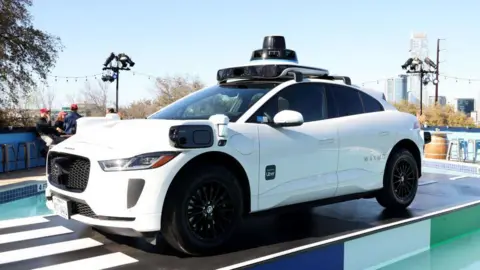
The incident raises important questions about the readiness of autonomous vehicles to handle edge cases and extreme weather scenarios. Autonomous driving technology relies heavily on machine learning models trained on extensive datasets, but rare or unprecedented weather events may not be adequately represented in these training datasets. When vehicles encounter flooded roads, their sensor systems—including cameras, lidar, and radar—may struggle to accurately assess water depth, road surface integrity, and potential hazards beneath the water's surface.
Waymo's decision to pause operations demonstrates maturity in the autonomous vehicle industry, where companies recognize that proving safety to regulators and the public is paramount. The pause allows the company to conduct detailed analysis of how its vehicles encountered flooded roads and what information they lacked or misinterpreted. This could involve reviewing sensor logs, simulation testing, and potentially updating mapping data to flag historically flood-prone areas.
The temporary service pause affects both existing Waymo One users—the commercial robotaxi service available to the public—and the company's employee shuttle programs. Regular users in affected cities have been notified of the suspension and offered alternative transportation solutions. The company has not announced a specific timeline for when services will resume, instead indicating that operations will resume once internal safety audits are completed and necessary software updates are deployed.

This situation highlights the broader challenges facing the autonomous vehicle industry as it scales operations across diverse geographic regions with varying climate conditions. While Waymo and other companies have extensively tested their systems in controlled environments and under normal weather conditions, the reality of operating in the real world includes unpredictable weather events, infrastructure issues, and scenarios that engineers may not have anticipated. Building robust systems requires continuous learning and adaptation.
Industry analysts note that this incident could have implications beyond Waymo. Other autonomous vehicle companies operating in similar markets will likely review their own protocols for handling flooded roads and severe weather conditions. Regulators may also use this incident to inform guidance on what safety standards self-driving car companies should maintain, particularly regarding edge cases and extreme weather.
The financial impact of this pause remains relatively limited due to Waymo's current operational scale. The company operates in a limited number of cities and serves a specific segment of the transportation market. However, as autonomous vehicle services expand and become more integral to urban transportation networks, the ability to operate reliably in all weather conditions will become increasingly important for both operational success and regulatory approval.
Waymo's transparency about this pause is noteworthy. Rather than attempting to downplay the incident or fixing issues quietly, the company openly communicated the suspension to users and the media. This approach helps build trust with regulators and the public by demonstrating that safety concerns are taken seriously and addressed proactively. Regulators appreciate companies that identify and address problems themselves rather than having issues discovered through complaints or accidents.
Looking forward, this pause may accelerate development of improved weather-handling capabilities in Waymo's autonomous driving system. The company may invest in better sensor fusion algorithms that can more accurately assess road conditions in heavy rain, enhanced mapping that identifies flood-risk zones, and improved decision-making protocols that err on the side of caution when weather conditions approach dangerous thresholds. These improvements could benefit not only Waymo but also contribute to industry-wide safety standards.
The incident also underscores the importance of robust testing protocols for autonomous vehicles. While simulation can help identify many potential issues, real-world testing reveals challenges that engineers might not anticipate in controlled laboratory environments. Companies like Waymo must balance the desire to rapidly expand services with the necessity of ensuring safety in diverse, complex, real-world conditions. The temporary pause represents this balance in action.
As the autonomous vehicle market continues to mature, incidents like this flooding situation will likely become more common talking points in regulatory discussions. Agencies responsible for overseeing autonomous vehicle deployment will need to establish clear standards for how companies should respond to and prevent weather-related incidents. Waymo's measured response provides a template for how responsible operators might handle such challenges, prioritizing safety over short-term operational continuity.
The company expects that this pause, while disruptive to some users, will ultimately strengthen confidence in its robotaxi services. By proactively addressing safety concerns and demonstrating technical expertise in responding to identified issues, Waymo reinforces its position as a leader in autonomous vehicle development. The temporary service suspension, therefore, should be viewed not as a failure but as evidence of the company's commitment to achieving the safety standards necessary for widespread autonomous vehicle adoption in the coming years.
Source: BBC News


