
Werner Finds Form: MLS Weekend Standouts

Timo Werner discovers his role at MLS club while Sporting KC struggles. Matt Turner impresses USMNT fans in latest MLS action.
Timo Werner has finally discovered his optimal position in MLS, delivering the kind of consistent performances that vindicate his transfer to American soccer. Meanwhile, Sporting Kansas City continues its alarming descent toward one of the league's historically poor seasons, raising serious questions about the club's trajectory. In parallel developments, goalkeeper Matt Turner is providing USMNT fans with genuine reasons for optimism heading into crucial international fixtures.
Throughout his nearly three-decade tenure as a head coach in elite American soccer, Bruce Arena has steadfastly refused to position himself as a tactical mastermind. The legendary coach has consistently demonstrated disdain for the notion that formations and intricate strategic frameworks form the cornerstone of managerial success. In one particularly memorable quote that crystallized his philosophy, Arena declared that "we have a very important analytic, and that's the score." This blunt assessment reveals a coach uninterested in the minutiae that dominates modern soccer discourse.
Such an approach stands in stark contrast to the prevailing managerial philosophy of 2026, when data analysis, positional analytics, and tactical innovation dominate every discussion about how to succeed at the highest levels of professional soccer. Yet Arena continues to thrive precisely because he possesses an almost supernatural ability to win matches, a reality that grants him immunity from the usual criticisms leveled at old-school coaches. His success derives principally from an exceptional talent for identifying player roles and establishing clear performance expectations that enable his squads to operate with confidence and purpose.

This philosophy proved instrumental during Arena's time with the LA Galaxy, where star striker Robbie Keane became perhaps the most enthusiastic advocate for his coaching style. Keane, who played under some of the world's greatest managers during his illustrious career, paid Arena an extraordinary compliment by calling him the "Sir Alex Ferguson of America." The comparison spoke volumes about how comprehensively Arena dominated his competition and shaped his teams into consistent winners. His ability to extract maximum performance from talented players became his greatest asset.
The impact of Arena's man-management approach became equally evident during his tenure at the New England Revolution, where Matt Turner flourished under his guidance. Turner's development into a legitimate USMNT starter represented a significant achievement for the young goalkeeper, whose confidence clearly benefited from Arena's unwavering support. Turner himself articulated what made Arena's approach so effective, describing it as a "super powerful thing" that transcended traditional tactical instruction. The goalkeeper recognized that Arena's gift lay in making players believe in themselves and understand their specific role within the team's broader framework.
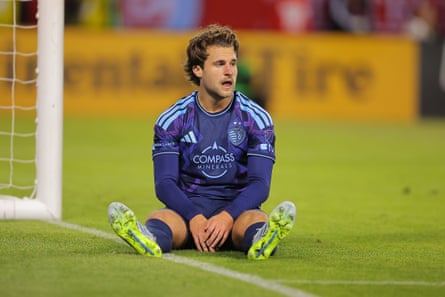
In this week's MLS weekend action, these coaching philosophies continued to shape outcomes across the league. Werner's emergence as a reliable contributor represents vindication for both the player and his current organization's decision to invest in his development. The German international had struggled to find consistency early in his MLS campaign, but recent tactical adjustments have unlocked his potential. By positioning him in a role that emphasizes his strengths—pace, technical ability, and finishing—rather than forcing him into a predetermined system, his current coaching staff has enabled him to flourish.
The contrast between Werner's trajectory and Sporting Kansas City's catastrophic season could hardly be starker. The Kansas City organization has imploded this season, with defensive vulnerabilities and creative deficiencies combining to produce one of the most disappointing campaigns in franchise history. A team that once prided itself on organizational stability and consistent playoff appearances now faces questions about fundamental structural problems. The squad's inability to score goals, combined with their perplexing defensive lapses, suggests deeper issues than simple bad luck or injury misfortune could explain.
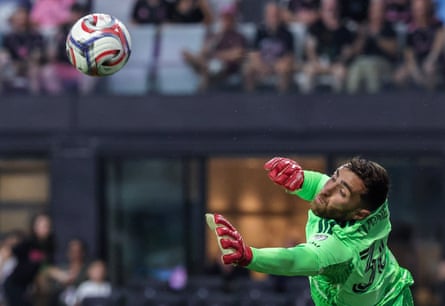
Meanwhile, Turner's performances between the posts have provided reassurance to national team supporters who harbored legitimate concerns about his international prospects. Following his formative years under Arena's patient mentorship, Turner has continued to demonstrate the mental toughness and technical proficiency required to succeed at the highest levels. His recent displays in MLS matches have showcased the kind of distribution, shot-stopping ability, and command of his penalty area that could prove invaluable for the USMNT as they approach crucial World Cup qualifying matches and tournament opportunities.
The broader lesson emerging from this MLS weekend encapsulates a fundamental truth about professional soccer: coaching matters tremendously, but not always in the ways that tactical analysts emphasize. Arena's success throughout his career has hinged upon his understanding that soccer ultimately remains a sport played by human beings requiring psychological support, clear direction, and genuine confidence in their abilities. While younger coaches obsess over pressing triggers and positional rotations, Arena focuses on the fundamental task of preparing his players mentally and emotionally for competition.
Looking ahead, the implications of these divergent trajectories will become increasingly apparent as the MLS season progresses toward its climactic stages. Teams with coherent philosophies and strong leadership—whether emphasizing tactical innovation or personnel management—will separate themselves from organizations struggling to establish basic competence. Werner's ongoing development, Turner's maturing confidence, and Sporting Kansas City's continued struggles will all serve as data points in the perpetual debate about what truly matters in professional soccer coaching and team building.
Source: The Guardian


