
Whirlpool Faces Recession-Level Slump Amid Iran Tensions

Appliance maker slashes earnings forecast and raises prices 10% as Iran war and tariffs devastate consumer spending on major purchases.
Major appliance manufacturer Whirlpool Corporation is navigating unprecedented challenges as geopolitical tensions and economic headwinds converge to create a perfect storm for the home appliances sector. The company, which operates under several well-known brand names including KitchenAid, Maytag, and Whirlpool, has announced significant adjustments to its financial outlook and pricing strategy as it confronts what executives describe as recession-level industry decline across North America.
The manufacturer reported that recent escalations in the Iran conflict have directly contributed to a dramatic collapse in consumer confidence during late February and March, fundamentally altering purchasing patterns across the appliance industry. As households grow increasingly cautious about discretionary spending, major appliance purchases—traditionally considered significant household investments—have experienced substantial delays and cancellations. This shift in consumer behavior represents a critical challenge for Whirlpool, which relies heavily on consistent demand for its refrigerators, washing machines, dishwashers, and other large household appliances.
Revenue performance during the most recent quarter fell nearly 10% compared to the same period in the previous year, a decline that reflects the broader weakness in consumer spending. Most troubling for the company, sales of major appliances in North America contracted by more than 7%, indicating that the core market for Whirlpool's primary product offerings has weakened considerably. This performance underscores the vulnerability of discretionary consumer spending when geopolitical uncertainty combines with economic concerns about inflation and job security.
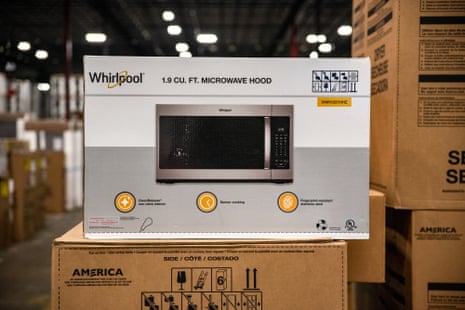
In response to these challenging market conditions, Whirlpool management has implemented aggressive pricing adjustments designed to protect profit margins amid declining sales volumes. The company has already executed a 10% price increase across its product portfolio, with plans to implement an additional 4% price hike in the coming months. These measures represent a significant attempt to offset rising costs and maintain operational profitability despite the headwind of reduced consumer demand.
The earnings forecast reduction announced by company leadership reflects management's pessimistic outlook for near-term recovery in consumer spending patterns. Executives have indicated that they expect the challenging environment to persist throughout the coming quarters, making the pricing strategy both necessary and potentially controversial from a marketing perspective. The company faces a delicate balancing act between protecting financial performance and maintaining competitiveness in an increasingly price-sensitive market.
Economists and industry analysts have noted that appliance purchases represent a valuable leading indicator of overall consumer health and economic sentiment. When households delay or cancel plans to replace aging appliances or renovate kitchens and laundry rooms, it signals broader concern about economic stability and future employment prospects. For Whirlpool and its competitors, this hesitancy translates directly into reduced order flows and mounting inventory challenges.
The intersection of geopolitical risk and trade tariff concerns adds another layer of complexity to Whirlpool's operating environment. Uncertainty surrounding potential tariff increases has created additional pressure on input costs and supply chain management, forcing the company to make difficult decisions about pricing and production levels. The potential for additional tariffs creates an additional headwind that complicates long-term planning and investment decisions for the manufacturer.
Whirlpool's situation reflects broader trends affecting American manufacturers of durable goods during periods of elevated economic uncertainty. When consumers perceive macroeconomic risks, they tend to defer major purchases of appliances, automobiles, and home furnishings—purchases that are inherently discretionary and can be delayed without immediate negative consequences. This pattern has repeated throughout numerous economic cycles, but the combination of geopolitical tension and trade policy uncertainty in the current environment appears particularly acute.
The company's portfolio of brands—including the premium KitchenAid line, the value-oriented Maytag products, and the flagship Whirlpool brand—serve different market segments and price points, yet all have experienced pressure from reduced consumer demand. This broad-based weakness suggests that the challenges are not limited to any single market segment but rather reflect economy-wide hesitation about discretionary household spending.
For consumers, the announcement of price increases comes at a time when many households are already grappling with concerns about inflation, interest rates, and overall economic stability. The prospect of paying more for appliances may further discourage replacement purchases, potentially creating a reinforcing cycle of reduced demand and mounting inventory for manufacturers. This dynamic could intensify pressure on Whirlpool and competitors throughout the year ahead.
The consumer spending patterns observed in the appliance sector may foreshadow broader economic trends that extend well beyond the home appliances market. If manufacturers across multiple sectors report similar patterns of declining demand and margin pressure, it could signal the onset of a more significant economic slowdown that affects employment, wage growth, and overall economic health. Investment analysts and policymakers will be watching closely for additional signals of economic distress in coming months.
Whirlpool's management team has emphasized its commitment to navigating these challenging conditions through disciplined cost management and strategic pricing adjustments. The company is evaluating its manufacturing footprint, supply chain efficiency, and product mix to optimize operations for a lower-volume environment. These operational adjustments, while necessary for financial survival, may require difficult workforce decisions and production facility modifications.
Looking forward, the company's ability to weather this downturn may depend on how quickly geopolitical tensions ease and consumer confidence rebounds. If the current environment proves temporary, lasting only a few quarters, Whirlpool's pricing increases and cost-cutting measures may prove sufficient to maintain acceptable profitability. However, if economic weakness persists or deepens, the company may need to implement more dramatic restructuring measures to maintain financial stability.
The situation at Whirlpool serves as a cautionary tale about the interconnected nature of modern global commerce and the vulnerability of American manufacturers to geopolitical shocks and policy uncertainty. Companies investing in domestic manufacturing and serving the American consumer market face particular exposure to shifts in confidence and spending patterns. The coming quarters will provide important insights into whether this represents a temporary correction or the beginning of a more sustained period of economic weakness affecting the appliance industry and broader economy.
Source: The Guardian


