
White House Press Dinner Shooting: What Happened

The latest details on the shooting at the White House correspondents' dinner where a suspect got close to Donald Trump before law enforcement intervention.
A shooting incident at the White House correspondents' dinner has sent shockwaves through the nation's capital, raising fresh concerns about security protocols at high-profile government events. The alleged shooter managed to breach security barriers and approach the area where President Donald Trump and numerous senior government officials were gathered for the prestigious annual gala. Law enforcement officers responded swiftly to neutralize the threat before any casualties occurred, though details surrounding the suspect's motivations and how he bypassed initial security checkpoints continue to emerge.
The incident represents a troubling escalation of threats against the sitting president and underscores the persistent security challenges facing the Secret Service and law enforcement agencies tasked with protecting top government officials. This marks the second significant security breach in less than two years, following an assassination attempt in Butler, Pennsylvania that shocked the nation and drew international attention. Just weeks after the Butler incident, authorities thwarted another assassination attempt at a golf course in Florida, prompting heated debates about security measures and threat assessment protocols.
Witnesses at the prestigious annual White House press dinner described a sense of shock and disbelief as the situation unfolded. The gathering, traditionally a lighthearted event where journalists, government officials, and media personalities celebrate press freedom and exchange witty remarks, transformed into a scene of chaos and concern. According to attendees, the atmosphere shifted dramatically when security personnel began responding to the threat, with guests and staff evacuated from the immediate vicinity.
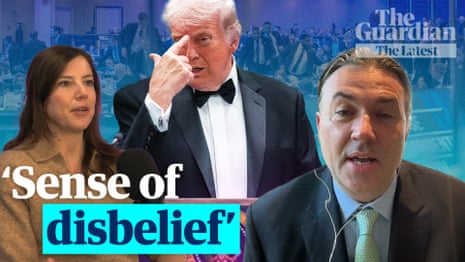
The Guardian's Washington bureau chief David Smith, who was present at the dinner, provided firsthand accounts of the disturbing moments as events unfolded. Smith described the initial confusion among attendees who were uncertain about what was happening and the severity of the situation. His observations offered valuable insight into how security response teams executed their protocols during the critical minutes when the threat was developing and being addressed.
As the alleged shooter is now being prepared to face criminal charges related to the White House incident, federal prosecutors are examining the circumstances that allowed the individual to penetrate the security perimeter. Investigators are working to establish a clear timeline of events, determine what weapons or tools the suspect possessed, and understand his potential motivations. The case is expected to draw significant legal attention given the high-profile nature of the incident and its implications for national security.
This incident has reignited discussions about the adequacy of security measures at major government events and whether current protocols are sufficient to protect against evolving threats. Security experts have begun analyzing the breach in real-time, questioning how an individual managed to approach the immediate vicinity of the president despite the presence of multiple layers of protection. Questions have arisen about coordination between federal, local, and Secret Service personnel, as well as the effectiveness of perimeter control measures.
The White House correspondents' dinner has long been viewed as a barometer of the relationship between the press and those in power, historically serving as a forum for candid exchanges and humor. The event's tradition of featuring a sitting or former president addressing the assembled journalists and media figures makes it particularly significant from a security standpoint. The presence of numerous cabinet members, congressional leaders, and senior government officials at the gathering meant that the incident potentially threatened multiple layers of national leadership.
In the aftermath of the shooting, the Secret Service faced renewed scrutiny regarding its threat assessment and protective advance work. The agency's personnel had conducted pre-event security sweeps and established protective perimeters, yet somehow the alleged perpetrator managed to circumvent these measures. This has prompted calls from lawmakers and security experts for a comprehensive review of the agency's procedures and potential updates to its operational protocols.
The timing of the incident, occurring within a politically charged period, has added another dimension to the national conversation about threats to political figures. The two previous attempts on the president's life had already elevated concerns about the security environment facing senior government officials. Law enforcement agencies across the country have been placed on heightened alert, reviewing their own security measures and threat assessments for upcoming official events.
Forensic experts and criminal investigators have been working methodically to reconstruct the events leading up to the White House correspondents' dinner shooting. Their analysis includes examining surveillance footage, interviewing witnesses, collecting physical evidence, and constructing a detailed chronology of the suspect's movements and actions. This investigative work will be crucial in determining whether the individual acted alone or had accomplices, and whether he targeted specific individuals or acted on more general motivations.
The incident has also sparked broader conversations about media safety and the role of journalists in covering sensitive political events. Reporters and photographers at the gathering found themselves in an unexpected situation where they transitioned from covering a routine annual event to documenting a genuine security crisis. Their professional responses during the incident demonstrated the resilience and quick thinking often required in their field.
As federal prosecutors prepare their case against the alleged shooter, the charging documents will likely provide additional details about the suspect's background, any prior criminal history, and evidence collected at the scene. The charges being considered may include federal offenses such as attempted assassination, unlawful firearm possession, or threats against a government official. The severity of potential charges reflects the gravity of the incident and its consequences for national security policy.
Looking forward, the incident will undoubtedly influence how major government events are organized and secured going forward. Event planners, security officials, and government agencies will likely implement additional protective measures, enhance screening procedures, and revise threat assessment protocols. The challenge lies in balancing robust security with the need for public events that maintain democratic values and press freedom.
The shooting at the White House press dinner represents a critical test of the nation's security apparatus and its ability to protect top government officials while maintaining public access and democratic processes. As investigations continue and the legal proceedings move forward, the focus will remain on understanding how such a breach occurred and implementing measures to prevent similar incidents in the future. The broader implications of this event will reverberate throughout policy discussions on national security for months to come.


