
White House Warns of AI Model Theft by Chinese Firms

White House memo reveals widespread AI model theft by Chinese companies targeting US artificial intelligence technology and intellectual property.
The White House has raised significant alarm over an escalating pattern of artificial intelligence model theft orchestrated by Chinese firms, according to a confidential memo circulated among senior government officials. The document, authored by Michael Kratsios, a prominent figure in the administration's technology policy division, details how foreign entities are systematically extracting and repurposing advanced US-developed AI models without authorization or compensation.
Kratsios's memo specifically identifies a troubling trend where Chinese companies are engaging in what officials characterize as illicit AI distillation—a sophisticated process wherein proprietary American artificial intelligence systems are reverse-engineered and compressed into unauthorized versions. These distilled models retain much of the original technology's functionality while circumventing licensing agreements and intellectual property protections that govern legitimate use of cutting-edge AI technology.
The implications of this coordinated effort extend far beyond corporate espionage, touching on fundamental questions of national security and technological competitiveness in the artificial intelligence sector. Government analysts warn that the rapid proliferation of stolen AI models could fundamentally undermine American companies' market advantages and accelerate the diffusion of sensitive technology to actors with potentially hostile intentions toward US interests.
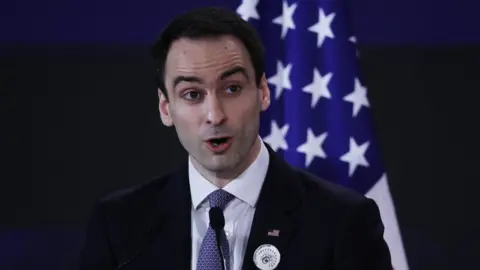
The memo's release reflects growing tensions between Washington and Beijing over technology transfer and intellectual property protection in the rapidly expanding field of artificial intelligence development. Officials contend that Chinese firms are not merely purchasing legitimate licenses or attempting to develop competing technology independently—rather, they are engaging in coordinated campaigns to appropriate completed models that represent years of research, development, and substantial financial investment by American technology companies.
Industry experts interviewed about the White House's findings suggest that the vulnerability stems partly from the nature of AI models themselves. Unlike traditional software that can be more easily protected through encryption and access controls, trained machine learning models can be accessed and analyzed through various technical methods once they are deployed or integrated into accessible systems. This architectural reality has created what security analysts describe as a persistent challenge in protecting AI intellectual property from sophisticated adversaries with adequate technical capabilities.
Major American technology companies have privately corroborated concerns raised in the memo, providing intelligence agencies with evidence of suspicious downloading patterns, reverse-engineering attempts, and suspicious redeployments of their proprietary models. Some firms report discovering their models being used in commercial applications across Chinese platforms, with identifying markers stripped away to obscure their origin and ownership.
The timing of the White House memo coincides with broader policy discussions within the Biden administration regarding how to strengthen protections for American AI model security and technological innovation. Government officials are reportedly considering new regulatory frameworks that would impose stricter penalties for intellectual property theft related to artificial intelligence systems, as well as enhanced monitoring mechanisms to detect and prevent unauthorized access to proprietary technology.
Notably, the memo does not limit its concerns to obvious commercial competitors. Instead, it characterizes the threat landscape as encompassing state-sponsored entities, private enterprises with government connections, and independent technology firms operating within China's regulatory environment. This broader characterization reflects the complex relationship between Chinese private sector companies and governmental agencies, where boundaries between commercial interests and state objectives often blur considerably.
The revelation has prompted increased scrutiny of how American companies currently protect their AI models when deploying them in international markets or through cloud-based services. Security specialists point out that many AI model distillation attacks exploit relatively accessible deployment architectures where models are used as backend services to power customer-facing applications, creating multiple potential interception points.
Congressional leaders from both parties have expressed concern about the implications outlined in Kratsios's memo, with some calling for immediate legislative action to strengthen penalties for technology theft. Lawmakers suggest that current statutes may be inadequate for addressing the novel challenges posed by AI model appropriation, particularly given the difficulty in establishing clear ownership and attribution once models have been distilled or modified.
The White House's disclosure also signals a potential shift in how the administration plans to approach technology competition with China. Rather than focusing exclusively on manufacturing capabilities or traditional semiconductor competition, policymakers are increasingly recognizing that artificial intelligence leadership depends critically on protecting the intellectual property underlying advanced systems. This recognition has implications for how federal agencies prioritize cybersecurity resources and international technology policy.
Looking forward, officials indicate that the administration is developing a comprehensive strategy to address the vulnerabilities identified in the memo. This approach is expected to include technical measures to make models more resistant to distillation attacks, policy interventions to deter theft, and diplomatic efforts to establish international norms around artificial intelligence intellectual property protection.
The controversy underscores the high stakes involved in the global competition for artificial intelligence dominance. As major powers race to develop increasingly capable AI systems, the protection of technological gains has become a central concern for national security officials worldwide. The White House memo represents an important acknowledgment that this competition includes not just innovation races, but also defensive measures against state-sponsored and commercial actors seeking to acquire advanced technology through unauthorized means.
Source: BBC News


