
WHO Chief Reassures Tenerife Over Virus-Hit Cruise Ship

WHO Director-General Tedros Adhanom Ghebreyesus addresses Tenerife residents' concerns as MV Hondius prepares to dock, clarifying this is not another COVID-19 situation.
The World Health Organization's Director-General Tedros Adhanom Ghebreyesus has moved to calm anxieties among Tenerife residents in the Canary Islands ahead of the arrival of a cruise ship carrying passengers affected by an infectious illness. His reassuring message comes as the MV Hondius is scheduled to dock at the Spanish island on Sunday, following reports of illness among those aboard the vessel.
Ghebreyesus's statement, which emphasized that "this is not another Covid," underscores international health authorities' determination to prevent widespread panic and misinformation during the incident. The WHO chief acknowledged public concerns while providing context about the current health emergency, drawing a clear distinction between the current situation and the catastrophic pandemic that has dominated global health discourse for the past several years.
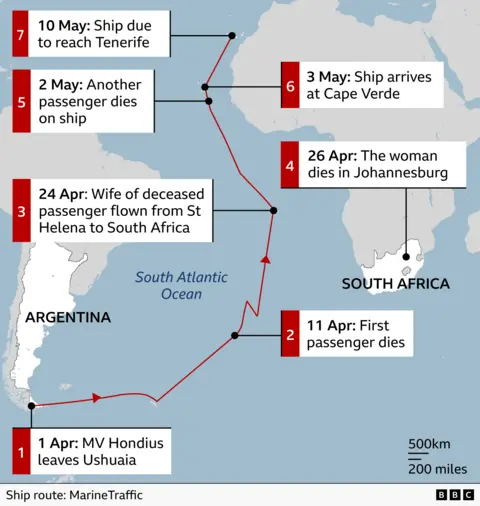
The arrival of the MV Hondius represents a test case for how modern health systems respond to disease outbreaks on international transportation vessels. The ship had been navigating waters around the Atlantic when passengers and crew members began experiencing symptoms consistent with a viral infection. Given the history of cruise ships as vectors for rapid disease transmission, the incident immediately triggered responses from regional health authorities, maritime officials, and international health organizations.
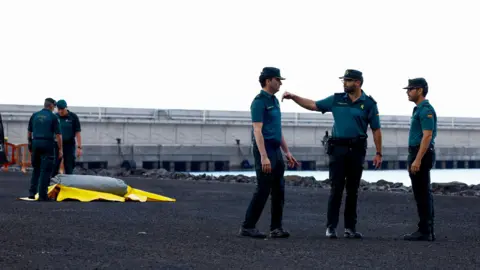
Tenerife, Spain's largest populated island and a major Mediterranean cruise ship destination, hosts millions of visitors annually through its principal ports. The island's healthcare infrastructure, while modern and well-equipped, faced questions about capacity to manage a potential outbreak scenario. Local government officials coordinated with health authorities to prepare isolation facilities, testing protocols, and quarantine procedures in advance of the vessel's arrival, ensuring a systematic and orderly response to the health challenge.
The MV Hondius, an expedition cruise ship operated by Hurtigruten, typically carries several hundred passengers and crew members. The vessel's operations had included visits to multiple ports across its itinerary, raising questions about the potential geographic spread of the illness among travelers who may have subsequently traveled to various destinations. Tracking and notification of potentially exposed individuals became an immediate priority for health surveillance systems.
International maritime health protocols, established and refined through years of experience managing disease outbreaks on vessels, dictate specific procedures for vessels with confirmed or suspected infectious illness aboard. These protocols include maintaining detailed passenger manifests, coordinating with destination port health authorities, establishing communication networks between ship operators and government health agencies, and implementing isolation measures for symptomatic individuals. The cruise ship outbreak response activated these established frameworks across multiple jurisdictions.
The World Health Organization's involvement signals the international dimension of modern health emergencies, where diseases recognized in one location can rapidly become matters of global concern. Tedros's direct communication to Tenerife residents reflected WHO's commitment to transparent public health messaging and combating the spread of misinformation during health crises. His statement sought to balance appropriate caution with evidence-based reassurance, acknowledging risks without amplifying unfounded fears.
Public health experts have noted that responses to cruise ship health incidents have evolved significantly since the early days of the COVID-19 pandemic. Testing capabilities have expanded, isolation protocols have been refined, and coordination between maritime authorities and health systems has improved considerably. These advancements meant that authorities could respond more swiftly and with greater precision than might have been possible just a few years earlier.
The incident highlighted ongoing vulnerabilities in global health security related to international travel and transportation networks. Cruise ships, by their very nature, create densely populated environments where respiratory viruses can spread efficiently among passengers and crew. The close quarters, shared ventilation systems, common dining facilities, and frequent international movement of people create ideal conditions for pathogen transmission. These structural challenges remain despite technological and procedural improvements in health monitoring and response systems.
Tenerife's response to the arriving vessel demonstrated the coordination required across multiple governmental and health organization levels. The island's tourism industry, which represents a substantial portion of its economy, required assurance that the health situation would be managed effectively without triggering broader travel cancellations or destination avoidance. Balancing economic considerations with genuine health protection concerns represented a delicate challenge for local authorities.
The specific pathogen aboard the MV Hondius remained the subject of clinical investigation and laboratory confirmation procedures. Samples collected from affected individuals would be analyzed to identify the causative agent, determine its characteristics, assess its transmissibility, and establish appropriate clinical management protocols. This diagnostic process typically requires several days but provides the evidence-based foundation for all subsequent response actions.
Ghebreyesus's reassurance to residents reflected both scientific confidence in modern disease management capabilities and recognition of legitimate public health concerns. His emphasis that the situation was distinctly different from the COVID-19 pandemic implicitly acknowledged lessons learned through that extraordinary public health challenge. Those lessons included improved surveillance systems, better testing capacity, refined isolation and quarantine protocols, and enhanced international coordination mechanisms for responding to emerging health threats.
The broader context for understanding this incident includes the normalization of disease surveillance and rapid response procedures across the international travel sector. The aviation and maritime industries have invested substantially in health monitoring systems, staff training programs, and communication protocols designed to identify and respond to health emergencies before they escalate into widespread outbreaks. These systems represent the embodiment of lessons learned through past health crises.
For travelers considering Caribbean and Mediterranean cruises, such incidents reinforce the importance of understanding cruise line health policies, vaccination status, and pre-travel health screening requirements. Travel insurance products specifically addressing health contingencies have become increasingly popular as travelers seek financial protection against unexpected illness-related disruptions to their plans. The cruise industry itself has implemented more robust health requirements and transparency measures in response to both regulatory pressures and consumer expectations.
As the MV Hondius prepared to dock in Tenerife on Sunday, health authorities stood ready to implement predetermined protocols for passenger and crew health assessment, testing, isolation where necessary, and case management. The coordinated response, guided by international health standards and supported by the WHO's reassuring messaging, aimed to manage the health emergency effectively while minimizing unnecessary alarm among the broader island population and tourism sector.
Tedros Adhanom Ghebreyesus's intervention in publicly addressing Tenerife residents underscored the WHO's evolving role in managing not just the scientific and medical aspects of emerging health threats, but also their psychological and social dimensions. In an era of rapid information dissemination and social media amplification, clear, authoritative communication from respected health leaders has become an essential component of effective public health response, serving to channel public concern into productive engagement with evidence-based health protective measures rather than allowing fear to drive counterproductive behaviors.
Source: BBC News


