
Why Nostalgia Couldn't Save Claire's Accessories

Retail experts analyze the downfall of Claire's, exploring how nostalgia and childhood memories failed to prevent the iconic accessories chain's collapse.
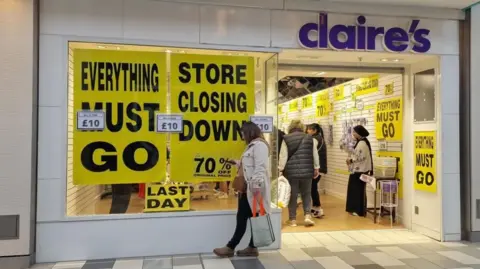
The closure of Claire's, once a beloved destination for children and teenagers seeking affordable jewelry and accessories, marks the end of an era that many grew up with. For decades, the accessories chain served as a rite of passage for young people getting their ears pierced or shopping for trendy baubles. However, despite the powerful emotional connections millions of customers maintained with the brand, nostalgia alone proved insufficient to keep the struggling retailer afloat. Industry analysts now point to a perfect storm of retail challenges that ultimately sealed the fate of this iconic store.
Claire's emergence as a retail powerhouse began in the 1980s, when it quickly became synonymous with affordable accessories and ear-piercing services. The brand's unique positioning in the market—targeting primarily younger demographics with trendy yet inexpensive offerings—allowed it to establish itself across shopping malls throughout North America and Europe. The company's willingness to offer ear-piercing services alongside its product inventory created a sticky customer relationship that kept shoppers returning. For an entire generation, visiting Claire's represented a significant milestone in their journey toward self-expression and independence.
Yet this nostalgic appeal, while undoubtedly valuable from a branding perspective, could not overcome the fundamental economic pressures that have besieged traditional retail in recent years. Retail experts point to several interconnected factors that conspired against Claire's success. The shift toward online shopping and e-commerce platforms fundamentally altered consumer behavior, particularly among younger demographics who increasingly prefer browsing and purchasing accessories through digital channels rather than visiting physical locations.

The structural decline of shopping mall culture represented another critical headwind for the accessories retailer. Throughout the 2010s and 2020s, regional shopping malls experienced unprecedented deterioration as anchor tenants closed stores and foot traffic dwindled. Claire's had built its business model around mall placement, relying on the consistent customer flow that these destinations once provided. As malls contracted, the company found itself in increasingly marginal locations with fewer potential customers. The pandemic accelerated this trend dramatically, as lockdowns and social distancing measures forced extended store closures and fundamentally altered consumer confidence in physical retail environments.
Beyond these macroeconomic trends, Claire's faced intensifying competition from multiple directions. Established retailers like Forever 21, H&M, and Zara expanded their accessory offerings to directly compete with Claire's core product categories. Simultaneously, online retailers such as Amazon, ASOS, and specialty e-commerce platforms captured significant market share from traditional brick-and-mortar accessory stores. These competitors offered superior selection, competitive pricing, and the convenience of home delivery—advantages that proved difficult for a mall-based retailer to overcome.
The company's ownership structure also contributed meaningfully to its eventual demise. Claire's had been acquired by private equity firm Apollo Global Management in 2014, leaving it burdened with substantial debt obligations. This financial strain limited the company's ability to invest in technology infrastructure, store modernization, and omnichannel retail capabilities that might have helped it compete more effectively in the evolving retail landscape. Private equity ownership, while providing capital for acquisition, frequently saddles companies with debt service obligations that reduce flexibility and innovation capacity.
The demographic shift among young consumers represented yet another challenge for the struggling accessories retailer. Today's children and teenagers express their identity through different channels than previous generations did. Social media platforms, customized digital avatars, and online communities have become primary means of self-expression for young people. Physical accessories, while still relevant, no longer hold the same cultural significance they once did. Additionally, younger consumers demonstrate greater environmental consciousness and ethical consumption awareness than their predecessors, making them less likely to purchase fast-fashion accessories from traditional retailers.
The COVID-19 pandemic delivered what many observers consider a final blow to Claire's already precarious situation. Extended lockdowns forced the chain to close stores for months at a time, disrupting cash flow and customer connections. When stores eventually reopened, consumer behavior had shifted permanently toward online shopping and away from mall-based retail experiences. The health crisis accelerated trends that were already underway, compressing what might have been a gradual decline into a rapid collapse. For a company already struggling with debt obligations and competition, this sudden shock proved insurmountable.
Management decisions also played a role in the chain's trajectory. Industry observers note that Claire's was relatively slow to develop a robust digital presence and e-commerce capabilities compared to competitors. While the company did launch online sales channels, they were not integrated effectively with the physical store experience, nor were they developed with sufficient sophistication to compete against dedicated online retailers. This digital lag meant that even as consumer behavior shifted online, Claire's was poorly positioned to capture that demand shift.
The ear-piercing service, once a key differentiator that drove foot traffic and loyalty, also lost some relevance over time. As more dermatologists and medical professionals offered professional piercing services, and as at-home piercing kits became readily available online, this unique value proposition diminished. Additionally, concerns about hygiene and health standards associated with mall-based piercing services created hesitation among health-conscious consumers and parents. This erosion of a core differentiating feature further weakened the company's competitive positioning.
Retail experts emphasize that Claire's collapse illustrates a broader lesson about the limits of nostalgia in sustaining struggling businesses. While emotional brand affinity can provide temporary support and customer loyalty, it cannot substitute for sound business fundamentals, strategic adaptation, and financial health. Companies operating in declining sectors or facing structural headwinds must fundamentally reinvent themselves to survive—a transformation that requires substantial investment, strategic vision, and operational flexibility.
The demise of Claire's also reflects the painful reality facing many traditional retailers in the current era. The transformation of retail has been far more dramatic and unforgiving than many established companies anticipated. Nostalgia and brand heritage, though valuable assets, prove insufficient when confronted with seismic shifts in consumer behavior, technological disruption, and economic pressures. As Claire's joins other retail casualties in the mall that time forgot, its story serves as a cautionary tale about the importance of continuous innovation and adaptation in an ever-changing marketplace. For millions of people who grew up visiting Claire's locations with their parents or friends, the chain's closure represents the loss of a cultural touchstone and a reminder of how quickly retail landscapes can transform.
Source: BBC News


