
Why Spotify Lacks AI Music Filter Feature

Discover why Spotify doesn't offer an AI music filter like competitor Deezer, and what this means for artists and listeners.
The rise of artificial intelligence in music production has sparked significant debate within the streaming industry, with major platforms taking distinctly different approaches to handling AI-generated content. While Deezer, a major European streaming service, has implemented a feature allowing users to filter out AI music from their listening experience, Spotify has notably chosen not to follow suit. This divergence raises important questions about platform philosophy, user control, and the future of music discovery in an era where artificial intelligence is becoming increasingly prevalent in content creation.
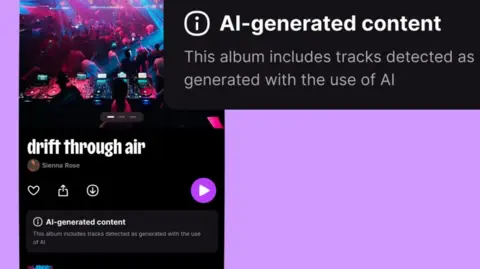
Deezer's decision to introduce an AI music filter came as a direct response to growing user concerns about the proliferation of AI-generated tracks on streaming platforms. The feature allows subscribers to customize their listening preferences and actively exclude music created by artificial intelligence systems from their personalized playlists and recommendations. This transparent approach acknowledges listener concerns about authenticity and gives consumers tangible control over the types of content they encounter. By offering this choice, Deezer positioned itself as a platform that respects user agency and listens to community feedback about content curation preferences.
Spotify's approach has been markedly different. The Swedish streaming giant has not developed or implemented any comparable filtering mechanism for AI-generated music. This absence isn't accidental but rather reflects a strategic decision about how the platform wants to position itself in relation to emerging music creation technologies. Spotify's leadership appears to believe that blanket filtering options for entire categories of music may not serve the platform's long-term interests or those of its diverse user base.

Understanding Spotify's reasoning requires examining the platform's broader business philosophy and market position. Spotify has invested heavily in algorithmic recommendation systems that prioritize listener engagement and discovery rather than content source categorization. The platform's data scientists have developed sophisticated machine learning models that analyze listening patterns and suggest new music based on individual taste profiles. By filtering out entire categories of music, Spotify argues that users might miss emerging artists and innovative sounds that could otherwise enrich their musical experience.
The streaming platform also considers the definition and identification of AI-generated music to be more complex than a simple binary choice. Not all AI music is created equal, and the distinction between AI-assisted production (where humans use AI tools to enhance their creative process) and fully AI-generated compositions remains philosophically murky. Spotify's technical team would need to develop sophisticated detection systems capable of distinguishing these nuances, a task that is both computationally expensive and prone to classification errors.
Furthermore, Spotify has argued that filtering options could inadvertently hurt independent and emerging artists who use AI tools as part of their creative toolkit. Many contemporary musicians leverage artificial intelligence for various production tasks—from generating backing tracks to assisting with composition—without these elements representing the entirety of their creative output. A blanket filter that removes all music with any AI involvement could disproportionately impact smaller creators who lack the resources of major record labels and rely on technological assistance to produce competitive output.
The broader context of AI in music production has evolved significantly over recent years. Major record labels, including Universal Music Group, have begun establishing clear policies regarding AI-generated content on their platforms. These industry giants recognize that artificial intelligence represents both an opportunity and a challenge for the music business. Some artists have enthusiastically embraced AI tools to expand their creative capabilities, while others view the technology with suspicion, concerned that it may undermine their livelihoods or dilute artistic integrity.
Spotify's hesitation to implement filtering mechanisms may also reflect concerns about setting precedent for other content categorizations. Once a streaming platform begins allowing users to filter content by creation methodology, it opens the door to requests for additional filtering options based on genre, artist nationality, label affiliation, or countless other metrics. Managing these expectations while maintaining platform functionality and algorithmic effectiveness presents a significant operational challenge that Spotify appears reluctant to undertake.
The licensing and rights management implications of AI music also factor into Spotify's decision-making calculus. The company has established relationships with major rights holders and independent distributors based on existing content categorization frameworks. Introducing new filtering mechanisms could require renegotiating licensing agreements and updating backend database systems to properly tag and identify AI-generated content. These technical and legal complications represent substantial investments that Spotify may not view as justified given current market demand.

User demand for AI music filters on Spotify remains somewhat unclear, which may explain the platform's cautious approach. While vocal communities of listeners and musicians have expressed concerns about AI-generated content, the broader user base hasn't demonstrated overwhelming enthusiasm for filtering mechanisms. Spotify's internal data likely shows that most users aren't actively seeking tools to exclude AI music, suggesting that implementing such features might be addressing a less urgent problem than other platform priorities.
The contrast between Deezer and Spotify highlights different philosophies about platform responsibility and user empowerment. Deezer's approach emphasizes transparency and user choice, acknowledging that some listeners have strong preferences about content sources. This strategy may appeal to more discerning listeners who prioritize knowing details about how their music is produced. Spotify's approach, conversely, prioritizes discovery and algorithmic optimization, trusting that its recommendation systems will serve users well regardless of whether they can see the underlying methods behind content creation.
Looking ahead, the issue of AI music filtering will likely become increasingly important as artificial intelligence plays a larger role in music production and distribution. Industry standards may eventually emerge that establish clearer definitions and labeling practices for AI-assisted or AI-generated content. If regulatory bodies or industry organizations mandate transparency about music creation methods, platforms like Spotify may find themselves forced to implement filtering mechanisms regardless of their current preferences.

The absence of an AI music filter on Spotify doesn't necessarily reflect indifference toward listener concerns but rather a different assessment of how best to serve platform users and the broader music ecosystem. As the streaming industry continues to adapt to technological change and evolving listener preferences, platforms will need to balance innovation, transparency, user control, and business sustainability. Whether Spotify eventually implements filtering mechanisms like Deezer remains to be seen, but the current divergence between major streaming services suggests that the industry hasn't yet reached consensus on the best approach to handling AI-generated music.
Source: BBC News


