
Will Starship Finally Deliver for US Space?

SpaceX's Starship rocket could transform American spaceflight. Explore what's at stake for the company and the nation's space ambitions.
The contemporary narrative surrounding SpaceX has become increasingly complicated, obscuring a fundamental truth that often gets lost in headlines about AI ventures and spectrum acquisitions: the company fundamentally remains a rocket manufacturer at its core. While numerous high-profile business developments have captured investor attention and media coverage, the critical question facing the aerospace industry remains unchanged—whether SpaceX's ambitious Starship program can finally deliver on its transformative promises.
Over the past year, SpaceX has executed an extraordinary series of mega-deals that have fundamentally altered perceptions of the company's business model and strategic direction. The company committed $17 billion to acquire wireless spectrum from EchoStar, a sum that remarkably exceeds the total amount SpaceX has invested in developing its entire portfolio of rockets throughout its history. This substantial acquisition underscores the company's commitment to expanding its Starlink satellite internet network, representing a dramatic pivot toward diversified revenue streams and global connectivity infrastructure.
Beyond spectrum acquisition, SpaceX has unveiled audacious plans to fundamentally reshape data center infrastructure through orbital deployment. The company announced intentions to launch approximately 1 million orbital data centers into space, a vision that would revolutionize cloud computing architecture and computational capacity on a global scale. This initiative represents one of the most ambitious technological undertakings in the company's history, requiring unprecedented launch capabilities and reliability from the Starship platform.
The merger with xAI, Elon Musk's artificial intelligence venture, added another significant dimension to SpaceX's transformation. The transaction valued the AI company at an extraordinary $250 billion, effectively intertwining SpaceX's destiny with the rapidly expanding AI sector. Simultaneously, SpaceX announced its intention to become a major computer chip manufacturer, entering the competitive semiconductor industry and establishing vertical integration across multiple technology sectors.
The company's recent decision to sell an enormous volume of ground-based compute resources to Anthropic demonstrates the breadth of SpaceX's commercial diversification strategy. These transactions collectively paint a picture of a company expanding far beyond its original mission as a rocket provider, establishing itself as a comprehensive technology conglomerate with fingers in aerospace, telecommunications, artificial intelligence, semiconductor manufacturing, and cloud infrastructure.
As a direct result of this impressive portfolio of acquisitions, investments, and strategic initiatives, an imminent initial public offering is anticipated to value SpaceX at somewhere between $1.5 trillion and $2 trillion—a valuation measured in trillions of dollars that reflects the market's recognition of the company's transformation into a multi-sector technology powerhouse. This valuation would place SpaceX among the most valuable companies globally, rivaling or exceeding the market capitalizations of many Fortune 500 enterprises.
Yet beneath this veneer of diversification and expansion lies a critical dependency that cannot be overlooked or minimized. All of SpaceX's ambitious plans—whether related to orbital data centers, global internet connectivity, satellite constellation expansion, or any other initiative—ultimately depend on the successful development and operation of the Starship rocket. Without Starship's capability to launch massive payloads at high frequency and reasonable cost, none of these ambitious visions can achieve practical realization.

The stakes for the broader American space enterprise have never been higher. The United States space sector faces intense competition from international players, and SpaceX's success with Starship will largely determine whether America maintains its dominant position in space access and exploitation. Government agencies, commercial partners, and international allies all have substantial interests in seeing Starship achieve operational reliability and cost-effectiveness. The Defense Department, NASA, and numerous commercial entities have invested confidence, contracts, and capital in the assumption that Starship will eventually fulfill its destiny as the world's most capable heavy-lift launch vehicle.
The space industry's future trajectory hinges on Starship's evolution from an experimental platform to a reliable, operationally mature system. The challenges are immense and well-documented, involving mastery of rapid reusability, reliability in the harshest environments, and consistent performance metrics that commercial and governmental customers demand. Previous attempts to develop systems of similar ambition have required years of development, testing, and refinement before achieving the operational maturity necessary for routine use.
SpaceX's previous rocket programs, including the Falcon 9 and Falcon Heavy, demonstrated the company's capacity to overcome substantial technical obstacles and achieve unprecedented performance levels. However, Starship represents an order-of-magnitude increase in complexity, with its fully reusable architecture, massive payload capacity, and novel systems requiring validation and proven reliability across numerous flight tests and operational scenarios.
The timeline for Starship's operational deployment remains subject to substantial uncertainty, despite SpaceX's confident public statements and projected milestones. Technical challenges continue to emerge during test flights, requiring design modifications, material improvements, and systems refinements that inevitably extend development schedules. The margin for error is minimal when developing a vehicle of such complexity, and each test flight generates valuable data but also occasionally reveals unexpected technical issues requiring resolution.
For the American space sector and the broader global aerospace community, the Starship question represents far more than a simple technical engineering challenge. It embodies larger questions about American competitiveness, technological leadership, and the viability of ambitious visions that require sustained effort, substantial capital investment, and unwavering commitment to ultimate success. The answer to whether Starship will finally deliver will reverberate across government, industry, and society for decades to come, shaping the trajectory of human space exploration and utilization for generations ahead.
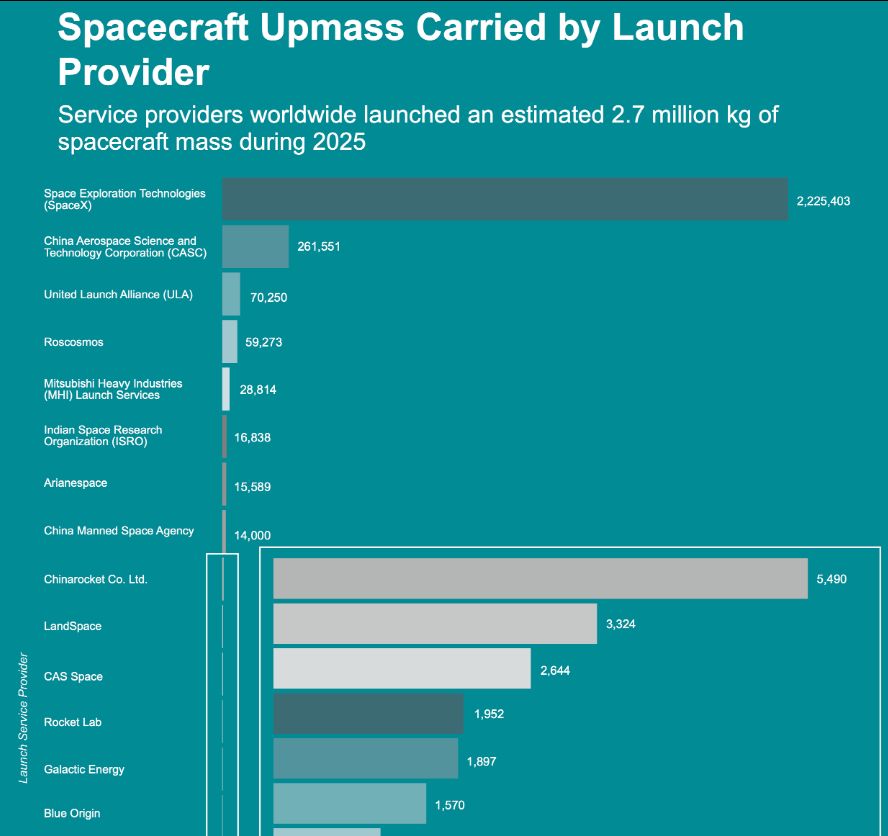
Source: Ars Technica


