
Winston Marshall's Shift From Folk Icon to Conservative YouTube Star

Former Mumford & Sons banjo player Winston Marshall transforms career into right-wing commentary. Explores his dramatic shift from Grammy stages to Fox News.
In a remarkable transformation that has captured public attention, Winston Marshall, once celebrated as the banjo virtuoso behind the Grammy-winning folk rock band Mumford & Sons, has embarked on an entirely new career trajectory. What began as a celebrated musical partnership has evolved into a polarizing venture into conservative commentary and digital media, marking one of the entertainment industry's most unexpected pivots in recent years.
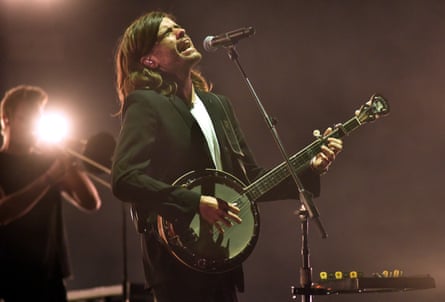
The journey from concert stages to contentious politics began with Marshall's founding role in Mumford & Sons, a band that achieved international prominence during the 2000s and 2010s. The group's blend of folk instrumentation with contemporary rock sensibilities resonated with millions of fans worldwide, establishing Marshall as a respected musician known for his distinctive banjo performances. His credentials as an artist seemed unassailable, with chart-topping albums and sold-out world tours cementing the band's legacy in modern music history.
A particularly iconic moment in Marshall's musical career occurred in 2011 when he found himself on stage at the Grammy Awards, an annual celebration of musical excellence that represents the pinnacle of industry recognition. More significantly, he was sharing the stage with Bob Dylan, the legendary American songwriter whose catalogue is replete with socially conscious anthems and poignant commentary on injustice. For a young musician like Marshall, performing alongside one of his musical heroes at such a prestigious event must have represented a career apex, a moment validating years of artistic dedication and creative expression.

However, the narrative of Marshall's professional life took an unexpected turn in subsequent years. Rather than continuing along the established path of a successful recording artist and touring musician, Marshall began to publicly align himself with right-wing political ideology and conservative causes. This ideological shift, while perhaps not unusual in isolation, proved particularly noteworthy given the stark contrast between his earlier artistic work and his emerging political positions.
By the mid-2020s, Marshall had fully transitioned into a new role as what can best be described as a conservative YouTube personality and digital media commentator. This transformation represented a complete departure from his musical identity, signaling a deliberate choice to abandon the entertainment industry for the realm of political commentary and social media influence. His new online presence focused on articulating right-wing perspectives on contemporary social and political issues, attracting a dedicated audience of ideologically aligned viewers.
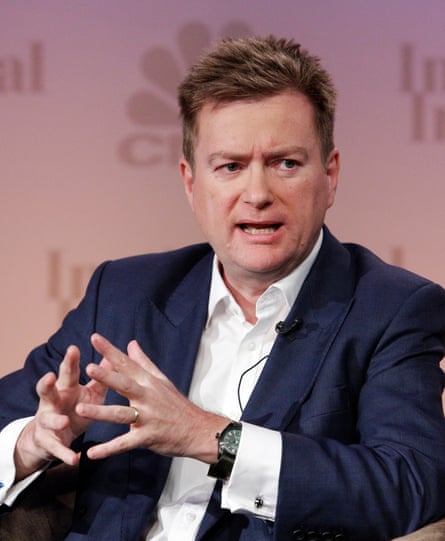
The culmination of this career transition became evident when Marshall appeared on Fox News, the influential American cable news network known for its conservative editorial stance. During this high-profile television appearance, Marshall unveiled a particularly controversial proposal regarding the ongoing issue of irregular migration across the English Channel. His proposed solution was undoubtedly provocative and unconventional, intended to capture attention through its audacious nature rather than its practical feasibility.
The specific proposal Marshall advocated for on Fox News concerned the installation of mines in the English Channel as a means to deter small boat crossings used by migrants attempting to reach British shores. Marshall himself acknowledged that this idea was, by his own characterization, "outlandish." This acknowledgment, while perhaps intended to demonstrate awareness of the proposal's radical nature, did little to mitigate the shocking nature of the suggestion. The proposal raised serious ethical, legal, and humanitarian concerns, given the obvious dangers such a measure would pose to human life.
This latest chapter in Marshall's public evolution cannot be viewed in isolation from broader trends within contemporary media and politics. His trajectory exemplifies a pattern whereby individuals from entertainment backgrounds increasingly pivot toward political commentary, often adopting positions on the right side of the political spectrum. This phenomenon reflects the growing influence of digital platforms and YouTube in particular, which have democratized access to media production and enabled individuals to build substantial audiences outside traditional media structures.
What makes Marshall's case particularly noteworthy is the dramatic ideological distance between his earlier artistic work and his current positions. Folk music, the genre in which Marshall initially made his mark, has historically been associated with progressive politics and social critique. Bob Dylan himself, the artist Marshall once admired enough to perform alongside, built much of his legendary status on songs addressing social injustice, civil rights, and anti-war sentiment. The contrast between this legacy and Marshall's current advocacy for hardline immigration positions highlights the profound nature of his career transformation.
The migration crisis affecting the United Kingdom, particularly the issue of small boat crossings in the English Channel, has become a politically charged topic in recent years. The issue intersects with broader debates about national sovereignty, border security, humanitarian obligations, and the treatment of asylum seekers. Marshall's entry into this debate through advocacy for extreme measures demonstrates how figures from outside traditional political spheres are increasingly inserting themselves into contentious policy discussions.
Marshall's connection to GB News, the British news network founded with explicitly stated intentions to provide conservative-leaning coverage, adds another layer to his professional evolution. The network itself represents an attempt to create a Fox News-style alternative to what some view as the more established institutional media in the United Kingdom. Marshall's involvement with the network, either directly or through family connections and alignment with its editorial philosophy, further underscores his complete transition from entertainment to political media.
The reception to Marshall's career change has been mixed, reflecting broader societal divisions regarding both immigration policy and the role of former celebrities in political commentary. Some observers view his transformation as a courageous willingness to express controversial views and engage with important policy debates. Others see it as a troubling example of an entertainer leveraging his previous fame to promote positions that lack substantive policy grounding or humanitarian consideration.
Marshall's case raises important questions about the nature of celebrity in contemporary society and the mechanisms by which public figures maintain relevance in an era of declining traditional media consumption. By repositioning himself within the digital media landscape and aligning with growing conservative online audiences, Marshall has found a path to continued prominence and influence. Whether this represents authentic personal evolution or strategic career repositioning remains subject to interpretation and debate.
The broader implications of Marshall's transformation extend beyond his individual career arc. It exemplifies how traditional entertainment industry figures are increasingly migrating toward political commentary and ideological positioning, particularly on the conservative side of the political spectrum. This trend reflects fundamental shifts in how media is consumed, how influence is accumulated, and how public discourse is shaped in the digital age. As established media institutions face declining viewership and influence, alternative platforms and personalities are rapidly filling the void, often bringing with them perspectives and proposals that challenge conventional policy thinking.


