
Women's Elite Rugby Season 2 Launches with Star Power

Women's Elite Rugby kicks off season two with celebrity backing and ambitious plans to grow the sport before the 2033 World Cup in the United States.
Women's Elite Rugby, America's semi-professional rugby union league, is launching into its highly anticipated second season with renewed energy, strategic investments, and a clear mission to elevate the sport on the national stage. The competition will kick off this Saturday with matches scheduled across Massachusetts and Illinois, marking another significant milestone in the league's quest to establish rugby as a mainstream sport in the United States ahead of the 2033 World Cup, which will be hosted on American soil for the first time in the sport's history.
At the helm of this ambitious venture is Dr. Jessica Hammond-Graf, who serves as both president and chief sporting officer of Women's Elite Rugby. Her journey to this leadership position is a compelling testament to the transformative power of trying something new. Like many Americans, Hammond-Graf did not grow up with rugby in her life. Instead, as an Army kid who moved frequently throughout her childhood, she gravitated toward more traditionally American sports, particularly soccer, which offered her both community and competition.
During her formative years at the University of Connecticut in the early 1990s, Hammond-Graf pursued a variety of athletic interests. She initially tried out for the soccer team, following the sport that had captured her heart during her youth. However, her athletic exploration didn't stop there. She also developed a passion for Ultimate Frisbee, a sport that was gaining popularity on college campuses across the country during that era. These diverse athletic experiences shaped her understanding of competition, teamwork, and athletic excellence.
Everything changed when a simple suggestion from a dormitory neighbor altered the trajectory of her life and career. One fateful day, a woman on her residence hall floor casually suggested, "Hey, you should come try rugby, OK?" What might have seemed like an offhand comment turned out to be a pivotal moment. Hammond-Graf accepted the invitation with an open mind, and what unfolded next was nothing short of remarkable. In her very first rugby match, she found herself thrust into the demanding position of fly-half, one of the most crucial positions in rugby where the player is responsible for directing team strategy, making split-second decisions, and orchestrating plays in real time.
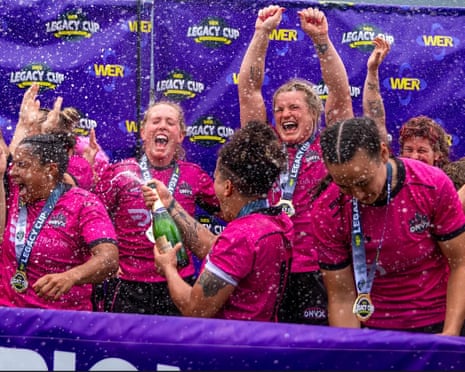
This second season comes at a particularly significant moment for professional women's rugby in America, as the sport continues to gain traction and visibility among American audiences. The league has made considerable progress since its inaugural season, learning valuable lessons about league management, player development, marketing, and fan engagement. The experiences garnered from the first season have provided the organization with crucial insights into what works, what needs improvement, and where opportunities for growth exist within the American rugby landscape.
One of the most notable developments heading into season two is the involvement of a celebrity investor who has committed resources to supporting the league's expansion and growth. This high-profile backing brings not only financial resources but also increased media attention and legitimacy to women's rugby in the United States. The investment demonstrates growing confidence in the commercial viability of professional women's sports and specifically in rugby's potential to capture audience interest in America.
The timing of this second season is particularly strategic given the approach of the 2033 World Cup. With less than a decade remaining before the tournament, Women's Elite Rugby serves as the primary pipeline for developing elite American players who will compete on the world stage. The league provides these athletes with competitive matches against high-level opponents, opportunities to develop their skills in a professional environment, and the chance to represent their country at the highest levels of international competition. Every season leading up to 2033 represents a crucial opportunity to strengthen the depth and quality of American women's rugby talent.

The infrastructure of American women's rugby has evolved significantly in recent years. The semi-professional structure of Women's Elite Rugby sits between grassroots club rugby and the fully professional opportunities available in other nations. This positioning allows the league to serve multiple purposes simultaneously: it provides employment and development opportunities for elite female athletes, it increases the visibility and accessibility of rugby to potential new fans, and it creates a talent pipeline that strengthens the national team program.
Dr. Hammond-Graf's leadership brings both athletic credibility and organizational acumen to the role. Her personal journey from discovering rugby as a college student to leading the nation's premier women's rugby league exemplifies the growth trajectory possible within the sport. Her background spans multiple athletic disciplines and her understanding of what it takes to build a successful athletic program, combined with her deep commitment to advancing women's elite rugby, positions her well to navigate the challenges and opportunities that lie ahead for the league.
The league's second season represents not merely a continuation of inaugural efforts but rather a thoughtful evolution informed by practical experience and strategic vision. The lessons learned during season one have been integrated into operations, game scheduling, player recruitment, and fan engagement strategies. The organization has had the opportunity to assess what captured audience enthusiasm, what marketing approaches resonated with potential fans, and how to create a sustainable financial model for women's professional rugby in America.
As matches begin this weekend in Massachusetts and Illinois, the stakes feel particularly high for the league and for women's rugby in America more broadly. Every victory, every impressive individual performance, and every growing attendance figure contributes to building momentum toward 2033. The World Cup will serve as both a showcase for American rugby talent and a catalyst for potentially transforming the sport's status within American sports culture. If women's rugby in the US continues its trajectory of growth and development, the tournament could represent a watershed moment for the sport's mainstream recognition and commercial success in the United States.
The involvement of celebrity investors and the semi-professional structure of the league signal broader shifts in how American sports organizations are recognizing and investing in women's athletic competition. Gone are the days when women's sports were viewed as secondary endeavors, underfunded and undersupported. The investment in Women's Elite Rugby reflects a growing understanding that women's sports can generate revenue, build passionate fan bases, and provide meaningful opportunities for female athletes to pursue professional careers in their chosen sports.
With season two now beginning, the focus for Hammond-Graf and her team shifts to on-field performance, player development, and the continued building of rugby culture in America. The path to 2033 is now more clearly defined, with each season serving as a stepping stone toward hosting and competing in the World Cup on home soil. For women's rugby in America, the next chapter is finally beginning to unfold.
The excitement surrounding this second season extends beyond the immediate competitive context. It represents a moment of opportunity for the sport of rugby itself to establish deeper roots in American sports consciousness. With the right investments, marketing, and continued growth, women's rugby could transition from a niche sport to a recognized component of America's athletic landscape, changing not only the trajectory of the female athletes competing in the league but also the broader perception of women's professional sports in the United States.
Source: The Guardian


