
World Cup Security Threats Amid Iran Tensions

Security experts warn of elevated terrorism risks for 2026 FIFA World Cup matches across 11 US cities, citing geopolitical tensions and extremist recruitment threats.
As the United States prepares to host the FIFA World Cup, security officials and counter-terrorism experts are sounding the alarm over significant vulnerabilities that could threaten the safety of millions of fans attending matches across the country. The upcoming tournament, which will feature 78 matches spread across 11 major American cities, faces a complex and multifaceted threat landscape that extends beyond traditional security concerns. Federal agencies are grappling with the challenge of securing one of the world's largest sporting events while contending with geopolitical tensions, evolving extremist threats, and resource constraints within law enforcement agencies.
The primary concern among security analysts centers on the heightened terrorism risk associated with the ongoing US-Israel conflict with Iran, which has created a volatile geopolitical environment that could inspire or facilitate attacks by hostile actors. Intelligence officials have identified multiple threat vectors, ranging from state-sponsored activities to non-state actors seeking to exploit the high-profile nature of the World Cup as a platform for violent action. The convergence of international tensions and domestic security challenges presents an unprecedented operational burden for agencies tasked with protecting sporting venues, transportation infrastructure, and public gathering spaces throughout the tournament.
According to four prominent counter-terrorism experts interviewed for this analysis, the most pressing threat emanates from homegrown violent extremists rather than coordinated international terror organizations. These individuals, often operating as lone actors or small cells, have demonstrated an alarming capacity for planning and executing attacks with minimal resources and detection. The experts emphasized that many of these potential perpetrators have been radicalized through online channels, exposing them to propaganda and ideological content produced by groups such as the Islamic State (ISIS) and other extremist organizations. The decentralized nature of radicalization through social media platforms and encrypted communication channels has made detection and prevention efforts significantly more challenging for law enforcement.

Federal law enforcement agencies face a critical challenge in responding to these soft target vulnerabilities, a term security professionals use to describe locations or events with limited protective measures and high concentrations of civilians. The World Cup matches will draw hundreds of thousands of spectators across dozens of venues, many of which lack the specialized infrastructure necessary to detect and interdict threats before incidents occur. Experts have raised concerns about intelligence gaps within federal agencies, noting that the depletion of counter-terrorism expertise has been compounded by budget constraints, personnel turnover, and shifting priorities following the post-9/11 period.
The scope of the security operation is staggering, requiring coordination among multiple federal, state, and local agencies to establish comprehensive threat detection and response protocols. The Department of Homeland Security, Federal Bureau of Investigation, and Secret Service will need to collaborate extensively with municipal police departments and private security firms to implement layered defense strategies. Intelligence sharing protocols, real-time threat assessment capabilities, and rapid response capabilities must be seamlessly integrated across all participating agencies to address emerging threats effectively.
One significant complication arises from the challenge of balancing security measures with the fundamental goal of creating an enjoyable fan experience. Excessive security theater can deter attendance and diminish the sporting event's cultural significance, yet insufficient measures could leave dangerous gaps in protection. Stadium operators and security planners must carefully calibrate the visible security presence to appear reassuring rather than oppressive, while deploying advanced detection technologies and intelligence capabilities behind the scenes to identify credible threats.
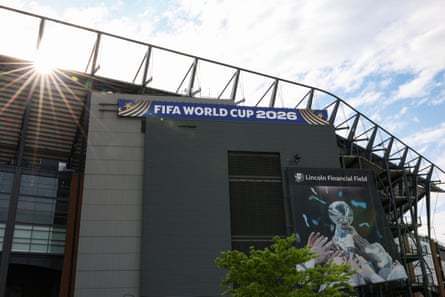
The intelligence community has identified several specific threat scenarios that require careful monitoring and contingency planning. Vehicular attacks targeting spectators outside stadiums represent a particularly difficult threat to mitigate, as they require minimal planning or resources yet can result in mass casualties. Additionally, security officials remain concerned about potential cyberattacks targeting critical infrastructure supporting the tournament, including power grids, communications systems, and transportation networks that fans will rely upon to attend matches.
Radicalization patterns observed in recent years indicate that extremists may seek to exploit the global attention surrounding the World Cup to amplify their messaging and increase the psychological impact of any attack. The symbolic significance of disrupting an international sporting event attended by diverse populations aligns with terrorist operational objectives of creating widespread fear and division. Furthermore, the diversity of potential threat actors—ranging from ideologically motivated individuals to foreign intelligence services seeking to destabilize the United States—requires security planners to develop comprehensive response frameworks capable of addressing multiple scenarios simultaneously.
Law enforcement agencies have begun implementing enhanced screening procedures, surveillance operations, and intelligence collection initiatives to identify individuals who may pose a credible threat to the tournament. These efforts include monitoring social media platforms and encrypted messaging services for suspicious communications, analyzing travel patterns and financial transactions of known extremists, and coordinating with international partners to track potential foreign threats. However, experts warn that these measures remain resource-intensive and may not detect all potential threats, particularly those perpetrated by individuals with no prior law enforcement contact.
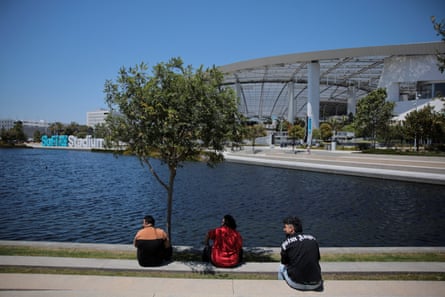
The structural vulnerabilities inherent in hosting the World Cup across multiple cities amplifies the security challenge exponentially compared to events concentrated in a single location. Each stadium presents unique architectural features, surrounding urban environments, and transportation access points that require customized security planning. The 11 host cities will need to develop coordinated but locally-adapted security frameworks that account for regional threat assessments, available resources, and community policing relationships.
Funding limitations have created additional obstacles for comprehensive security preparation, with some local jurisdictions struggling to secure adequate resources for enhanced protective measures. Federal grant programs and emergency appropriations have been proposed to assist host cities, but bureaucratic delays and political complexities have slowed the distribution of critical resources. This financial uncertainty has created operational challenges for security planners attempting to implement robust, multi-layered protection strategies.
International cooperation will play a crucial role in the security framework, as foreign nationals will represent a significant portion of attendees and potential threat vectors may originate from abroad. The State Department, along with intelligence agencies, has been coordinating with international partners to conduct enhanced vetting procedures for foreign visitors and to identify known or suspected extremists attempting to enter the country under the guise of being sports fans. Information sharing with allied intelligence services has intensified to ensure comprehensive threat assessment and interdiction capabilities.
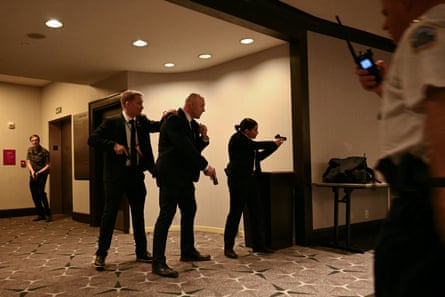
The success of World Cup security operations ultimately depends on the sustained commitment of federal and local resources, effective intelligence analysis and sharing, and the development of comprehensive response protocols that address evolving threat scenarios. As the tournament approaches, security agencies will continue refining their strategies based on emerging intelligence, lessons learned from other major sporting events, and technological innovations in threat detection and prevention. The challenge ahead requires unprecedented coordination, innovation, and vigilance to ensure that the World Cup can be celebrated as a great American sporting achievement while protecting all participants from the significant terrorism risks that continue to threaten public gatherings in the contemporary security environment.
Source: The Guardian


