
Zelensky Blasts US Envoys for Skipping Kyiv

Ukrainian President Zelensky criticizes US envoys Steve Witkoff and Jared Kushner for visiting Moscow repeatedly but never traveling to Kyiv, calling the pattern disrespectful.
Ukrainian President Volodymyr Zelensky has publicly expressed frustration over what he characterizes as a significant diplomatic slight, asserting that the failure of prominent US envoys to visit Kyiv represents a troubling pattern of disrespect toward his nation. The criticism centers on two key figures in American diplomatic efforts: Steve Witkoff, a seasoned diplomatic envoy, and Jared Kushner, who serves as Donald Trump's son-in-law and holds significant influence in shaping foreign policy decisions.
The crux of Zelensky's complaint highlights a glaring asymmetry in diplomatic engagement between Washington and the Ukrainian capital. While both Witkoff and Kushner have made multiple journeys to Moscow to engage with Russian officials, neither has deemed it necessary or important enough to make the corresponding trip to Kyiv to meet directly with Ukrainian leadership. This disparity underscores what many observers view as a troubling prioritization that seemingly elevates engagement with Moscow over direct dialogue with Ukraine's government.
Zelensky's remarks reflect deeper anxieties about US diplomatic priorities in Eastern Europe and the broader region. The Ukrainian president's frustration appears rooted in the belief that repeated visits to Moscow without corresponding visits to Kyiv send a problematic message about American commitment to Ukraine's interests and sovereignty. Such diplomatic oversights, intentional or otherwise, carry significant symbolic weight in international relations where the frequency and location of high-level visits often serve as indicators of strategic importance and commitment.
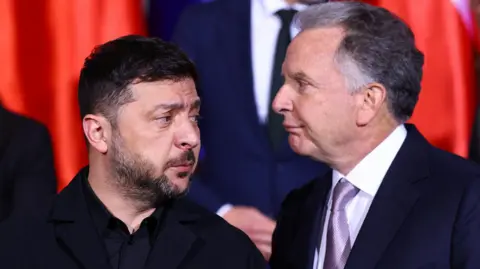
The situation gains additional significance when examined within the context of ongoing US-Ukraine relations and broader geopolitical tensions in the region. Ukraine has faced persistent security challenges and international pressure, making direct engagement with American decision-makers at the highest levels increasingly critical for the country's long-term interests. The absence of these high-profile visits to Kyiv may be interpreted as a lack of urgency or commitment regarding Ukraine's concerns and strategic position.
Steve Witkoff, who has emerged as a prominent figure in Trump's diplomatic apparatus, has become known for his role in managing sensitive international negotiations and back-channel communications. His multiple trips to Moscow have been characterized as part of broader efforts to understand Russia's negotiating positions and explore potential avenues for dialogue. However, the corresponding lack of visits to Kyiv raises questions about the balance and impartiality of these diplomatic initiatives.
Jared Kushner's involvement in this diplomatic engagement adds another layer of complexity to the situation. As Trump's son-in-law and a figure with considerable influence on policy decisions, Kushner's travel patterns and diplomatic priorities carry outsized significance. His focus on Moscow communications without parallel engagement in Kyiv suggests a potential imbalance in how these envoys are distributing their diplomatic attention across key allies and strategic partners.
The diplomatic protocol and practice of international relations typically emphasize the importance of reciprocal engagement and equal treatment of allied nations. When prominent envoys make repeated visits to one capital while avoiding another, it inevitably generates questions about the underlying priorities and strategic calculations driving these decisions. Zelensky's public criticism suggests that Ukrainian officials view this pattern as indicative of a broader concern about America's commitment to Ukrainian interests.
This situation must be understood within the context of Ukraine's ongoing security challenges and its critical dependence on international support. The country faces persistent military pressures and existential security concerns that make regular, high-level diplomatic engagement with the United States absolutely essential. Repeated visits to Moscow without corresponding trips to Kyiv create an impression of asymmetrical focus that Ukrainian leadership finds both troubling and unacceptable.
The criticism also reflects broader tensions within American foreign policy regarding how the nation balances its relationships with different regional actors. The concentration of diplomatic visits to Moscow over Kyiv suggests either deliberate strategic choices or an oversight in diplomatic planning, neither of which reflects well on the administration's handling of these critically important relationships.
Zelensky's willingness to publicly articulate this frustration demonstrates the depth of concern within Ukrainian leadership about how their nation is being prioritized in American diplomatic strategy. Public criticism of this nature, while diplomatically unconventional, serves as a signal to Washington about the importance Ukraine attaches to this matter. It also communicates to domestic Ukrainian audiences that their president is actively advocating for their nation's interests on the international stage.
The diplomatic imbalance highlighted by Zelensky's remarks raises important questions about the logic and reasoning behind these travel decisions. Whether driven by security considerations, scheduling constraints, or deliberate strategic choices, the pattern creates a narrative that may not serve American interests in demonstrating balanced commitment to its various allies and partners in the region.
Moving forward, the situation underscores the ongoing importance of maintaining robust, multi-directional diplomatic engagement with key allies. The absence of high-level American envoys in Kyiv may need to be rectified to demonstrate continued American commitment to Ukraine's sovereignty and security. As geopolitical tensions continue to evolve in Eastern Europe, such symbolic gestures and direct engagement become increasingly important for maintaining strong international relationships.
The broader implications of this diplomatic disparity extend beyond mere symbolism. They touch on substantive questions about how American foreign policy objectives are being pursued and whether current diplomatic arrangements adequately serve the interests of all parties involved. Zelensky's public frustration indicates that Ukrainian officials believe the current arrangement is inadequate and requires immediate correction through more balanced and frequent diplomatic engagement.
Source: BBC News


