
AMD Ryzen 9 9950X3D2 Dual Edition: Premium Cache Performance

AMD's new Ryzen 9 9950X3D2 Dual Edition packs 208MB of cache for $899. Our in-depth review reveals performance gains and power efficiency improvements.
AMD is preparing to launch its highly anticipated Ryzen 9 9950X3D2 Dual Edition processor on April 22, marking another significant milestone in the company's processor lineup. The chip carries a price tag of $899, though market conditions and supply availability could potentially shift this figure in either direction as demand evolves. This premium positioning reflects the advanced architecture and substantial improvements AMD has engineered into this latest generation.
To understand what makes the 9950X3D2 Dual Edition special, it's important to contextualize it within AMD's broader processor portfolio. This processor represents an evolution of the existing 16-core Ryzen 9 9950X3D, which carries an MSRP of $699 with typical street prices hovering around $660. The key differentiator lies in a fundamental architectural enhancement: while the standard 9950X3D features only one of its two 8-core Zen 5 CPU chiplets equipped with an additional 64MB of L3 cache, the Dual Edition configuration applies this cache enhancement to both chiplets, resulting in an extraordinary total of 208MB of cache across the entire processor.
This cache configuration represents a dramatic departure from conventional processor design philosophy. The accumulation of 208MB of L3 cache is substantially larger than what consumers typically encounter in desktop processors, even at the highest performance tiers. This architectural decision directly addresses the performance bottlenecks that emerge in demanding workloads, where rapid access to cached data can mean the difference between exceptional performance and mere competence. AMD's engineering team has clearly prioritized cache density as a solution to modern computational challenges.
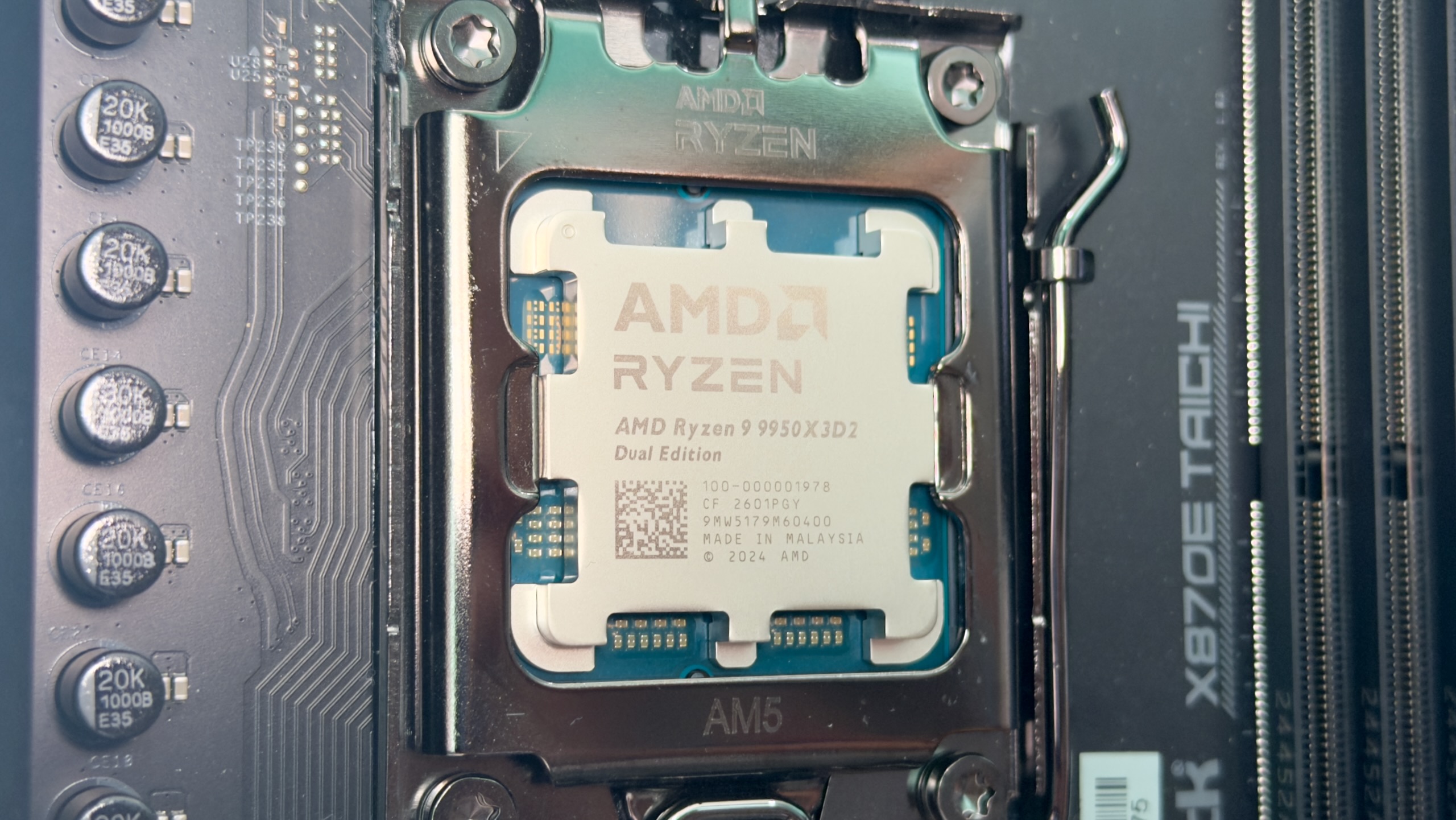
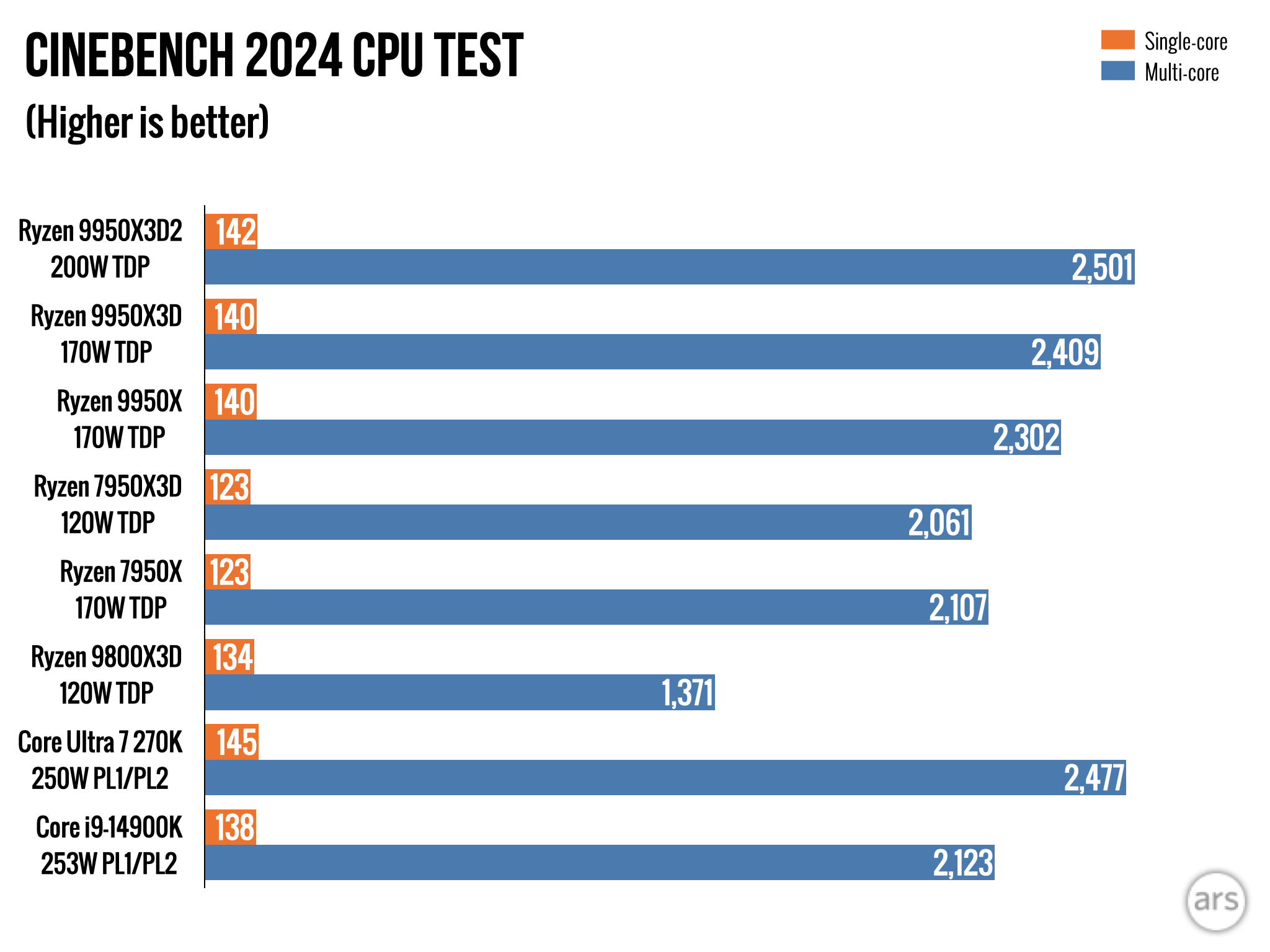
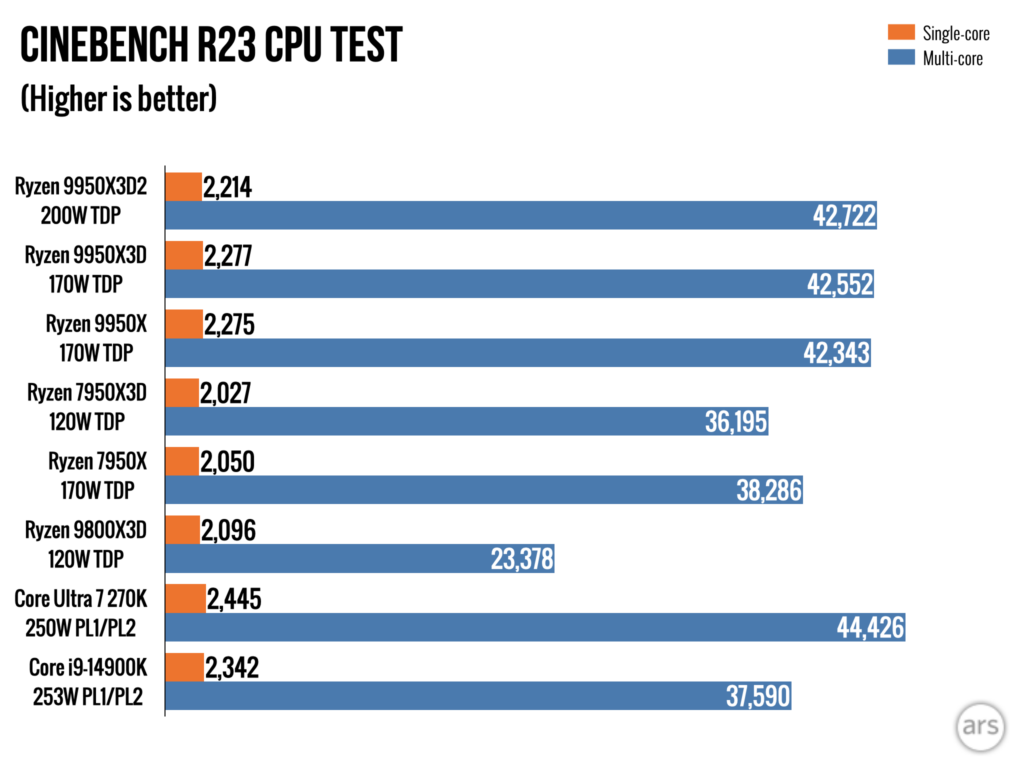
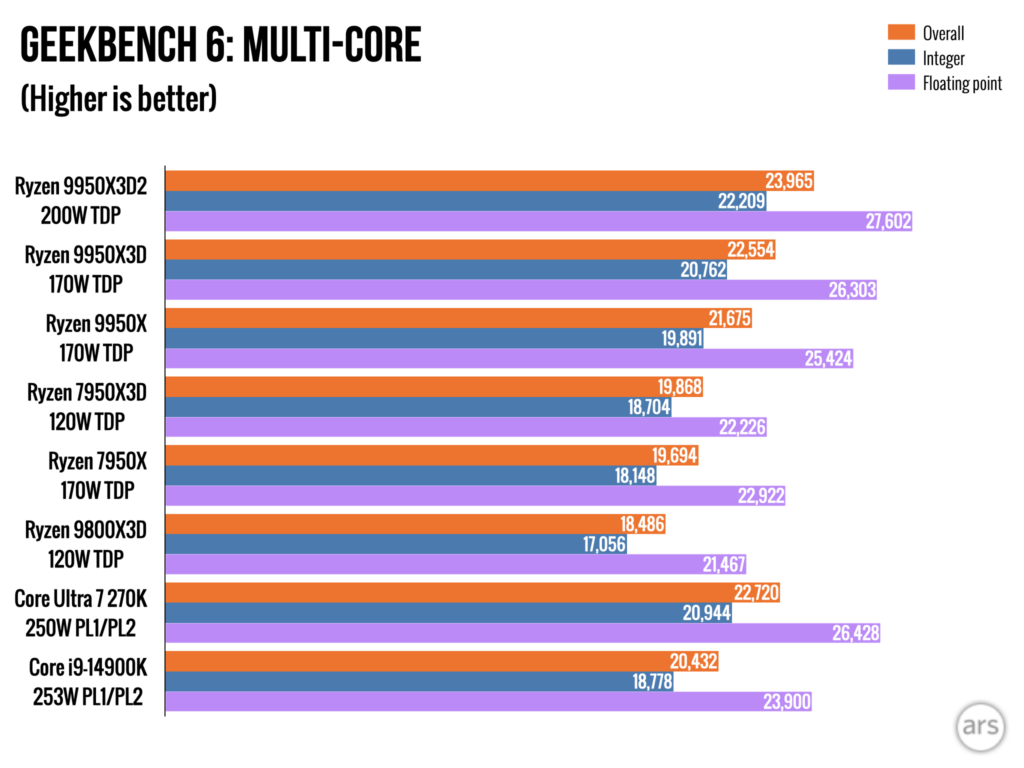
Our comprehensive testing reveals that the 9950X3D2 Dual Edition delivers measurable performance improvements across multiple evaluation categories. In general-purpose CPU benchmarks, the processor consistently outperforms its non-Dual counterpart, though the gains are incremental rather than revolutionary. Video encoding tests demonstrate similar patterns, with the Dual Edition showing modest but consistent advantages. Gaming performance follows this same trajectory, where the additional cache translates into frame rate improvements that, while not dramatic, contribute to a smoother overall experience at high resolutions and settings.
What emerges as particularly noteworthy from our testing is how AMD has managed the thermal and power characteristics of this substantially enhanced processor. Despite carrying a default TDP specification of 200W—a 30W increase over the standard 9950X3D's 170W baseline—real-world power consumption tells a more nuanced story. During gaming workloads, the 9950X3D2 consumes approximately the same power as its predecessor, suggesting that improved efficiency partially offsets the higher TDP specification. Even more impressively, during video encoding scenarios, the Dual Edition actually demonstrates slightly lower power consumption than the regular 9950X3D, a counterintuitive result that speaks to the refined nature of the architecture.
This power efficiency achievement deserves particular emphasis because it represents a significant engineering accomplishment. AMD has invested considerable effort in optimizing the 3D V-Cache technology implementation, effectively eliminating many of the historical drawbacks associated with stacked cache architectures. Earlier iterations of 3D V-Cache designs sometimes suffered from thermal management complications and suboptimal power scaling, but the 9950X3D2 Dual Edition demonstrates that these concerns have largely been addressed through careful thermal design and architectural refinements.
The pricing strategy surrounding the 9950X3D2 Dual Edition deserves consideration in the broader market context. At $899, the processor commands a $200 premium over the standard 9950X3D's $699 MSRP. Whether this premium represents fair value depends significantly on individual use case requirements and budget constraints. For professionals engaged in heavily cache-sensitive workloads—such as scientific simulations, complex database operations, or specialized rendering tasks—the enhanced cache may justify the additional expense. Consumer gamers, by contrast, may find that the marginal performance improvements don't warrant the investment, particularly given the already substantial performance envelope of the standard 9950X3D.
The release of the 9950X3D2 Dual Edition also carries broader implications for the competitive landscape in high-performance computing. AMD continues to demonstrate its commitment to the Ryzen processor line, iteratively enhancing performance through architectural innovations rather than pursuing the path of ever-higher clock speeds. This methodology proves particularly effective in the current technological context, where thermal constraints and power delivery limitations make additional frequency gains increasingly difficult to achieve.
Market positioning represents another crucial element in understanding this processor's significance. AMD clearly intends for the 9950X3D2 Dual Edition to occupy a premium niche within its product portfolio, targeting users who require maximum cache performance and are willing to pay accordingly. This stratification allows AMD to serve diverse customer segments with appropriately spec'd products, from budget-conscious consumers purchasing entry-level Ryzen processors to enthusiasts and professionals demanding the absolute best performance available.
The decision to enhance both chiplets with cache represents a bold architectural choice that diverges from the established design pattern. By committing to universal cache enhancement, AMD signals confidence in the technology's maturity and benefits. This approach also simplifies the manufacturing and testing processes by eliminating asymmetrical configurations, which can sometimes introduce unexpected performance variations or thermal characteristics.
From a technical specifications standpoint, the 9950X3D2 Dual Edition maintains the same core and thread count as its predecessors—sixteen cores and thirty-two threads—distributed across two eight-core chiplets. The enhancement lies entirely in the cache architecture rather than in fundamental processor design changes. This conservative approach to core counts reflects market reality, where additional cores provide diminishing returns for most applications and actually create thermal management challenges when implemented carelessly.
Looking forward, the 9950X3D2 Dual Edition demonstrates AMD's pathway for processor evolution in the near term. Rather than pursuing dramatic architectural overhauls annually, AMD appears committed to incremental refinements that maximize value for customers while managing manufacturing complexity and thermal constraints. This measured approach contrasts sharply with the historical industry trend of processor redesigns every generation, suggesting a more mature and sustainable development philosophy.
The April 22 launch date positions the 9950X3D2 Dual Edition strategically within the annual product cycle, allowing sufficient time for market evaluation before the next generation emerges. Supply and demand dynamics will undoubtedly influence actual retail pricing, as mentioned in AMD's guidance. Early adoption levels will reveal whether the market values the enhanced cache configuration sufficiently to support premium pricing throughout the product lifecycle.
In conclusion, the Ryzen 9 9950X3D2 Dual Edition represents a refined and enhanced approach to high-performance desktop computing. The substantial cache enhancement, combined with demonstrated power efficiency improvements and consistent performance gains across diverse workloads, makes this processor an compelling option for users whose applications benefit from large caches. While the $899 price point exceeds many alternatives, the architectural improvements and engineering refinements justify consideration for serious computing professionals and enthusiasts seeking maximum performance capabilities.
来源: Ars Technica


