
Alaska Fjord Tsunami: 500m Wave from Massive Landslide

A colossal landslide in Alaska's Tracy Arm fjord triggered the second-highest tsunami ever recorded. Discover how 63.5 million cubic meters of rock created catastrophic waves.
In the early hours of August 10, 2025, one of Earth's most dramatic natural disasters unfolded in relative silence along Alaska's pristine coastline. At precisely 5:26 am local time, an enormous wedge of rock measuring at least 63.5 million cubic meters suddenly detached from the mountainside above Tracy Arm fjord. This massive landslide represented an incomprehensible volume of stone—equivalent to the weight of millions of fully loaded freight trains—plummeting downward at tremendous velocity toward the fjord's crystalline waters below.
The moment this colossal mass of rock struck the ocean at the terminus of the South Sawyer Glacier, it displaced an extraordinary volume of water instantaneously. The initial impact generated a breaking wave towering 100 meters high that propagated rapidly across the fjord's confined waters. This initial surge traveled at velocities exceeding 70 meters per second—faster than most commercial aircraft travel—creating a tsunami wave of devastating proportions. When this powerful surge finally encountered the opposite shoreline's steep rocky cliffs, it continued ascending vertically, surging up the jagged rock face to a remarkable height of 481 meters above sea level.
The significance of this event cannot be overstated in the context of modern science and natural hazard documentation. According to Aram Fathian, a dedicated researcher at the University of Calgary and co-author of a comprehensive Science study that meticulously reconstructed this extraordinary event, "It was the second highest tsunami ever recorded on Earth," placing it among the most violent natural events documented in human history. What makes this distinction particularly noteworthy is that this cataclysmic event occurred with virtually no public awareness or media attention globally.
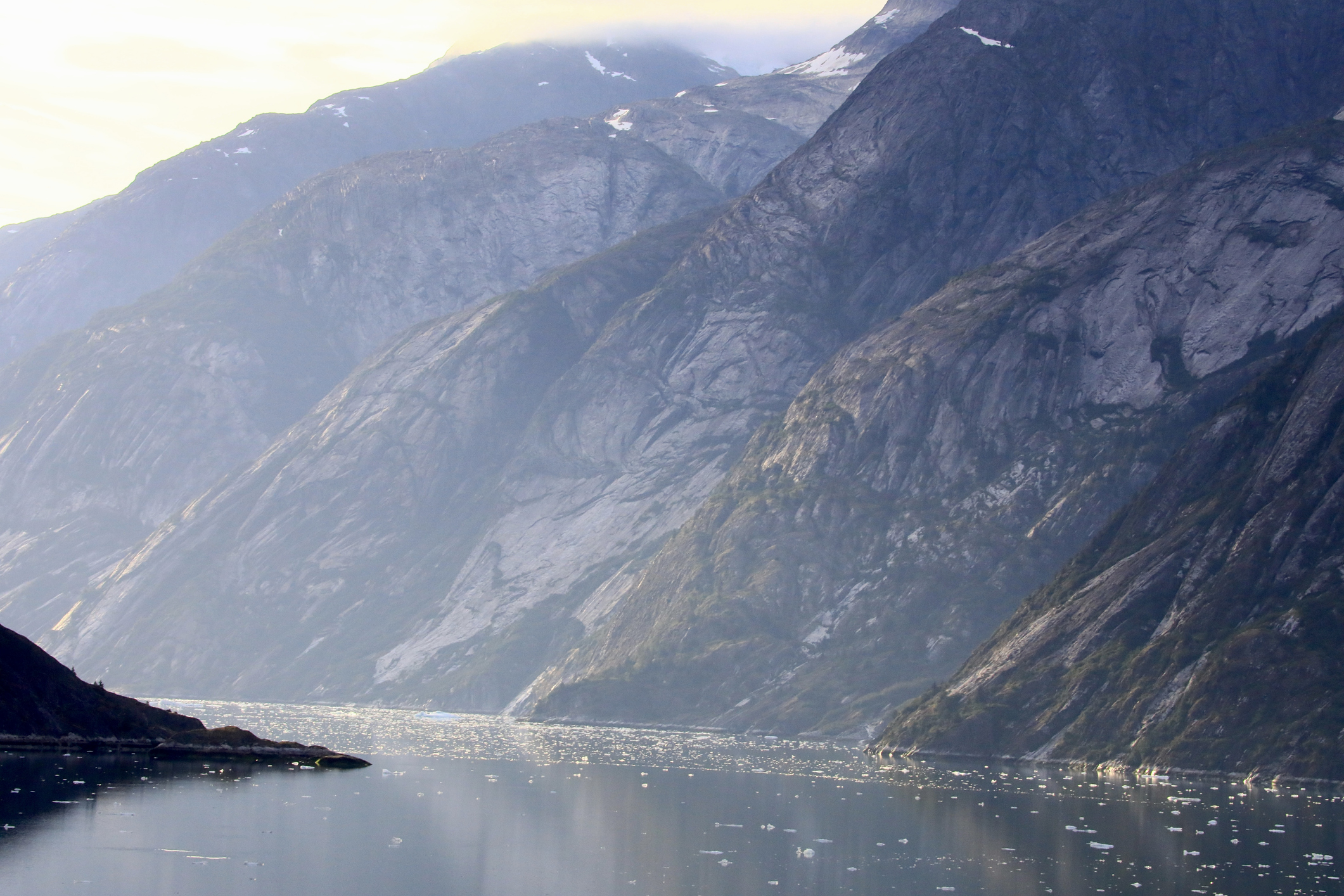
Fathian further explains the peculiar circumstances surrounding this near-catastrophe: "But until now, almost nobody heard about it because it was a near-miss event." The fortuitous timing of this disaster, occurring at 5:26 in the morning when tourism activity was minimal, proved to be the crucial factor preventing massive casualties. Had this identical event occurred during peak tourist season and daylight hours when cruise ships and recreational vessels typically navigate the fjord, the human toll would have been absolutely catastrophic. The narrow escape highlights a sobering reality: megatsunami events of this magnitude pose an ever-present and terrifying risk to populated coastal areas worldwide.
Despite the absence of reported injuries or fatalities from this particular event, the incident serves as an urgent wake-up call for disaster preparedness and geological monitoring. The near-miss nature of this disaster demonstrates that communities cannot afford complacency when facing such powerful natural forces. Scientists and emergency management officials recognize that without dramatic improvements in early warning systems and evacuation protocols, future landslide-generated tsunamis could result in tragic loss of life and widespread devastation.

Understanding Landslide Megatsunamis and Their Unique Characteristics
To fully comprehend the extraordinary nature of the Tracy Arm event, one must understand the fundamental differences between earthquake-generated tsunamis and those produced by massive geological collapses. Earthquake-generated tsunamis, which dominate global disaster records, typically reach runup heights of merely tens of meters when they finally strike distant coastlines after traveling across ocean basins. These distant tsunamis, while certainly dangerous, are generally constrained by the physics of wave propagation across open water and the dissipation of energy over vast distances.
Landslide tsunamis, by dramatic contrast, operate under fundamentally different physical principles that produce far more violent and destructive outcomes. When millions upon millions of tons of rock suddenly and catastrophically fail and plunge into a confined body of water such as a narrow fjord, the resulting fluid dynamics create waves of almost unimaginable proportions. The critical factors that amplify these waves include the extreme variation in water depth throughout the fjord, the direct and immediate displacement of the entire water column by the falling debris, and the constraining geography of the narrow channel itself. The confined geometry prevents wave energy from dissipating laterally, instead forcing all energy upward in a devastating vertical surge.
Scientific documentation of landslide tsunami events has expanded considerably since the early twentieth century. Since 1925, researchers have carefully catalogued and studied 27 documented events worldwide where massive rock collapses generated significant tsunami activity. These events, though geographically scattered, reveal consistent patterns in how catastrophic rock failures interact with water bodies to produce extreme waves. The Tracy Arm fjord tsunami now stands as the second-highest recorded event in this entire historical catalog, surpassed only by one other documented megatsunami, underscoring the truly exceptional nature of this August 2025 occurrence.
The mechanics of landslide tsunamis also differ significantly from earthquake-generated waves in terms of their spatial extent and predictability. While earthquake tsunamis propagate in organized wave trains that travel vast distances, landslide tsunamis typically remain localized to the immediate region surrounding the collapse. This localization creates both advantages and disadvantages for disaster response. The advantage lies in the limited geographic area threatened; the disadvantage stems from the sudden and almost unpredictable nature of the initial event, which provides virtually no warning time for evacuation or protective measures.
The Tracy Arm fjord landslide represents a critical case study in understanding how geological hazards continue to threaten populated areas across the planet. As climate change accelerates glacier retreat and destabilizes mountain terrain worldwide, the frequency of such catastrophic rock failures may increase substantially. Fjords in Alaska, Norway, New Zealand, and other regions with steep terrain and deep water bodies face particular risk from these megatsunami hazards. The near-miss of the Tracy Arm event underscores the urgent necessity for improved monitoring systems, better understanding of precursor signals that might indicate imminent collapse, and comprehensive emergency preparedness strategies for vulnerable communities living near geologically active fjords.
Research teams like those led by Aram Fathian continue investigating the physical mechanisms that trigger these catastrophic slope failures and the fluid dynamics that govern megatsunami generation. By studying past events in meticulous detail, scientists hope to develop better predictive models and early warning capabilities. The Tracy Arm fjord tsunami, though fortunately occurring during a period of minimal human presence, has provided invaluable scientific data that will inform disaster preparedness efforts for generations to come. As populations continue expanding into coastal regions worldwide, understanding and preparing for these extreme natural phenomena has become an essential component of modern risk management and public safety.
Source: Ars Technica


